In the Indian military, some officers become public figures long before they rise to the top. Their speeches circulate widely, their interviews trend online, and their personalities become part of the national conversation.
Lieutenant General N.S. Raja Subramani took a very different path.
For nearly four decades, he stayed away from headlines while serving in some of India’s toughest military environments — Kashmir, the Northeast, high-altitude sectors, strike formations, and strategic headquarters. He built his career inside operations rooms, forward bases, command centres, and military planning structures rather than television studios.
Now, that quiet officer has stepped into one of the most powerful military positions in the country.
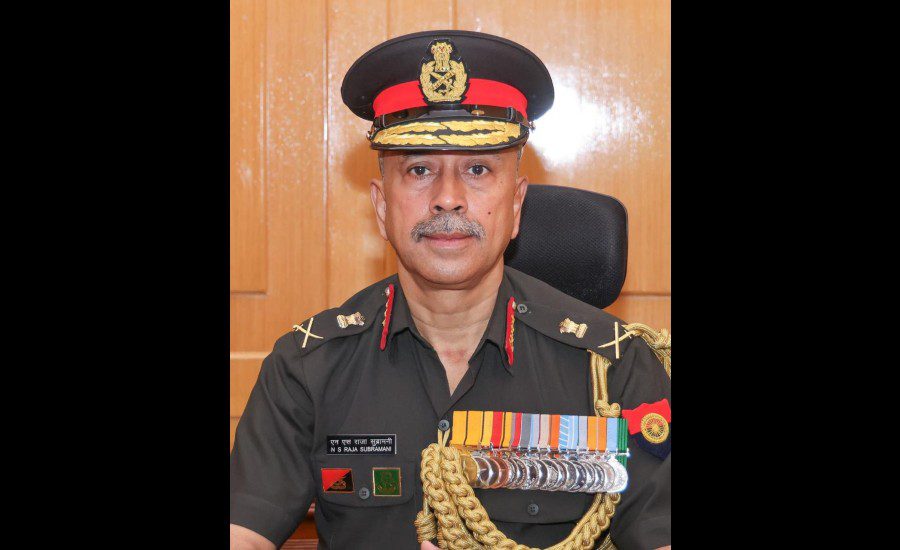
As India’s new Chief of Defence Staff, Raja Subramani takes charge at a moment when the country is redrawing the future of its armed forces — integrating the Army, Navy and Air Force, preparing for technology-driven warfare, strengthening the China frontier, and restructuring military command systems for the first time since Independence.
His rise is not built around political visibility or public theatrics. It is built around battlefield experience, institutional trust, and years spent understanding how the Indian military functions from the ground up.
And that journey began in the infantry.
Also read: Mission Vande Mataram: How Four BSF Women Climbed Everest And Sang India’s Soul From The Top Of The World
A SOLDIER FROM THE GARHWAL RIFLES
On December 14, 1985, Raja Subramani was commissioned into the 8th Battalion of the Garhwal Rifles — one of the Indian Army’s most respected infantry regiments.
For a young officer entering service during the mid-1980s, the Indian Army was stepping into one of its most operationally demanding eras. Militancy, insurgencies, border tensions and internal security operations were shaping the lives of infantry officers across the country.
This was not a career that unfolded inside comfortable headquarters.
It unfolded in mountains, conflict zones and difficult terrain.
His early years exposed him to the realities of infantry warfare — long deployments, counter-insurgency operations, high-altitude preparedness, and the unforgiving rhythm of military life in active operational sectors.
THE MAKING OF A STRATEGIC SOLDIER
Unlike officers who remain confined to tactical command roles, Raja Subramani steadily expanded into the strategic side of military leadership.
He trained at the prestigious Joint Services Command and Staff College in the United Kingdom, an institution known for preparing senior military officers for complex joint warfare and strategic planning.
He later attended the National Defence College in New Delhi — India’s top institution for strategic and national security studies.
His academic background reflected the same shift.
He earned a Master’s degree connected to King’s College London and pursued an M.Phil in Defence Studies from the University of Madras.
By then, Raja Subramani was no longer just an infantry commander.
He was becoming part of the Army’s strategic leadership ecosystem.
THROUGH KASHMIR, THE NORTHEAST AND INDIA’S HARDEST FRONTIERS
The defining chapters of his military career were shaped in India’s most sensitive operational theatres.
He served extensively in Jammu & Kashmir, where the Indian Army has spent decades handling infiltration, terrorism, Line of Control tensions and hybrid warfare backed by Pakistan.
Kashmir is not simply another military posting.
It is a constant operational grind where commanders must balance intelligence, troop morale, civilian sensitivity, counter-terror operations and high-risk deployments simultaneously.
Raja Subramani also served in the Northeast, another region where military leadership demands an entirely different kind of operational understanding — mountain warfare, insurgency management, difficult terrain and border complexities involving China and Myanmar.
Together, these experiences gave him a rare operational range.
He understood both conventional military preparedness and long-duration internal security operations.
That combination would shape the rest of his career.
COMMANDING INDIA’S STRIKE POWER
Among the most defining appointments in his career was his command of II Corps, better known as the Kharga Corps.
Within military circles, command of a strike corps is seen as a major milestone.
Strike corps are not defensive formations. They are designed for offensive warfare during major military conflict. These formations include armoured units, mechanised forces, artillery systems and large combat structures prepared for rapid battlefield operations.
Kharga Corps remains one of India’s most strategically important formations, particularly in relation to the western front.
Commanding it placed Raja Subramani among the Army’s top operational commanders.
It also marked his transition from field leadership into the highest levels of military planning.
NORTHERN COMMAND AND THE PRESSURE OF THE FRONTIER
As Chief of Staff of Northern Command, Raja Subramani moved even deeper into India’s most sensitive operational theatre.
Northern Command oversees some of the country’s most volatile military zones — Kashmir, Line of Control sectors, counter-terror operations and parts of the northern frontier.
The role demanded coordination across intelligence, logistics, operational planning and high-level military management.
This was not merely about commanding troops. It was about managing one of the most active military theatres in the world. Every troop movement, every logistics chain, every intelligence input and every deployment carried strategic implications.
By this stage, Raja Subramani had accumulated experience across tactical warfare, conventional operations and strategic coordination — a combination few officers achieve.
THE GENERAL WHO OVERSAW A CHANGING ARMY
In March 2023, he took charge as General Officer Commanding-in-Chief of Central Command headquartered in Lucknow.
The timing was significant.
India’s military posture had already changed sharply after tensions along the Line of Actual Control with China. Mountain warfare readiness, logistics expansion and rapid infrastructure development had become top priorities.
Central Command’s role gained greater strategic weight in this environment.
From Himalayan preparedness to reinforcement capability, the command became part of India’s evolving northern defence architecture.
Raja Subramani was now operating at a level where battlefield readiness and national strategy increasingly overlapped.
INSIDE ARMY HEADQUARTERS
On July 1, 2024, he became Vice Chief of Army Staff. This is one of the most influential positions in the Indian Army.
The Vice Chief handles far more than ceremonial responsibilities. Procurement, force restructuring, modernization, operational preparedness, capability enhancement and institutional reforms all move through this office.
His tenure came during a period when warfare itself was rapidly changing.
Drones were reshaping battlefields. Artificial intelligence was entering military systems. Cyber warfare capabilities were becoming essential. China’s military posture was becoming more aggressive.
India was simultaneously trying to reduce dependence on imported weapons while pushing indigenous defence production.
Inside Army Headquarters, Raja Subramani became associated with modernization, institutional streamlining and long-term capability planning.
His style remained measured and understated. But his influence inside the system continued growing.
THE MOVE THAT SIGNALLED BIGGER PLANS
After retiring from active Army service in 2025, Raja Subramani was appointed Military Adviser at the National Security Council Secretariat.
For many defence observers, this was a major signal.
The National Security Council Secretariat sits at the heart of India’s strategic decision-making system. It works closely with the Prime Minister’s Office, the National Security Adviser, intelligence agencies and senior military leadership.
Appointments here are based heavily on institutional confidence.
The role indicated that Raja Subramani was now operating at the national strategic level rather than purely military command structures.
It also suggested that the government saw him as someone capable of handling defence transformation at the highest level. Months later, that assumption proved correct.
THE NEW CHIEF OF DEFENCE STAFF
In 2026, the Government of India appointed Lieutenant General N.S. Raja Subramani as the country’s next Chief of Defence Staff.
The appointment placed him at the centre of the biggest military restructuring exercise India has seen in decades. The CDS is not just the senior-most military officer.
The role exists to integrate the Army, Navy and Air Force into a more coordinated fighting structure.
It involves theatre command reforms, joint planning, procurement integration, logistics coordination and preparation for future warfare across land, air, sea, cyber and space.
The scale of the challenge is enormous.
Each military service has its own institutional culture, operational priorities and strategic doctrines. Bringing them into a unified framework requires negotiation, credibility and operational authority.
Raja Subramani enters the office carrying all three.
A GENERAL WITH VERY LITTLE PUBLIC NOISE
One of the most striking things about Raja Subramani is how little personal information exists about him publicly. There are almost no detailed interviews. Very little is known about his family.
His personal life remains largely outside public view. No carefully curated public persona surrounds him. In an age where visibility often becomes part of leadership, Raja Subramani’s rise stands out because it happened without that machinery.
Inside defence circles, however, he built another kind of reputation — calm, methodical, operationally sharp and institutionally grounded.
Many officers are remembered for speeches. Others are remembered for command credibility. Raja Subramani belongs firmly to the second category.
THE WEIGHT OF THE MOMENT
His appointment comes during one of the most sensitive phases in India’s military evolution.
China’s military rise has changed the strategic balance across Asia. Border tensions continue along the Himalayan frontier. Technology is redefining warfare faster than most militaries can adapt.
Drone warfare, cyber operations, artificial intelligence and multi-domain battle strategies are no longer future concepts — they are present-day realities.
At the same time, India is attempting one of its most ambitious defence reforms: integrating the armed forces into theatre commands capable of operating as a single structure during conflict.
That transformation will define the future shape of India’s military power. And much of that responsibility now sits with Raja Subramani.
FROM INFANTRY OFFICER TO INDIA’S TOP MILITARY POSITION
The story of N.S. Raja Subramani is not built around dramatic public moments.
It is built around decades of movement through the military system — from battalion life to strike corps command, from operational sectors to strategic headquarters, from frontline formations to national security planning.
He represents a generation of officers shaped by insurgencies, border tensions and constant operational exposure. Now, as Chief of Defence Staff, he stands at the point where India’s military past meets its future.
The infantry officer from the Garhwal Rifles is no longer just leading troops. He is helping shape how India prepares for the wars of the coming decades.
Also read: How IAS Namrata Jain Is Taking PDS Deep Into Abujhmad