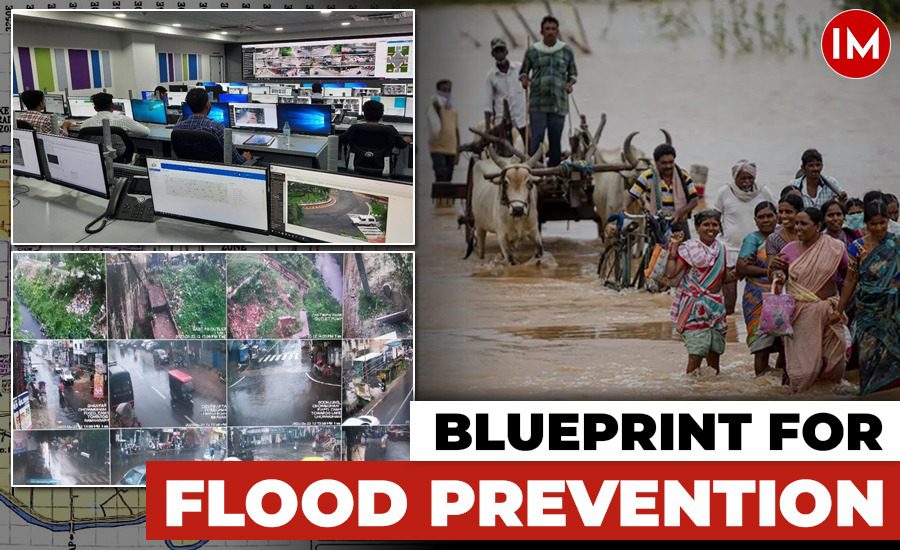
Urban flooding has become an increasing concern for many cities worldwide, particularly those experiencing heavy rainfall and rapid urbanization. For Agartala, the capital city of Tripura, flood management has been a pressing issue, exacerbated by its unique geographical and climatic conditions. Every year, the city grapples with the challenge of managing torrential downpours, which, if not properly addressed, could lead to significant waterlogging and flooding. However, Agartala’s proactive measures and innovative solutions in flood management have set a remarkable example of urban resilience and effective governance.
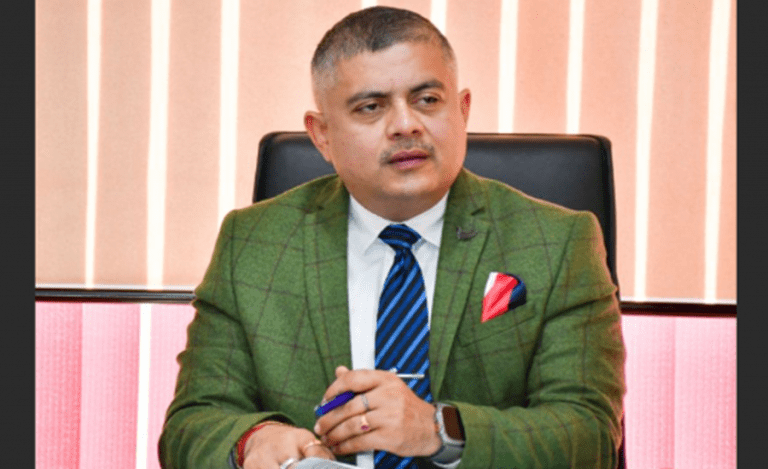
Speaking with Indian Masterminds, 2013 batch IAS officer Dr. Shailesh (Tripura Cadre), who is the Municipal Commissioner, Agartala shared about the project in detail.
Heavy Rainfall and Urban Flooding
In regions like Agartala, heavy rainfall is a common occurrence, often resulting in intense challenges for flood management systems. The city experiences rainfall patterns that can overwhelm conventional drainage systems. For instance, Agartala once recorded a staggering 270 millimeters of rain in just one hour. Such extreme weather events necessitate a robust and well-maintained drainage infrastructure to prevent flooding.
Since 2018, Agartala has implemented a comprehensive flood management strategy designed to tackle these challenges effectively. The city’s approach is multi-faceted, focusing on drainage mapping, regular desilting, advanced pumping systems, and real-time monitoring.
1. Drainage Mapping and Desilting
A fundamental aspect of Agartala’s flood management strategy is the meticulous mapping of its stormwater drainage system. The Agartala Municipal Corporation (AMC) and Agartala Smart City Ltd. (ASCL) have prioritized the removal of encroachments and the construction of approximately 50 kilometers of new stormwater drains. This infrastructure is essential for managing rainwater efficiently and directing it away from populated areas.
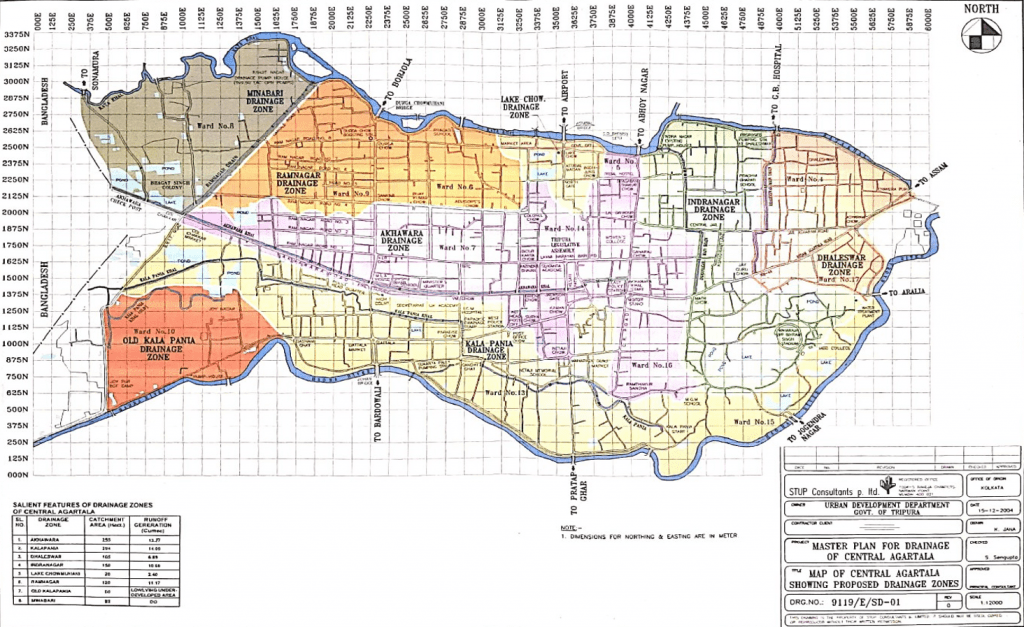
Desilting, the process of removing accumulated debris from drains, is carried out annually to ensure optimal flow. The city employs fully mechanized super sucker machines for this purpose. Since the introduction of these machines, flooding has been significantly reduced. According to Dr. Shailesh, Municipal Commissioner of Agartala, “Regular desilting is crucial. It’s not just a maintenance task but a strategic measure to prevent flooding and ensure smooth drainage.”
2. Advanced Pumping Systems
Agartala’s flood management system includes the installation of 18 high-powered flood pumps strategically placed in low-lying areas. These pumps are capable of discharging up to 900,000 liters of water per hour, a capacity crucial for handling severe rainfall. The city has also added six diesel-driven pumps to address power cuts during storms.
The pumps are connected to a network of underground pipelines that discharge water into the Kathakal Canal to the north and the Habada River to the south. This extensive network ensures that water from low-lying areas is efficiently removed and directed away from the city.
3. Real-Time Monitoring and Command Center
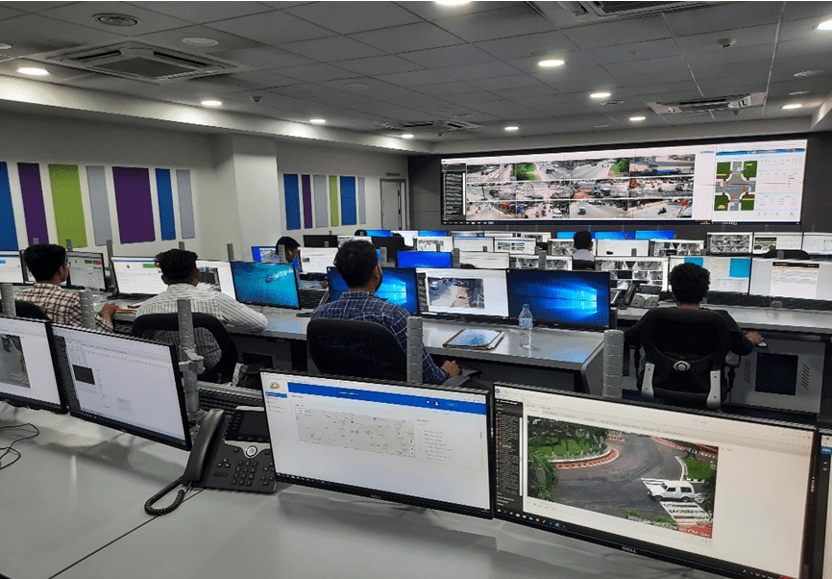
A significant advancement in Agartala’s flood management system is the establishment of an Integrated Command and Control Center (ICCC). This center employs real-time monitoring through CCTV cameras installed at key points throughout the drainage system. “The smart city mission has been instrumental in setting up these cameras, which provide live feeds crucial for flood management.”
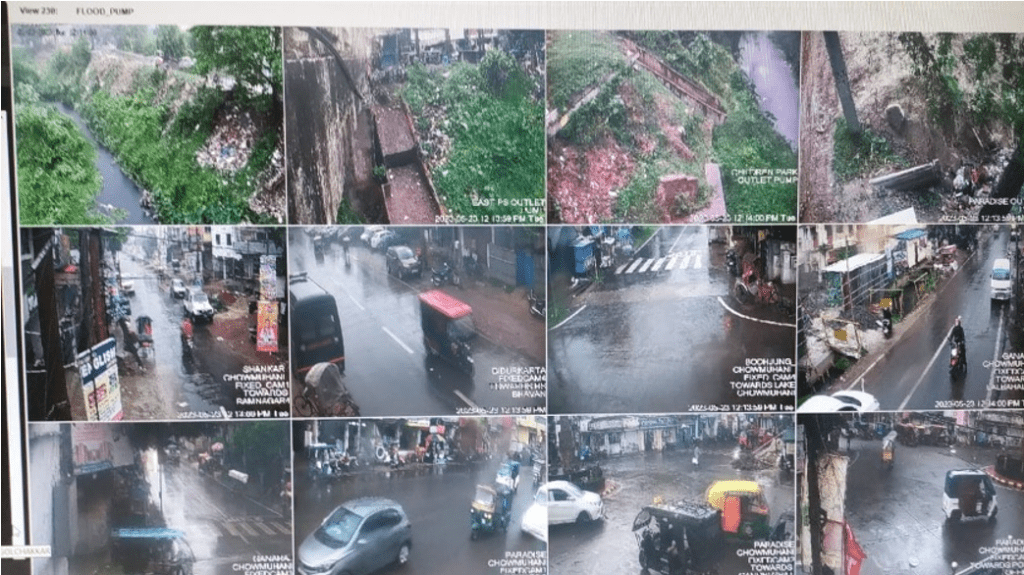
Dr. Shailesh emphasizes the importance of this system, stating, “The command and control center has revolutionized our flood management efforts. With real-time data from CCTV cameras and sensors, we can monitor water levels, pump operations, and drainage conditions continuously. This has greatly improved our response times and decision-making.”
The command center operates 24/7, with a dedicated team of eight personnel managing the system. They track rainfall, water levels, and pump operations, ensuring that the city’s drainage and flood management systems function smoothly during heavy rains.
4. Digital Twin and Advanced Sensors
Looking ahead, Agartala is planning to further enhance its flood management capabilities through advanced technologies. The city is working on creating a Digital Twin of the city, coupled with data triangulation from the India Meteorological Department (IMD) and the Central Water Commission (CWC). This system will enable sophisticated waterlogging and flood modeling, providing forecasts based on the intensity and total quantum of rainfall.
The new initiative will also integrate with the ICCC for real-time monitoring and management. Additionally, the city plans to install four more flood pumps and advanced sensors inside arterial stormwater drains to detect and warn of potential blockages. These sensors will allow for quicker identification and resolution of issues, further reducing the risk of flooding.
Community Engagement and Challenges
Community involvement has been a crucial aspect of Agartala’s flood management strategy. Educating residents about the importance of not dumping waste into drains has been vital in preventing blockages. Despite these efforts, challenges remain, including occasional debris blockages and the need for continuous improvement in system efficiency.
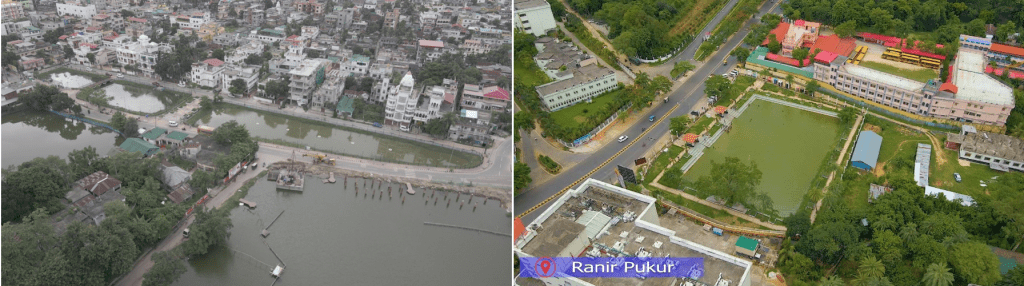
Dr. Shailesh remarked, “While our flood management project has seen significant success, it’s not without its challenges. For instance, some residents have expressed their dissatisfaction because they miss the boat rides they enjoyed during the monsoon season. It’s quite ironic that the very success of our system, which has reduced waterlogging, has also led to a nostalgia for those past recreational activities.”
A Model for Urban Flood Management
Agartala’s approach to flood management serves as a model for other cities facing similar challenges. Through a combination of innovative technologies, rigorous maintenance practices, and community engagement, the city has successfully minimized the impact of flooding.
“One of the key takeaways from our approach is that the principles we’ve applied here in Agartala can be adapted to other states and cities. The most crucial aspect is the regular cleaning of the drainage system, which we call desilting. This needs to be done every year, and it’s just common sense,” Dr. Shailesh said while concluding.