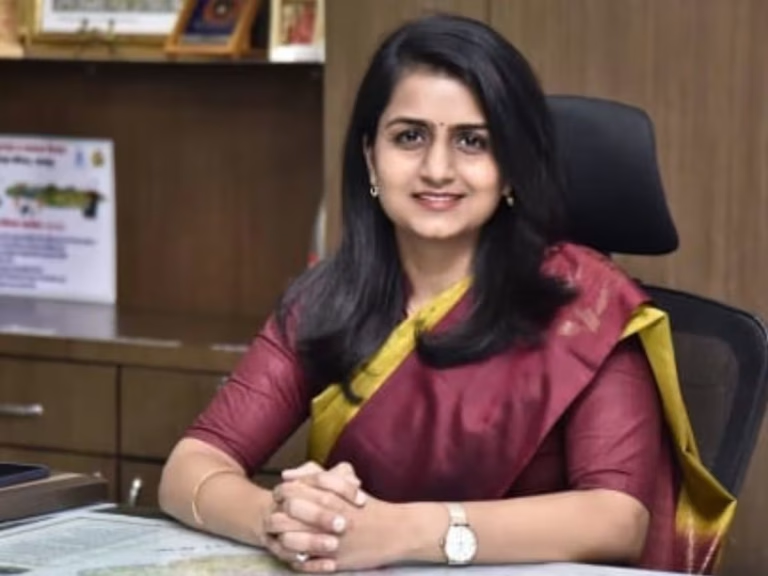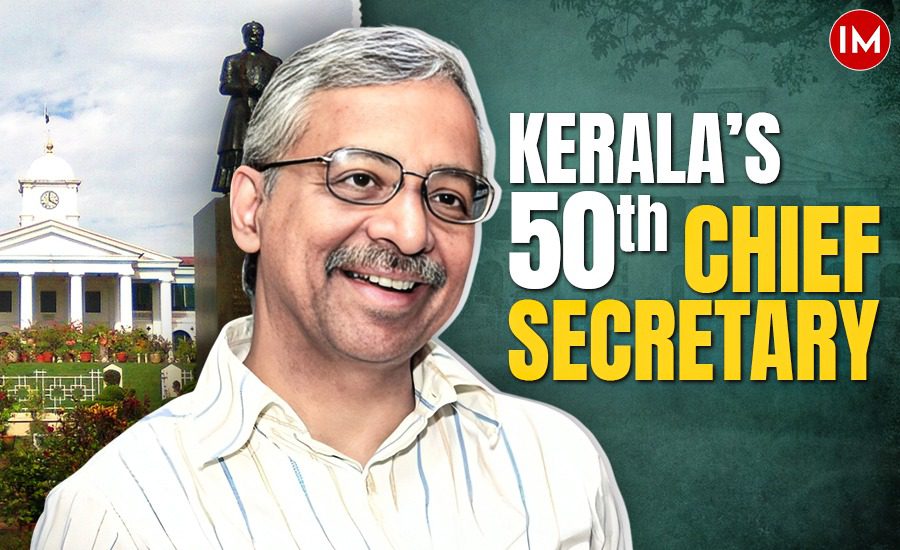
When the Kerala government named Dr. A. Jayathilak as the 50th Chief Secretary of the state, it was not just a routine bureaucratic appointment. It marked the rise of an officer whose career blends intellectual depth, grassroots governance, institution-building, and policy-level impact. A 1991-batch IAS officer of the Kerala cadre, Jayathilak steps into the state’s top bureaucratic post at a time of both opportunity and internal churn, bringing with him over three decades of wide-ranging administrative experience.
EARLY LIFE AND ACADEMIC FOUNDATION
Born on June 16, 1966, Dr. A. Jayathilak is a native of Thiruvananthapuram. His academic journey reflects an uncommon range. He graduated from Thiruvananthapuram Medical College in 1990 and later earned a postgraduate degree in Medicine and Surgery. Alongside this, he also holds a Master’s degree in Arts from Annamalai University.
Known since his student days for sharp intellect and curiosity, Jayathilak was a national-level quiz champion. He captained the Indian quiz team at an international quiz competition in Islamabad in 1990. His interests extended beyond academics to sports as well, as he represented Kozhikode district in shooting events at the Kerala State Shooting Championship.
ENTRY INTO CIVIL SERVICES
Jayathilak joined the Indian Administrative Service in 1991. He began his career as the Sub-Collector of Mananthavady, a posting that shaped his grounding in field administration. These early years exposed him to tribal welfare, land issues, and grassroots governance, experiences that would later influence his administrative style.
His reputation as a hands-on officer grew during his tenure as District Collector of Kollam and later Kozhikode. In both districts, he focused on citizen engagement and long-term social impact rather than short-term visibility.
FOCUS ON EDUCATION AND YOUTH
As District Collector, Jayathilak launched career guidance programmes for school students. These initiatives aimed to expose students, especially from government schools, to higher education options and competitive exams. His direct engagement with educational institutions earned appreciation from teachers, parents, and students alike.
Unlike conventional top-down programmes, these initiatives relied on interaction, mentoring, and motivation. They reflected his belief that administration must invest in human potential, not just infrastructure.
ARCHITECT OF KERALA TOURISM’s GLOBAL BRAND
One of the defining chapters of Jayathilak’s career was his role in shaping Kerala Tourism. As Managing Director of the Kerala Tourism Development Corporation (KTDC), he worked closely with senior officers such as Amitabh Kant and V. Venu during a period when the state was repositioning itself on the global tourism map.
This phase saw Kerala emerge as a globally recognised tourism brand, known for sustainability, culture, and responsible travel. Jayathilak’s contribution lay in institution-building, strategic branding, and professionalising tourism management.
REPLICATING SUCCESS IN CHHATTISGARH
His success in Kerala led to a deputation to Chhattisgarh, where he became the first Managing Director of the state’s Tourism Board. Starting almost from scratch, he helped brand and market Chhattisgarh internationally within just two years.
This was a rare example of a state borrowing administrative expertise across cadres to build a new sector. His work demonstrated that governance models could travel across regions if adapted thoughtfully.
LEADERSHIP AT THE NATIONAL LEVEL
Jayathilak also held important positions at the national level. He served as Chairman of the Spices Board under the Ministry of Commerce and Industry from 2011. Later, he held additional charge as Chairman of the Rubber Board from September 2014.
Under his leadership, the Spices Board became the first central government office in South India to implement a fully paperless e-office system at its headquarters in Kochi. The Board received the Niryath Bandhu Award, presented by the President of India, for its performance.
He also served as Chairman of the International Pepper Community from 2014 to 2015, during which India held the chairmanship. His tenure focused on international cooperation and strengthening India’s position in the global spice trade.
SENIOR ROLES IN KERALA ADMINISTRATION
Over the years, Jayathilak has held several key roles in the Kerala government. These include Secretary and Director of Agriculture, Secretary of the Water Resources Department, Director of Rural Development, Director of Personal and General Administration, and Managing Director of Industries.
Before his elevation as Chief Secretary, he was serving as Additional Chief Secretary (Finance), one of the most influential positions in the state administration.
APPOINTMENT AS CHIEF SECRETARY
In April, the Kerala cabinet appointed Jayathilak as the next Chief Secretary, succeeding Sarada Muraleedharan, who retired on April 30. While senior officers from earlier batches were considered, the government opted for Jayathilak, who is expected to remain in office until his retirement in June 2026.
His tenure is likely to be longer than that of his immediate predecessor, providing administrative continuity at the top.
CONTROVERSIES AND CHALLENGES AHEAD
Jayathilak’s elevation comes amid internal bureaucratic tensions. He has been named in allegations made by suspended IAS officer N. Prasanth, relating to disciplinary actions and administrative conduct. The dispute has included legal notices, RTI revelations, and public debate over bureaucratic accountability.
These issues form the backdrop against which Jayathilak assumes office, adding complexity to his leadership challenge.
THE ROAD FORWARD
Dr. A. Jayathilak brings to the Chief Secretary’s office a rare mix of academic excellence, field experience, policy exposure, and institution-building. Fluent in English and Malayalam, he is known for intellectual versatility and a strong administrative memory.
As Kerala’s top bureaucrat, his task will be to steer governance through internal friction, fiscal pressures, and rising public expectations. His career so far suggests an officer comfortable with both detail and vision. How he balances authority with consensus will define his legacy in the years ahead.