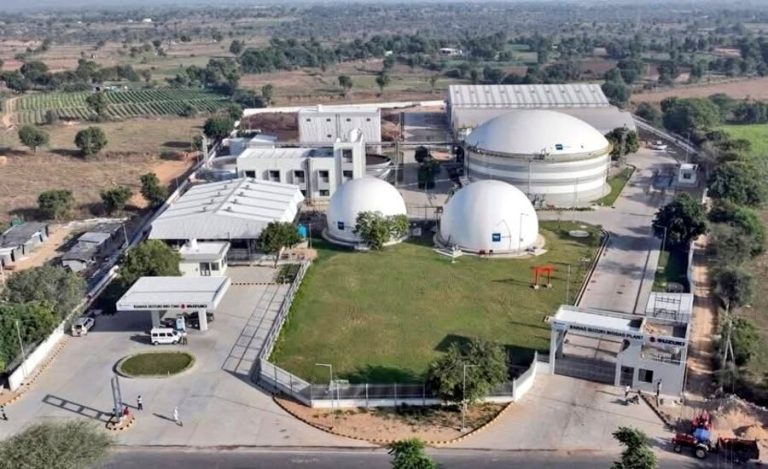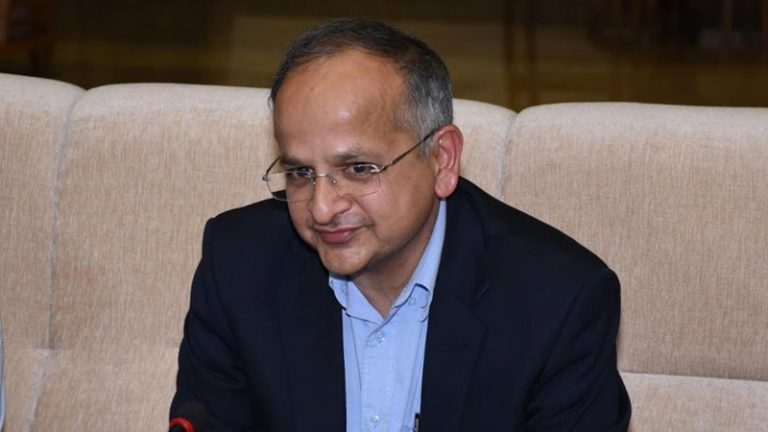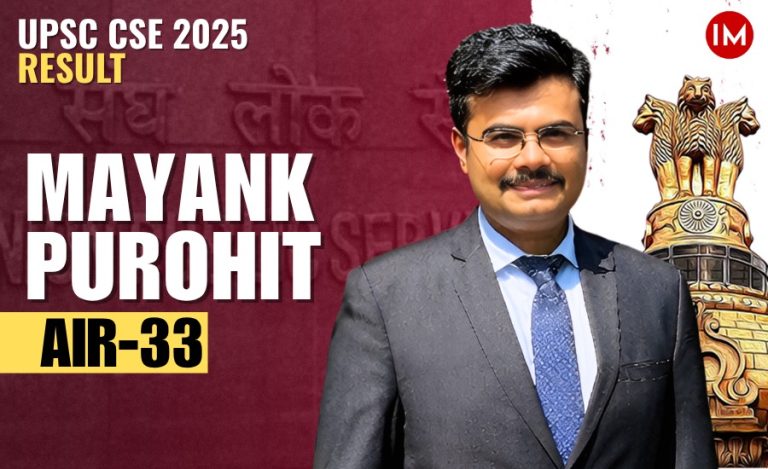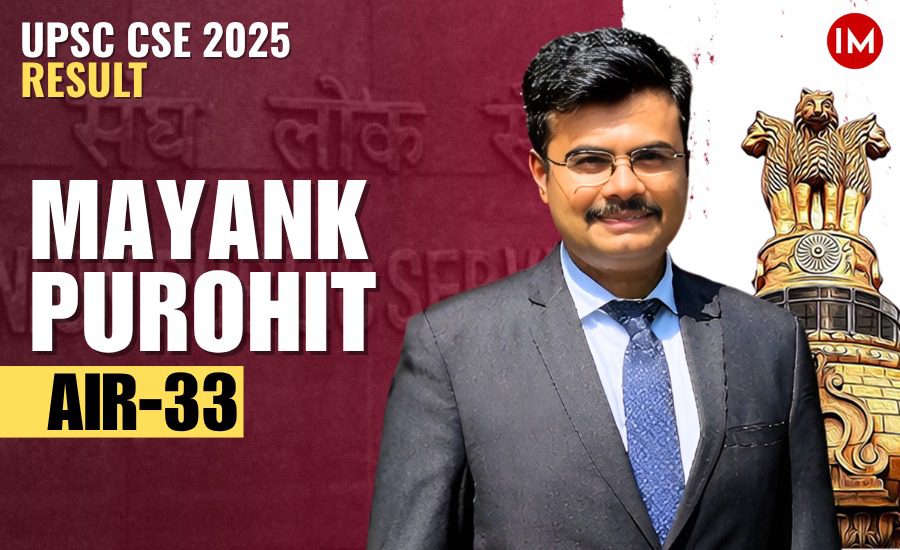
In the desert town of Phalodi, recently carved into a district from Jodhpur, dreams often grow quietly. For Mayank Purohit, they grew steadily.
Raised in a close-knit family of six: his grandparents, parents, younger brother, and now his wife, his journey carries the imprint of both tradition and transition. Marriage came just before his breakthrough attempt, adding a personal milestone to a long professional pursuit.
With a hint of humour, he reflects on the timing: “Yes, you could say that,” he says when told his wife might have brought him luck.
CHASING OPPORTUNITY BEYOND BOUNDARIES
Mayank’s early education began in Phalodi, but the absence of English-medium schools pushed him to relocate to Jodhpur. The move marked his first step beyond familiar surroundings.
From there, he followed a path many aspirants recognise: Kota for Classes 11 and 12, preparing for engineering entrance exams. That journey culminated at IIT Dhanbad, where he pursued Mining Machinery Engineering.
After graduating, he entered the corporate world, working for two years as a technologist in a cab company. But something didn’t sit right.
“I tried preparing along with the job, but it wasn’t working out,” he shared in an exclusive conversation with Indian Masterminds. The decision to quit wasn’t easy, but it was necessary.
FIVE ATTEMPTS, COUNTLESS LESSONS
Mayank’s UPSC journey wasn’t linear. It stretched across five attempts, each one shaping his approach.
He missed clearing Prelims in his first attempt and once again in between. But persistence turned the tide. He cleared Prelims three times, wrote Mains thrice, and reached the interview stage twice.
In parallel, he also secured a place in the Indian Forest Service, an experience that sharpened his understanding of governance and environmental issues.
What stands out is not just the numbers, but the evolution behind them.
A STRATEGY BUILT ON CLARITY, NOT COMPLEXITY
Mayank’s preparation wasn’t overloaded with resources; it was anchored in clarity.
For Prelims, he focused on high-weightage subjects like Polity, Economy, Environment, and Geography, ensuring no mistakes in basic questions. Previous Year Questions became his compass.
Current affairs came primarily from newspapers, supported by coaching material for revision. But one aspect gave him a distinct edge, logical guessing. Combined with a strong base, it helped him maximize scores.
For Mains, the shift was sharper. Answer writing became central, especially after leaving his job. He used the gap between Prelims and Mains to full advantage and paid special attention to Ethics (GS Paper IV), recognizing its scoring potential.
His optional subject, Physics, demanded a different discipline. “It’s technical. You have to remember derivations and practice numericals repeatedly,” he explains.
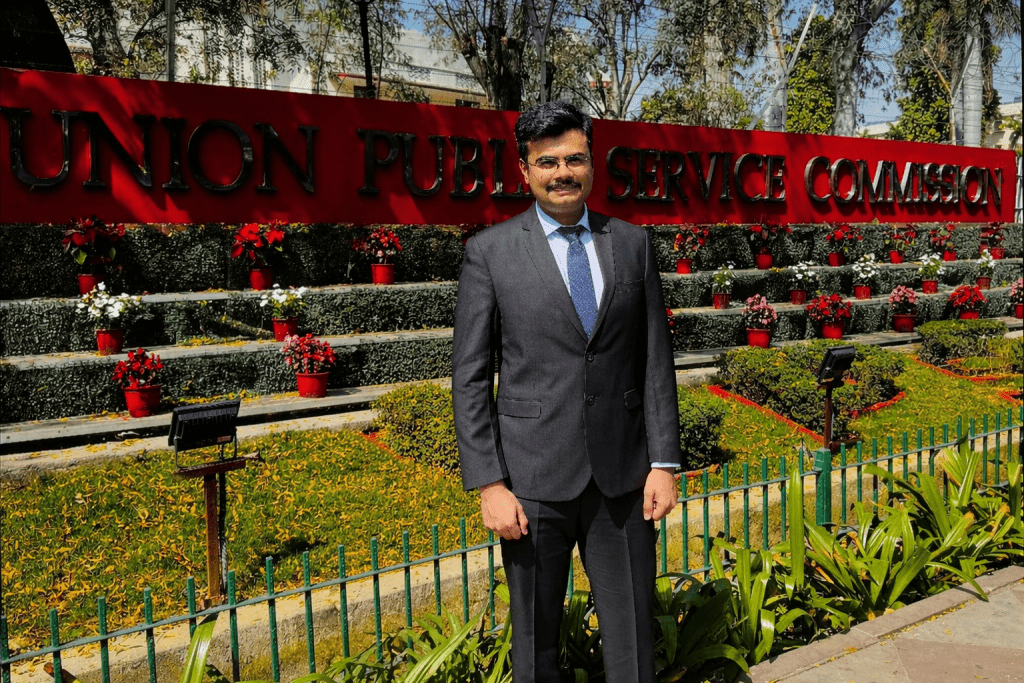
INSIDE THE INTERVIEW ROOM
By the time Mayank reached the interview stage, the unpredictability of UPSC had become familiar.
The questions were a mix of current affairs and depth-based discussions. Topics ranged from US tariff policies to forest cover trends in India, drawing from both global developments and his experience in the Forest Service.
There were also questions rooted in his background, Rajasthan, tourism, and his Detailed Application Form.
Nothing dramatic. Just a conversation testing clarity, awareness, and composure.
GROUND-LEVEL IMPACT
With a strong likelihood of entering the Indian Administrative Service, Mayank’s vision is practical.
He is drawn toward agriculture, shaped by what he has seen within his own family. But he’s equally interested in something broader… making governance work better.
From improving service delivery to integrating technology into administration, his focus remains on execution.
THE QUIET CHALLENGES BEHIND THE JOURNEY
Beyond exams, Mayank faced the less visible side of preparation: social pressure and uncertainty. Leaving a stable job wasn’t easy, especially when people around him didn’t fully understand the decision. There were also the repeated cycles of failure, each demanding a full reset.
“Failing at different stages is itself a challenge. It takes almost a year to reset and start again,” he says.
WHAT ASPIRANTS CAN LEARN
If there’s one idea Mayank returns to, it’s clarity.
“Prelims filters candidates, Mains builds your score, and Interview gives the final touch,” he explains. “So, focus heavily on Mains, especially answer writing.”
He advises aspirants to study toppers’ copies, understand writing patterns, and keep strategies simple and defined.
Because in an exam known for its unpredictability, what steadies the journey is not doing more, but doing the right things consistently.