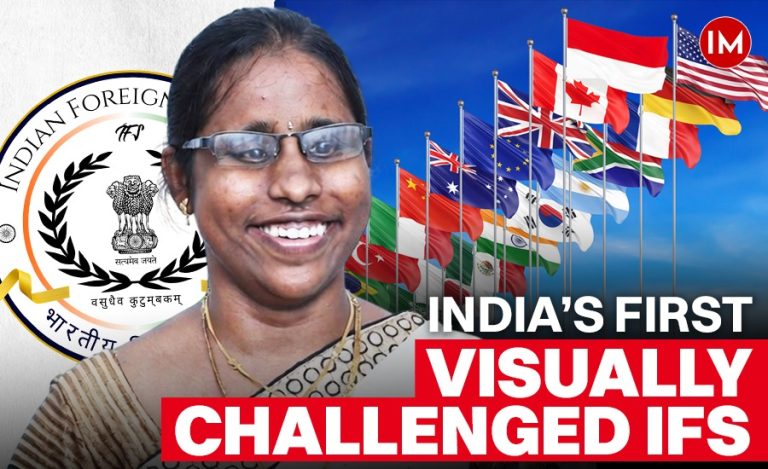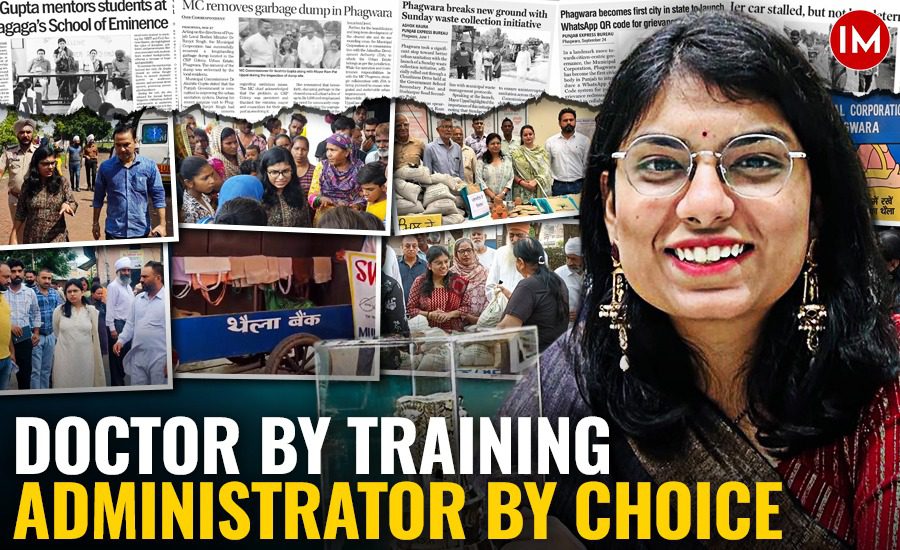
When Dr. Akshita Gupta first stepped into a hospital as an MBBS intern in Ambala, Punjab, her world revolved around patients, prescriptions, and night duties. Years later, her workplace expanded from hospital wards to district offices and field inspections. Today, she is an IAS officer of the 2021 batch, Punjab cadre, who cleared the UPSC Civil Services Examination in her very first attempt with AIR 69, carrying her medical training into the larger arena of governance and public service.
THE IDEA THAT CHANGED EVERYTHING
The seed of civil services was sown through family friends serving in the IPS and administrative services. Their stories of grassroots governance, public accountability, and real-world impact deeply influenced her. Gradually, Dr. Akshita realised that while medicine allowed her to heal individuals, administration offered a platform to improve systems that affect thousands.
Speaking to Indian Masterminds, she said, “I realised that my medical knowledge and experience could be used in a much broader way for society if I joined the civil services.” That realisation marked her transition from a clinical career to a life in public administration.
PREPARING FOR UPSC DURING MBBS
Dr. Akshita began her UPSC preparation during her internship, one of the most demanding phases of medical training. With 12–14 hour hospital shifts, finding time and energy to study was a daily challenge. Subjects like Economics, Geography and Polity were entirely new to her science-oriented background.
Her routine was rigid but effective – hospital work during the day, focused study sessions in the evenings, and revision late at night. As the Mains examination approached, she took a strategic break from hospital duties, availing 1.5 months of leave to concentrate solely on answer writing and revision.
LIFE AS AN IAS OFFICER ON THE GROUND
After joining the service, Dr. Akshita quickly found herself dealing with issues far removed from textbooks. As SDM of Shaheed Bhagat Singh Nagar, she worked extensively on child welfare and substance abuse prevention, leading the district to be recognised by the National Commission for Protection of Child Rights (NCPCR) as one of the best-performing districts in tackling drug abuse among children.
Currently serving as Commissioner, Phagwara Municipal Corporation, she has led several citizen-centric initiatives, including a WhatsApp QR code–based grievance redressal system that improved accessibility and responsiveness in local governance. Her role as Assistant Returning Officer during the 2024 Lok Sabha Elections further tested her administrative abilities under pressure, giving her valuable insights into election management and coordination at the grassroots level.
THE DOCTOR’S TOUCH IN GOVERNANCE
Her medical training continues to shape her administrative approach. Public health, sanitation, addiction, and child welfare remain areas where she feels her clinical experience adds value. Whether dealing with field staff, citizens, or elected representatives, she relies on empathy, observation, and evidence-based decision-making—skills honed during her years as a doctor.
From night duties in hospital wards to high-pressure administrative assignments, Dr. Akshita Gupta’s journey reflects a seamless blend of medical precision and administrative empathy—proof that service, in any form, begins with intent.
Also Read : Why a Doctor Chose IAS After MBBS