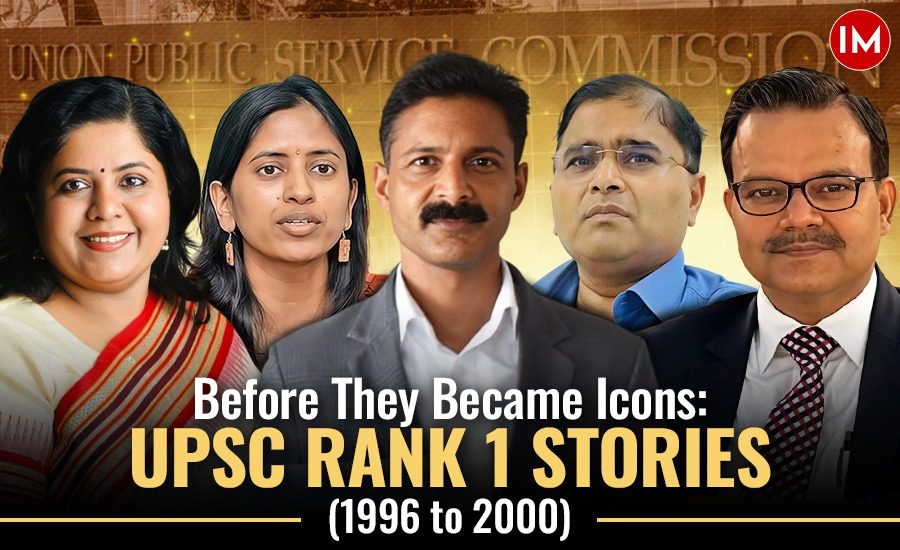
Indian Masterminds presents an exclusive series on UPSC Rank 1 toppers from 1990 onwards, tracing their journeys from uncertain beginnings, through the crucible of the examination, to the remarkable roles they occupy today.
In this second instalment, we spotlight the pioneers: the UPSC Civil Services Examination toppers from 1996 to 2000—officers who entered public service at a defining moment in India’s administrative evolution.
The late 1990s marked a period of institutional change for Indian governance. Economic reforms were settling in, technology was beginning to influence administration, and public expectations from bureaucracy were steadily shifting. The officers who topped the Civil Services Examination during this phase were not only academically accomplished but also had to adapt to a rapidly changing governance landscape.
This feature profiles five such officers—Sunil Kumar Barnwal (1996), Devesh Kumar (1997), Bhawna Garg (1998), Saurabh Babu (1999), and Vijayalakshmi Bidari (2000)—and examines how their early choices, preparation strategies, and administrative careers shaped their long-term impact.
SUNIL KUMAR BARNWAL (AIR 1, UPSC CSE 1996)
IAS, Jharkhand Cadre | 1997 Batch
Sunil Kumar Barnwal aspired to become an IAS officer from a young age, growing up in Bihar in a family that valued education and public service. He completed his schooling at R.H.T.B. High School in Bhagalpur and later moved to a hostel to prepare for engineering entrance examinations. Though age restrictions prevented him from appearing for the IIT entrance exam, he cleared multiple engineering tests, including ISM Dhanbad and Roorkee Engineering College.
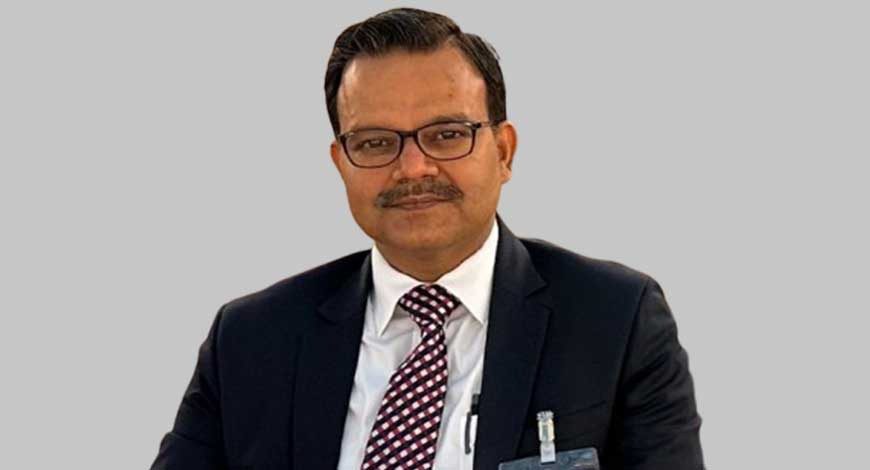
He chose Petroleum Engineering at ISM Dhanbad, where he consistently excelled, earning three gold medals during his course. Civil services, however, remained his primary goal. While studying engineering, he used vacations to prepare for UPSC, focusing on Physics and Mathematics.
After graduating in 1993, Mr. Barnwal joined GAIL (Gas Authority of India Limited). Due to age eligibility, he made his first UPSC attempt in 1995, clearing the preliminary and Mains examinations but falling short at the interview stage. He reassessed his approach, refined his preparation strategy, and continued studying alongside his job. In his second attempt in 1996, he topped the Civil Services Examination with 1,417 marks.
Over more than two decades, Sunil Kumar Barnwal has served extensively in the Government of Jharkhand, working across education, IT, industry promotion, energy, natural resource management and governance. He was also posted as IG (Prisons) from 2008 to 2009, during which he administered 26 prisons in Jharkhand and oversaw correctional initiatives such as computer training, art and painting classes, vocational training programmes, and the implementation of several IT initiatives under the Integrated Prisons Management System.
From 2015 to 2019, as Secretary to the Government, he played a central role in reforms related to industry, investment and mineral development. He later served as an additional member of the Board of Revenue before moving to the Government of India. As Joint Secretary in the Ministry of Home Affairs, he was involved in designing the Vibrant Villages Programme for border areas. Subsequently, as Additional Secretary in the Ministry of Education, he worked on implementing the National Education Policy (NEP) 2020 in Central Universities.
IAS Sunil Kumar Barnwal has also pursued advanced education mid-career, completing a master’s in public management from the Lee Kuan Yew School of Public Policy, with academic exposure at the National University of Singapore, Harvard University and Singapore government ministries. He is currently serving as the CEO of the National Health Authority.
DEVESH KUMAR (AIR 1, UPSC CSE 1997)
IAS, Himachal Pradesh Cadre | 1998 Batch
Born on July 1, 1974, in Uttar Pradesh, Devesh Kumar combined a strong technical education with a clear interest in public administration. He completed his B.Tech in Chemical Engineering from IIT Kanpur between 1991 and 1995. His academic journey continued years later with an Executive Master’s in Public Administration from Syracuse University’s Maxwell School (2014–15).
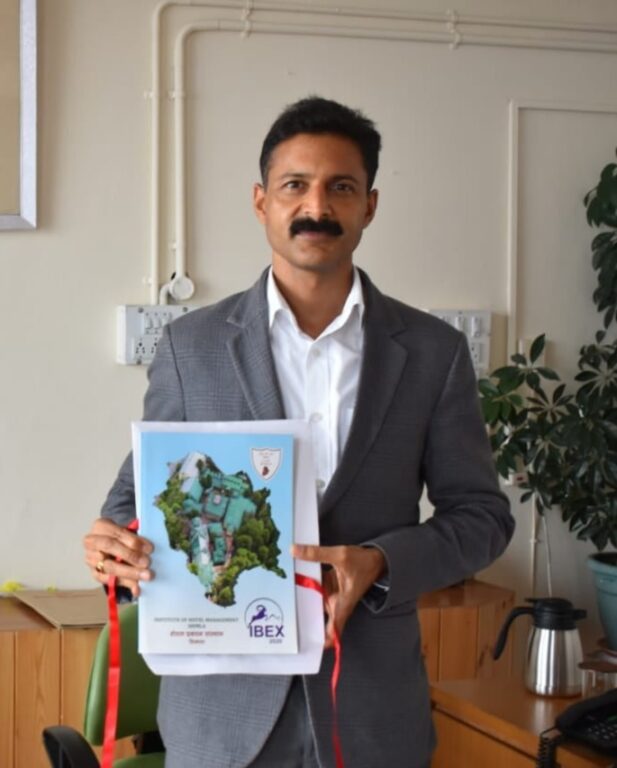
Mr Devesh topped the 1997 Civil Services Examination with chemistry and geography as his optional subjects. He was among the few candidates of the 1990s to achieve the top rank with a technical background.
Allotted to the Himachal Pradesh cadre, he has served in several senior administrative roles, including Divisional Commissioner and Secretary to the Chief Minister. His portfolio has covered departments such as General Administration, Secretariat Administration, Sainik Welfare and Parliamentary Affairs.
In June 2021, Devesh Kumar took charge as Managing Director of the Himachal Pradesh Power Corporation Limited, overseeing power sector projects and institutional management. With close to three decades in public service, his career reflects a steady progression through administrative leadership roles at the state level.
BHAWNA GARG (AIR 1, UPSC CSE 1998)
IAS, Punjab Cadre | 1999 Batch
Bhawna Garg secured All India Rank 1 in the 1998 Civil Services Examination on her very first attempt—an achievement that remains a reference point for aspirants. A chemical engineering graduate from IIT Kanpur, she had earlier topped the IIT-JEE and received the Ratan Swaroop Memorial Award for academic excellence across subjects.
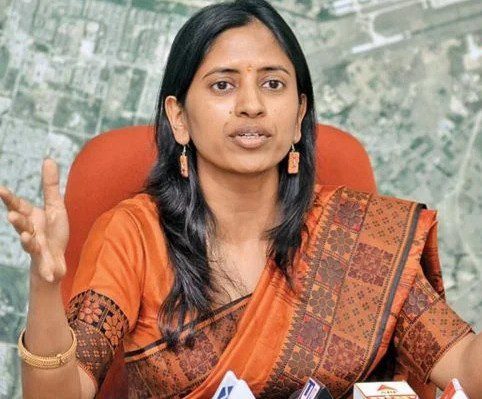
Soon after graduating, she appeared for the UPSC examination and topped the country’s most competitive recruitment process. As an IAS officer of the Punjab cadre, Bhawna Garg has handled a wide range of administrative responsibilities.
She served as the Deputy General Director at the Unique Identification Authority of India (UIDAI) under the Ministry of Electronics and Information Technology, where she was involved in strengthening Aadhaar-related services and improving technological systems in northern India.
She also served as Secretary, Employment, Technical Education & Skills; Special Secretary, Finance; Secretary, Urban Transport and Social Welfare; and Special Secretary, Science, Technology & Environment, Revenue, and Director, Disaster Management.
She has also completed a Master’s in Public Policy, Development Economics and International Development, along with a certificate in Health Policy from Princeton University.
In May 2025, she was appointed Principal Secretary, Jails, Government of Punjab. In her current role, she is focusing on modernising prison administration, including the use of technology-driven systems to improve management and oversight.
SORABH BABU (AIR 1, UPSC CSE 1999)
IAS, Uttar Pradesh Cadre | 2000 Batch
Sorabh Babu topped the Civil Services Examination in 1999. A Mechanical Engineering graduate from Uttar Pradesh University, he has often described his UPSC journey as demanding and uneven, requiring careful self-assessment and sustained effort.
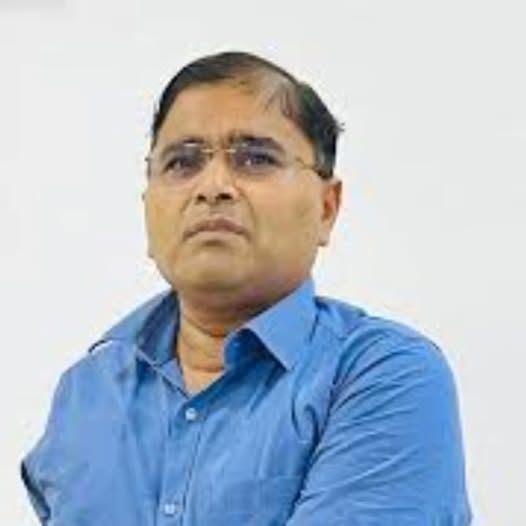
Motivated by the diversity of roles and policy exposure offered by the civil services, Mr Sorabh chose administration as a long-term career path. Over the years, he has held several senior positions in the Government of Uttar Pradesh.
Currently, he serves as Principal Secretary, Cooperation, and also holds additional charge of the Rural Development and Rural Engineering Department, overseeing programmes related to rural infrastructure, cooperatives and development planning.
Prior to this assignment, he served as Commissioner of the Food and Civil Supplies Department, where he played a key role in strengthening the public distribution system and ensuring the efficient delivery of essential commodities. Earlier, in April 2021, he held the position of Secretary, Medical Education Department, and in 2020, he was on central deputation as Director in the Department of Atomic Energy, Mumbai.
VIJAYLAKSHMI BIDARI (AIR 1, UPSC CSE 2000)
IAS, Maharashtra Cadre | 2001 Batch
Vijayalakshmi Bidari topped the Civil Services Examination in 2000 and joined the IAS in 2001. Her upbringing involved frequent relocations due to her father’s career in the IPS, resulting in schooling across eleven locations. She studied primarily in state board and missionary schools before choosing science for higher secondary education.
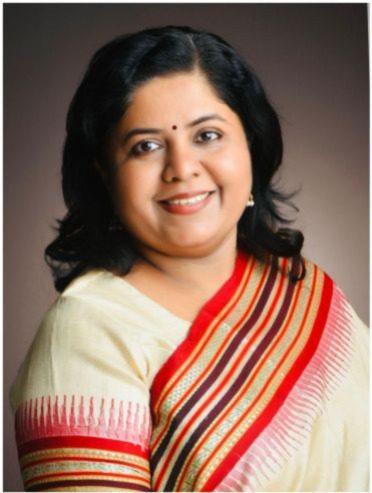
She pursued Computer Science engineering from RV College of Engineering, graduating in March 1999. Even before completing her degree, she secured multiple job offers through campus placements. In her first UPSC attempt, she secured Rank 107 and was selected for the Indian Customs and Central Excise Service, missing the Indian Administrative Service (IAS) by 35 marks. Encouraged by her family to aim higher, she reappeared and secured Rank 1 in her second attempt. Her optional subjects were Kannada Literature and Political Science & International Relations. She was the was the first woman from south India to top the exams.
Vijayalakshmi Bidari’s administrative career spans both state and central postings. She has served as District Collector, CEO of Zilla Parishad, Commissioner of Kolhapur Municipal Corporation, Director of IT, Member Secretary of the Maharashtra State Commission for Women, Regional Director at the Staff Selection Commission and Controller at URSC, ISRO.
Her work in e-governance has received multiple recognitions, including the Rajiv Gandhi Gatiman Prashasan Award and the SS Gadkari Award for Excellence in Public Service. She has also been a Chevening Gurukul Scholar at the London School of Economics and a Distinguished Humphrey Fellow in 2024. She is currently posted as Divisional Commissioner, Nagpur.
LOOKING AHEAD
The UPSC Rank 1 toppers from 1996 to 2000 entered public service at a time when administration was becoming more complex and interconnected. Their careers demonstrate how examination success is only the starting point of a much longer journey in governance.
As Indian Masterminds continues this series, these profiles offer readers and aspirants a detailed look at what sustained public service looks like—beyond ranks, marks and first postings—across decades of responsibility and decision-making.