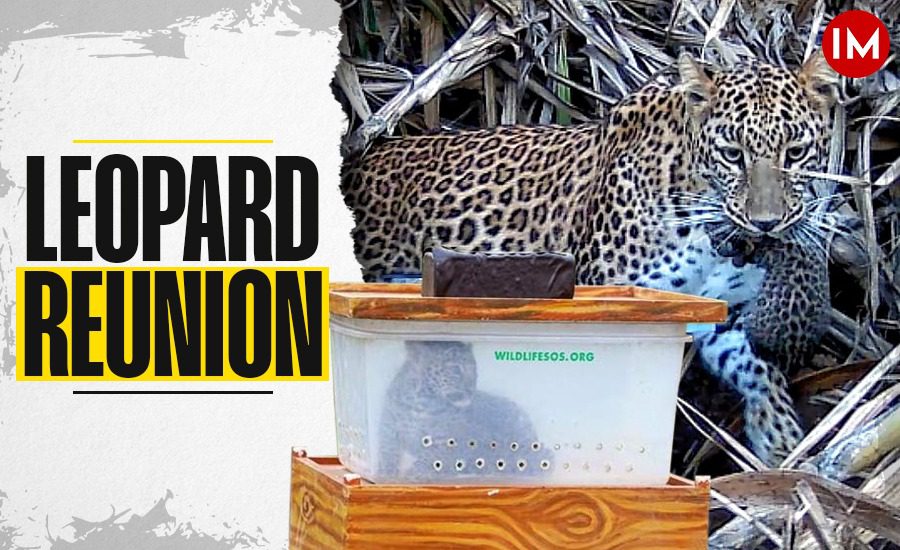
A five-day-old male leopard cub was found in a sugarcane field in Junnar and was reunited successfully with its mother on the same day by the forest staff. This is one region where the forest department is doing an excellent job of safeguarding the leopard population by ensuring the safety not only of the adult big cats but also the vulnerable cubs who wander away and invariably get lost.
Junnar taluka is in Pune district of Maharashtra which came second in the list of the states with the highest leopard population released by the central government in its ‘Status of Leopards in India 2022’ report.
The fifth cycle of leopard population assessment covered 20 states, and it was found that MP leads with Maharashtra coming a close second. The overall leopard population in India too has increased which prompted Prime Minister Modi to compliment the forest officials and staff who keep vigil day and night to ensure that leopards are kept away from harm, notably by agitated people when these big cats enter their areas.
Indian Masterminds spoke to DCF Junnar, Amol Satpute, IFS, to know more about the thriving leopard population there, and also the process they adopt to reunite lost cubs with their mother.
SUGARCANE FIELDS
The region is filled with sugarcane fields which are a favourite haunt for the leopards, just like sugarcane fields of Pilibhit in Uttar Pradesh are for the tigers. And, it is here that little cubs often get separated from their mother, while roaming out far while playing.
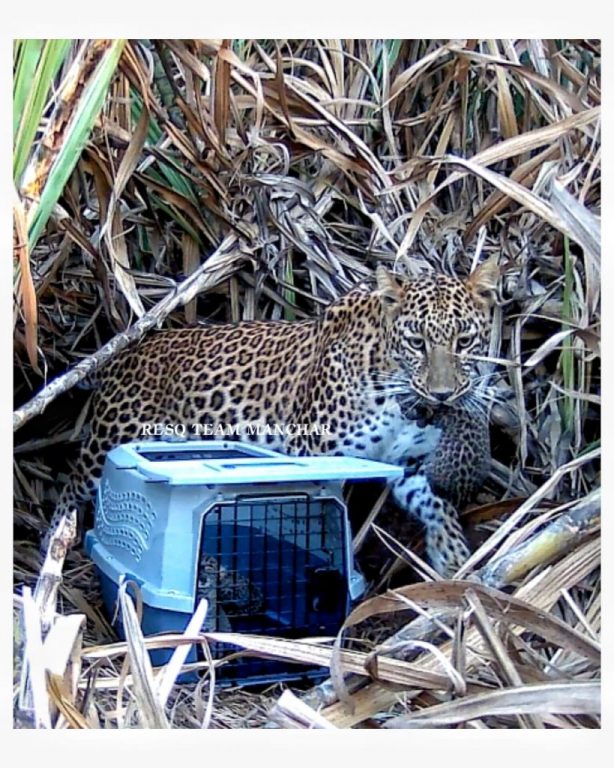
However, the good thing is, the forest department of Junnar is quick to come to the rescue of the lost cubs and reunite them with their mother. “There have been 125 such reunions in the last five years,” said Mr. Amol Satpute, DCF Junnar.
HOW REUNION IS DONE
He further informed how the cubs are reunited with their mother. Once the department finds a cub roaming alone, they immediately secures its safety. “The cub is put inside a small plastic crate with an easy opening so that when the mother comes, she can easily remove it and take the cub away with her,” he said.
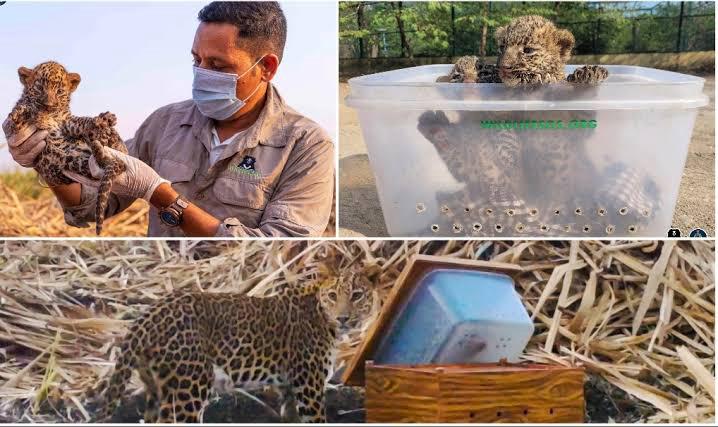
But, does not the human handling deter the mother from taking the cub with her, as most wild animals or birds seem to reject their young ones if they sense human touch on them? Mr. Satpute said, “Our staff wear gloves while handling the cubs and they leave immediately after placing it inside the crate. If the mother smells humans in the vicinity, she will not come near the crate. If necessary, our staff keep vigil from a safe distance.”
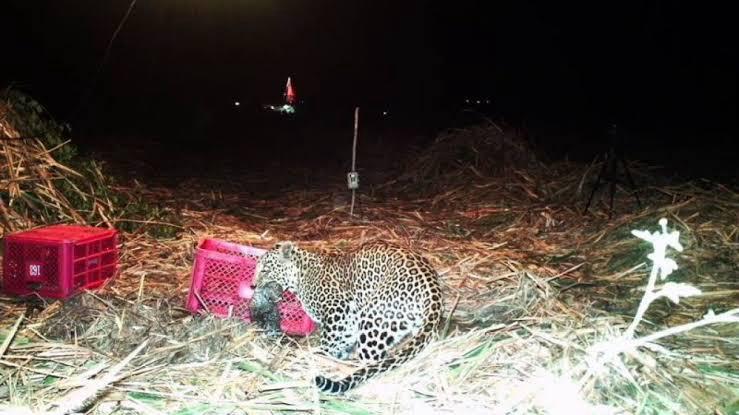
However, camera traps are placed strategically on the spot where the cub is left to capture the moments, and keep an eye for any other movements beside that of the mother leopard. “We also conduct a thorough medical examination of the cub and if deemed fit for release, then only we leave it back at the spot where it was found. The reunion is strategically planned for nighttime as leopards are primarily nocturnal animals,” Mr. Satpute added.
ALERT VILLAGERS
The forest department is alerted about lost cubs almost always by the public, which goes to show that the awareness level about protecting wildlife is high in this region. Mr. Satpute said, “They call us immediately and do not touch the cubs. In fact, they stand guard till we reach the spot. This is the result of our intensive awareness camps on the urgent need for wildlife conservation.”
As recent as last week, a leopard cub was discovered inside a sugarcane field in Junnar. Accustomed to catching glimpses of leopards in the area, the people immediately reported the incident to the forest department. The forest staff successfully reunited the 5-day-old male leopard cub with its mother near Kusur village.
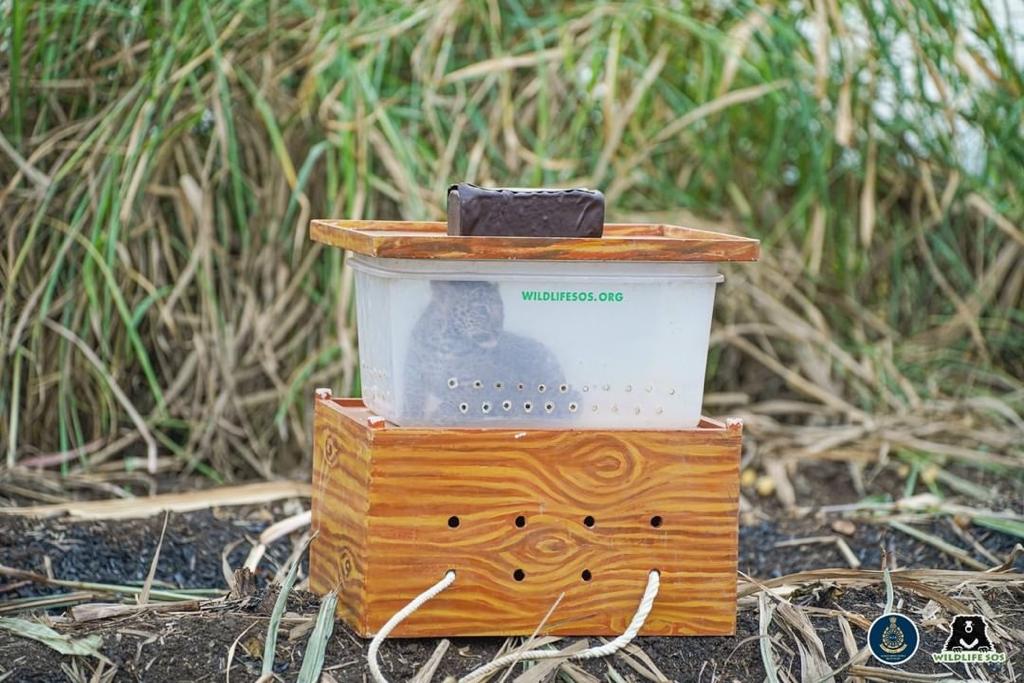
After a preliminary medical examination, the cub was left at the same spot in the evening. The mother leopard came silently in the darkness of the night and gently picked up the cub by the scruff of his neck and disappeared.
COMMUNITY PARTICIPATION
The fact that the community is actively participating in wildlife conservation along with the forest department is a healthy sign, and is one of the main reasons Junnar recorded a density of seven leopards per 100 sq km.
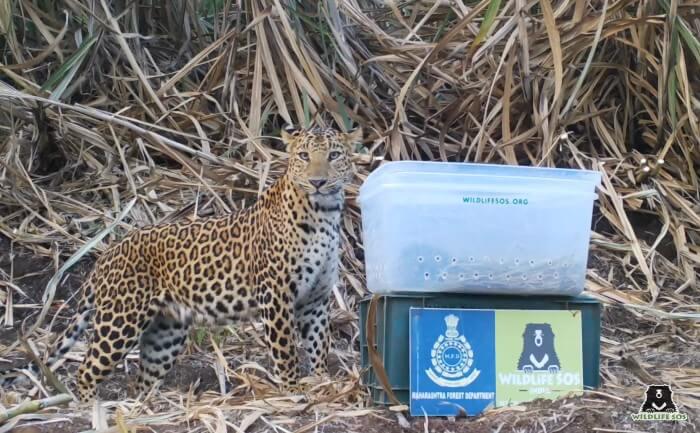
The successful reunions prove how collaborative efforts by the forest department and public are yielding the expected results. It is the harvesting season now, and farmers are very busy. Yet, they took time out to save a lone leopard cub in Junnar. This underscores the importance of raising awareness and creating empathy for wildlife among the public, especially those living close to reserved forests, so that they become custodians of our ‘wild treasures’.