Be it a metropolitan city or a tier 1 or tier 2 town, a common sight that greets people is of people begging on the roads, pavements, footpaths, and at other public spaces. The fact of the matter is, begging is a full-time occupation for many, and there are even syndicates involved in this purportedly easy but lucrative occupation. There are reports of these syndicates forcing children to beg, not hesitating to use even infants for this purpose, who are commonly seen perched on the shoulder or arms of a woman, as this heightens the sympathy factor.
Taking note of the illegality, the central government has formulated a scheme, ‘SMILE – Support for Marginalized Individuals for Livelihood and Enterprise’, to tackle the issue. And, Indore is part of the 10 cities which have been selected under the SMILE scheme. Hence, the Indore administration is focusing hard on making the cleanest city in the country beggar free, too. With a targeted approach, they have started an intensive drive towards a ‘Beggar Free Indore’.
In an exclusive conversation with Indian Masterminds, IAS officer of 2010 batch currently posted as DC of Indore, Mr. Asheesh Singh, outlined the steps being taken as part of this drive.
INCLUSIVE APPROACH
As per a report by the Ministry of Social Justice and Empowerment, that was released in 2021, there are more than 4 lakh 13 thousand beggars in the country. West Bengal topped the chart with more than 81 thousand beggars while Madhya Pradesh reported 28 thousand.
Indore district administration held its first meeting with the agenda to make the city beggar free, on 1 February. The next step was to identify the begging hotspots and build teams to tackle these. More than 40 spots, including major roads, cross roads and religious places, were identified. Finally, the campaign was launched on 8 February, with the target period being 15 days. In this first phase, the focus was solely on child beggars and how to bring them out of begging with the administration’s support.
“We wanted to take an inclusive approach. First, we wanted to identify the children, whether they were with their parents or were orphans. We counseled the parents to not put their children into begging, and later, we shifted the children to the welfare centres,” Mr. Singh said.
BUILDING TEAMS
The need was felt for building teams with officers from various departments, who can take decisions in accordance with the plan and approach, when they are counseling on field. So, seven teams were formed with officers from the Women & Child Development, Labour, and education departments, and the Municipal Corporation.
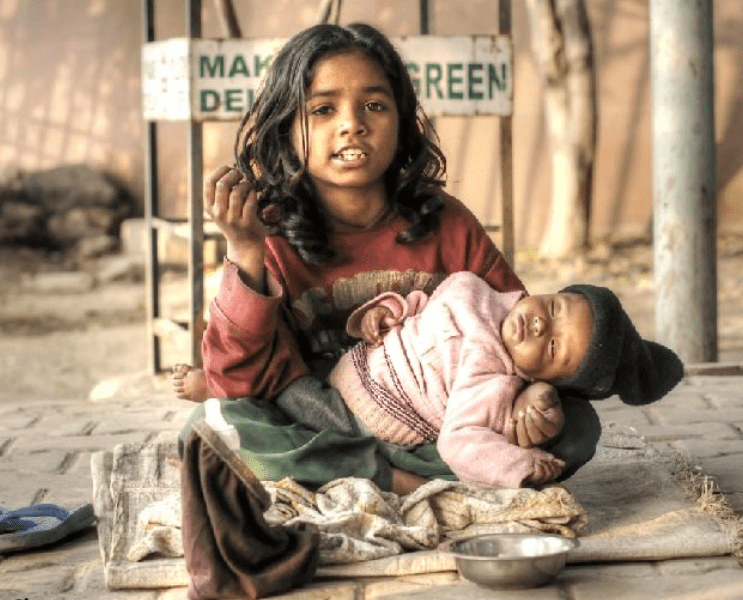
These teams started the drive on 8 February by visiting all the hotspots that were identified. They counseled the parents and asked them to admit their children in schools. Mr. Singh mentioned that the teams also warned the parents that immediate action would be taken against them, if their children will be seen begging again. The team took the same approach for the children who were living with their parents while the orphans were immediately shifted to welfare centres.
“The teams are repeating the drive in the same places to make sure nobody has been missed out,” Mr. Singh added.
PRIESTS PUT ON WATCH
He also said that it is impossible for police or the administration to be on the watch for 24 hours. So, they have collaborated with NGOs and volunteers to help out. They are also asking priests and maulavis to counsel children and parents both. During the drive, the team roped in around 80 such people to help.
“Religious places are hotspots for begging. We have asked the priests to do the counseling because we believe their word will have bigger impact on them. Also, we have requested them to report if any child is seen begging again anywhere,” Mr. Singh said.
THE RESULTS
Till now, the teams have talked to more than 116 people and have also identified 44 child beggars. Out of which, 40 have been released after the counseling of parents and making sure of their admission in schools. Four children have been taken under the care of the administration.
The teams also filed FIRs on 2-3 persons for repeating the offence. However, Mr. Singh said that till now, no racket as such has been identified. In future, if anything comes up, action will be taken accordingly.
The drive has been planned phase wise, of 15 days each, in order to make it more sustainable. Mr. Singh said, “In the next phase we will target the adults and identify their problems. Then the administration will decide whether they should be provided with livelihood opportunities or some other kind of help.”