(Part II of the two-part series on Dr. Shukla’s life and career)
After tracing Dr. Sanjay Shukla’s rigorous UPSC preparation, formative years in the Indian Forest Service, and his impactful contributions to conservation in Part I, this second feature turns to a lesser-known yet equally defining side of him—his evolution as a wildlife photographer and global nature explorer. His story moves far beyond official duties and dives into decades of curiosity, personal passion, and an exceptional commitment to understanding the planet’s most remote ecosystems.
EARLY INTEREST, REAL EXPOSURE AFTER JOINING THE SERVICE
Photography entered Dr. Shukla’s life much before the Indian Forest Service did. As he shared with Indian Masterminds, “I always had an interest in photography, but wildlife entered my life only after I joined the service.” Growing up and studying in Deoria, Gorakhpur and Allahabad meant he rarely encountered wild habitats. Much of his early photography was general — pictorial and street work — until the IFS took him into real forests.
Everything changed with his first posting in Chhindwara between 2006 and 2009. Pench Tiger Reserve was practically next door, and he visited it frequently. These visits gradually shaped his eye for animal behaviour, light, movement, and the patience required to capture a moment in nature that lasts only seconds.
The passion deepened further during later postings — in Khandwa he focused intensively on birds, insects and spiders due to the absence of tigers. Travel for work or training became opportunities to explore new habitats. If there was even a possibility of a sanctuary or national park nearby, he made it a point to visit.
Over time, he explored nearly every genre of photography, but wildlife remained his anchor. It was this pursuit that eventually took him far beyond India.
A GLOBAL EXPLORER WITH A CAMERA
What began with Pench went on to cover some of the most sought-after wildlife destinations in the world. Dr. Shukla calls Masai Mara “the most engaging wildlife landscape” he has ever experienced, and it became a favourite — he visited it multiple times.
Rwanda brought a completely different challenge. Unlike vehicle safaris, gorilla tracking happens entirely on foot, in forests where stinging nettles brush against exposed skin, and steep climbs demand considerable stamina. The thrill of seeing a gorilla family for the first time came with a dose of exhaustion; he remembers barely being able to lift his camera for the first few minutes. “You get only one hour with the gorillas, and that one hour costs 1,500 USD—it’s one of the most expensive wildlife experiences in the world,” he notes.
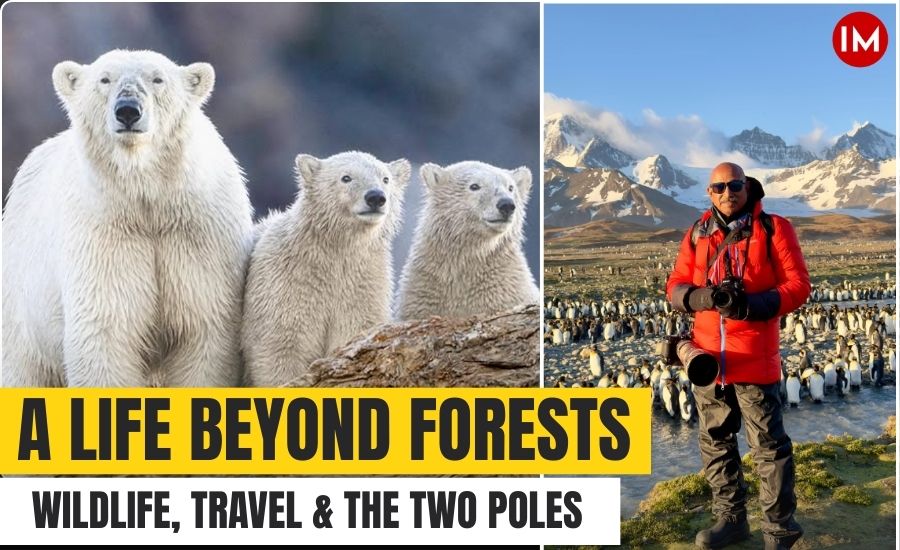
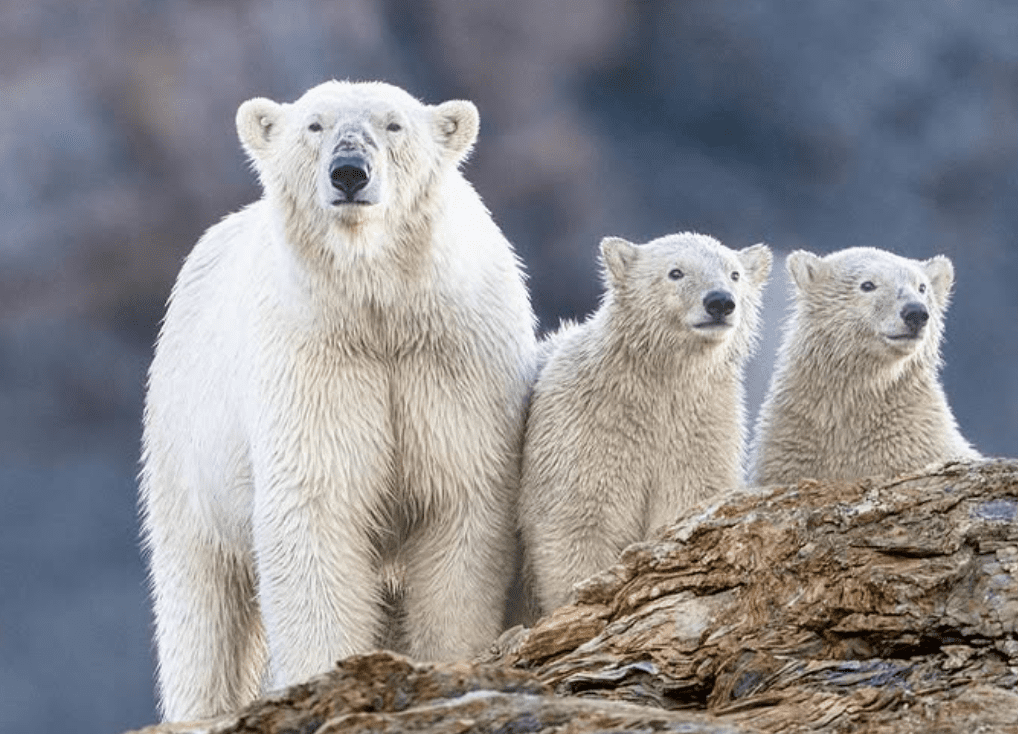
Then came the bears. After photographing sloth bears and Himalayan black bears in India, he travelled to Kargil–Drass to see brown bears in the wild. That trip planted a new idea — to see polar bears in their natural habitat. The Arctic expedition followed soon after, where he spotted a mother with two cubs within three hours of boarding the ship. Later sightings were less frequent, making every successful one more special.
And then, the journey grew even more ambitious.
REACHING BOTH POLES
For Dr. Shukla, visiting the Arctic was a long-standing dream. But once he completed that, a new thought emerged: if the northern pole was done, the southern must be next.
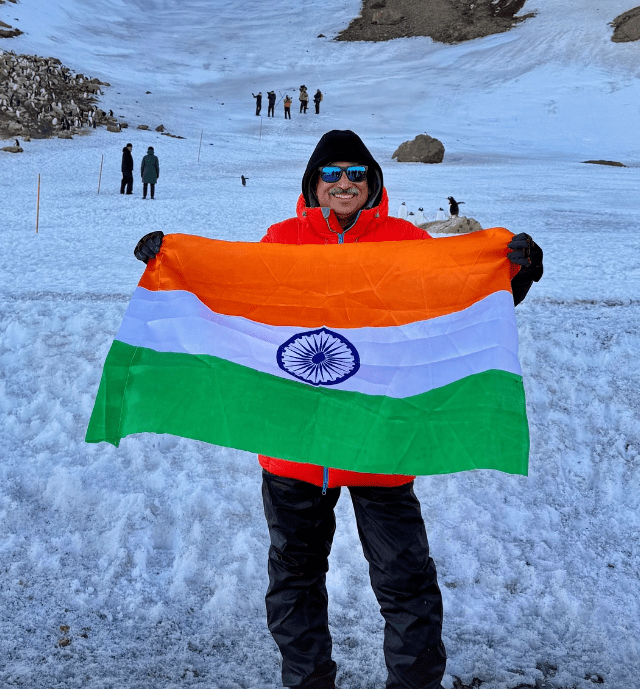
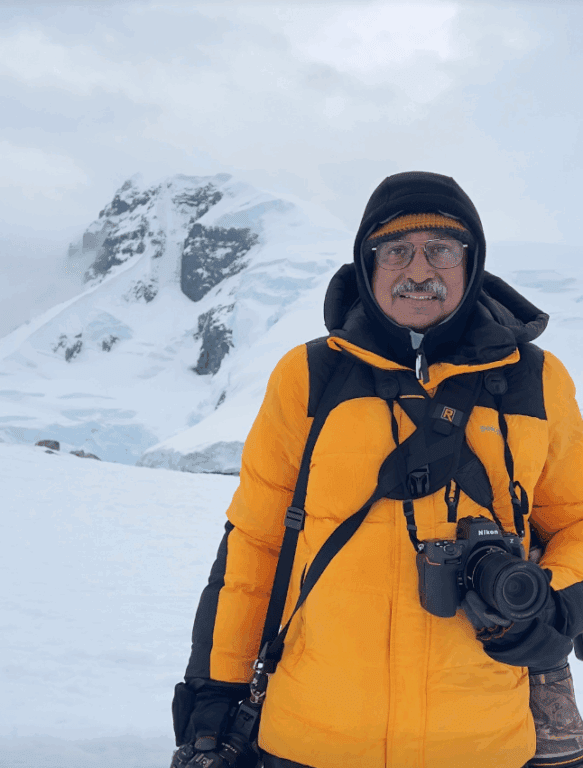
Antarctica, however, is not just a destination; it is a test. The cost is high, the routes are rough, and the Drake Passage remains one of the most unpredictable stretches of ocean anywhere in the world. Even on a relatively mild crossing, waves can reach towering heights. On land, bio-security rules demand constant vigilance — one cannot sit, rest a bag on the ground, or carry any foreign particle ashore.
Despite the challenges, the experience was extraordinary. Beyond the icebergs, glaciers and dramatic landscapes, the sheer volume of wildlife struck him. Vast colonies of penguins and seals seemed to stretch endlessly, especially in South Georgia and the Falklands. Antarctica may appear harsh and barren from afar, but up close it is a dynamic, thriving world.
With this expedition in November 2025, Dr. Shukla completed a remarkable personal milestone: he had now visited all seven continents, including both polar extremes.
A LIFE OF TRAVEL AFTER RETIREMENT
Retirement from the Government of India opened new possibilities. Without the once-necessary long leave approvals, Dr. Shukla could plan frequent trips. The year 2025 alone included Madagascar in July a place he describes as “unlike anywhere else on the planet,” home to lemurs and the highest diversity of chameleons, and another return to Masai Mara in September. By November he was onboard the ship to Antarctica.
The coming year is already set: Pantanal in northern Brazil for jaguars and Borneo for orangutans. South America also beckons for its birdlife, with Ecuador and Costa Rica high on his list.
THE ROLE OF IFS TRAINING IN EXTREME EXPEDITIONS
While these trips demand patience and passion, they also require physical endurance. Dr. Shukla credits much of that to IFS training. Daily physical sessions at the academy, long treks, field tours and later, years of walking inside tiger reserves made the body comfortable with strain. “In the forest, the more you walk, the better officer you become,” he says. Kanha Tiger Reserve required mandatory foot patrolling, which helped build strength over time.
This foundation proved extremely valuable during the polar expeditions, where cold wind, harsh terrain and the constant need to carry gear can easily overwhelm unprepared travellers.
A DEEPER UNDERSTANDING OF CLIMATE CHANGE
Travelling to diverse ecosystems has sharpened Dr. Shukla’s understanding of global environmental issues. Wildlife patterns, species distribution and even inter-species interactions are visibly shifting due to climate change. Antarctica, governed by strict conservation rules and almost zero pollution, acts as a pure reference point for scientific research. Even there, he noticed glaciers receding and ice fractures increasing — a reminder that no part of the planet is untouched.
These observations reinforced his belief that sustainable living cannot remain only a policy concept; it must translate into everyday choices.
FROM A SMALL TOWN TO ALL SEVEN CONTINENTS
For someone who grew up in Varanasi, travelling to both ends of the Earth is an extraordinary journey. Dr. Shukla speaks of it with gratitude more than pride. “I never imagined as a child that I would be able to do all this,” he says. Yet the path he carved through public service, exploration, and photography has taken him farther than he ever expected.
MESSAGE FOR YOUNG FOREST OFFICERS
For the new generation entering the Indian Forest Service, Dr. Shukla’s advice is clear: master your professional responsibilities, but also expand your world. Visiting well-managed conservation projects worldwide helps officers understand what works, what fails, and what can be adapted in India. Such exposure, he believes, enriches an officer’s perspective and allows them to serve wildlife, communities and governance systems more effectively.
From Pench to the polar regions, from gorillas in Rwanda to penguins in Antarctica, Dr. Sanjay Shukla’s journey is a reflection of deep curiosity and a lifelong relationship with nature.