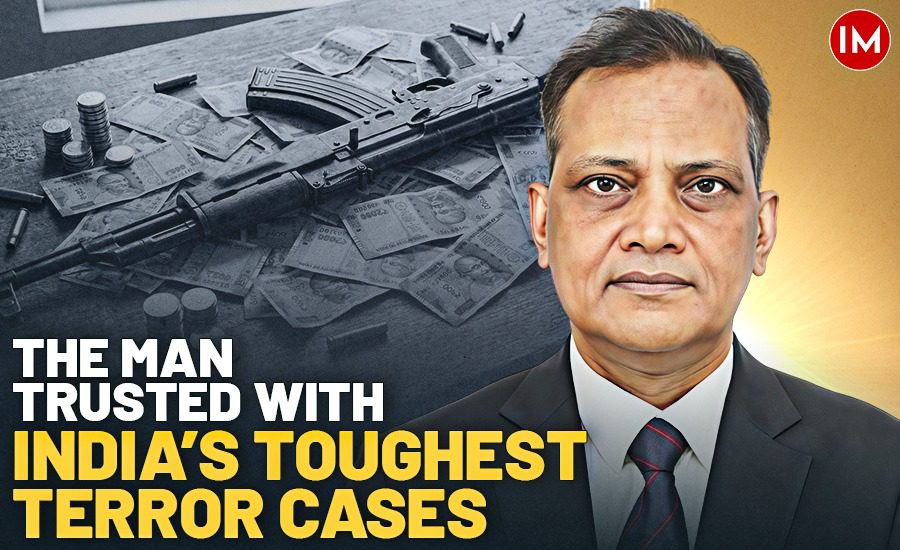
Leadership in national security is often defined less by public visibility and more by the weight of decisions taken in silence. For over three decades, Rakesh Aggarwal has worked across India’s most sensitive investigative and operational institutions – where outcomes matter more than optics, and precision outweighs rhetoric. From complex corruption probes to counter-terror operations and institutional reform, his career has unfolded largely away from public glare. As he assumes charge as Director General of the National Investigation Agency, Aggarwal brings with him not just rank and seniority, but an accumulation of institutional memory, investigative rigour, and a reputation for measured, fact-driven leadership – qualities that now anchor India’s premier counter-terror agency at a time of evolving security challenges.
STRONG ACADEMIC FOUNDATION
Hailing from Haryana, Rakesh Aggarwal brings a rare combination of technical knowledge and management expertise to policing. He holds a Bachelor’s degree in Mechanical Engineering and a Master’s degree in Management, qualifications that have shaped his structured, analytical, and efficiency-driven approach to leadership.
After clearing the UPSC examination in 1993, he joined the Indian Police Service in 1994 and began his career in the Himachal Pradesh cadre, gaining on-ground experience in law and order, administration, and field policing before moving to central deputations.
EXPERIENCE ACROSS ELITE SECURITY AGENCIES
Over more than three decades, Aggarwal has served across almost every major pillar of India’s internal security framework. His career includes key assignments in the Central Bureau of Investigation (CBI), National Security Guard (NSG), Special Protection Group (SPG), Border Security Force (BSF), Central Reserve Police Force (CRPF), and the National Investigation Agency (NIA).
He first joined the CBI as a Superintendent of Police and was among the early officers associated with the agency’s cybercrime wing, established in the early 2000s. His work in complex investigations and organisational management led to his promotion as Deputy Inspector General and later Joint Director.
His contributions to policing and investigation were recognised with the President’s Police Medal for Meritorious Service in 2010, followed by another President’s Medal in 2016.
A DISCIPLINED AND DECISIVE LEADER
Aggarwal is widely regarded within the service as a disciplined, outcome-oriented administrator. During his tenure at the CBI, he headed a committee tasked with identifying non-performing officials, which led to several compulsory retirements under Section 56(J) of the Fundamental Rules—a measure aimed at improving institutional efficiency and accountability.
Colleagues describe him as firm yet fair, with a strong emphasis on timely decision-making. He was known for ensuring that disciplinary proceedings did not linger and for placing trust in his teams once responsibilities were assigned. His approach to public expenditure has also drawn attention; Aggarwal consistently discouraged unnecessary spending and emphasised financial prudence, even in matters where he was formally entitled to higher privileges.
STEERING SENSITIVE AND HIGH-PROFILE CASES
Aggarwal’s second tenure at the CBI, beginning in 2019, coincided with a phase of intense public and political scrutiny. As Joint Director and head of the Delhi Zone, he oversaw several sensitive investigations, including cases linked to alleged corruption in government departments and pending probes related to the 2010 Commonwealth Games.
During this period, the CBI filed a closure report in the Satyendar Jain case after examining multiple aspects of the allegations, a report later accepted by a Delhi court. At the same time, the agency registered and pursued the Delhi excise policy case, leading to high-profile arrests. Officials familiar with his work note that Aggarwal maintained a fact-based and legally rigorous approach, irrespective of the profile of the individuals involved.
RISE WITHIN THE NIA
Aggarwal’s transition to the NIA marked a natural progression in his career focused on internal security and counter-terrorism. He rose through the ranks to become Additional Director General, and in September 2025 was appointed Special Director General through an in-situ upgradation, effectively making him the agency’s operational backbone.
Following the repatriation of the then DG, Aggarwal was entrusted with additional charge of the NIA, ensuring stability at a time when the agency was engaged in investigations related to terror financing, radicalisation networks, and cross-border linkages. His formal appointment as DG in January 2026 reinforced the government’s confidence in his leadership.
LEADING AT A CRITICAL JUNCTURE
As Director General, Rakesh Aggarwal takes charge of the NIA at a time when security challenges are increasingly complex and transnational in nature. The agency’s mandate continues to expand, requiring close coordination with state police forces, central agencies, and international partners.
With decades of experience across investigative, operational, and protective roles, Aggarwal brings institutional depth, operational clarity, and administrative stability to the position. His tenure is expected to focus on strengthening investigative rigour, maintaining continuity in sensitive cases, and steering the NIA through the evolving landscape of national security threats.
In a system where credibility and competence are paramount, Rakesh Aggarwal’s appointment signals a continued emphasis on experience-driven leadership at the heart of India’s counter-terror framework.