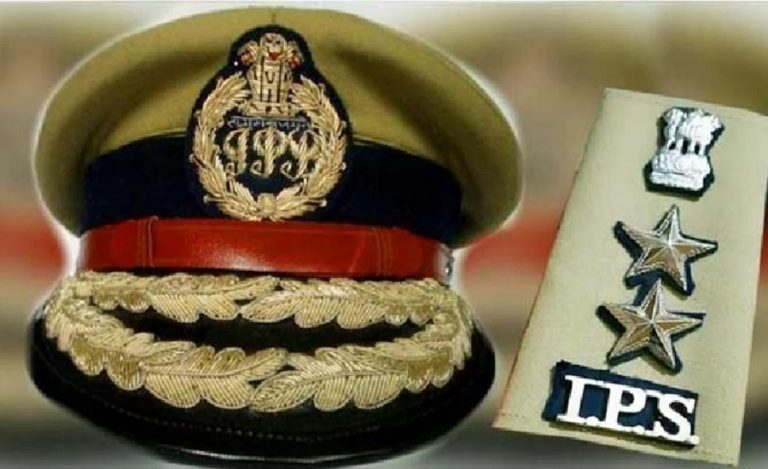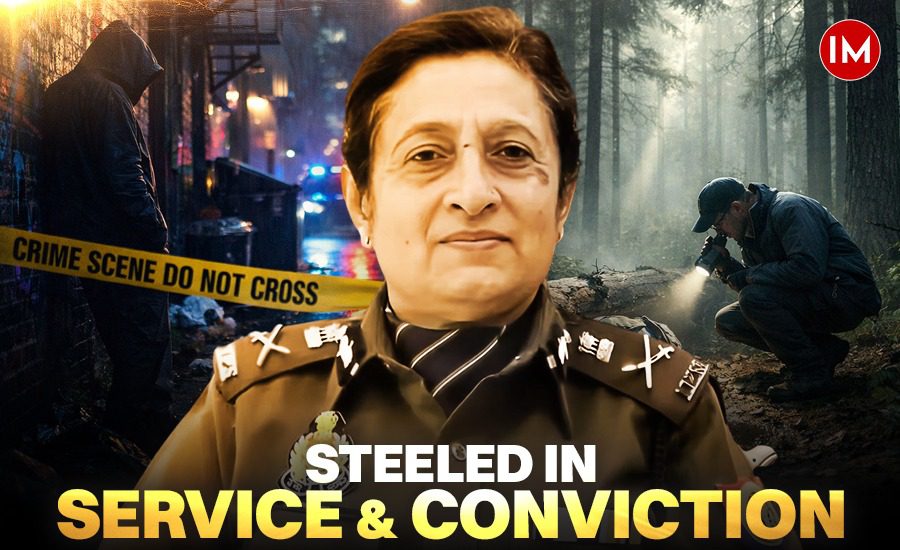
For Tilotama Varma, policing was not merely a career choice—it was almost a calling. The uniform, the discipline, and the sense of public duty were part of her world from the beginning. Her father himself served in the Indian Police Service, and the idea of serving the nation through policing took root early.
Yet the real significance of that legacy became evident only years later, when she had already begun carving her own identity as a tough and principled officer.
Watch her interview here:
One of the most emotional moments in her career came after she received national recognition. A call came from Rashtrapati Bhavan to her father. It was a moment of immense pride. “For a father,” she reflected, “to feel proud of his daughter’s work is something very special.” For Tilotama Varma, the moment symbolised not just personal achievement but the fulfilment of a family’s shared values of service and integrity.
Also read: How Surinder Choudhary Uses Long-Distance Running to Stay Mentally Strong in a High-Pressure Police Career
A Field Officer at Heart
Despite working in some of the most complex investigative and administrative environments, Varma describes herself in the simplest possible terms: a field officer. “I was always a field officer,” she says.
The statement sums up her policing philosophy. For her, the real essence of policing lies not in files and offices but in understanding ground realities—people, crime patterns, and the social context in which law enforcement operates.
That philosophy became particularly important during her tenure with the Central Bureau of Investigation (CBI), an institution known for handling politically sensitive cases and high-profile investigations.
Varma acknowledges that pressures do exist. “Political pressures come, no doubt about it. It is an open secret,” she says candidly. But the strength of an investigating officer lies in maintaining professional integrity.
Her guiding belief is simple yet powerful: the pen is mightier than the sword. Evidence, documentation and honest investigation ultimately prevail over pressure and influence.
Investigating Power
Her time in investigative roles brought her face-to-face with some of the most powerful people in the country. Investigations she handled involved political figures at the highest levels.
At least one chief minister and several ministers were investigated during that period, and in some cases convictions followed. For Varma, such moments reaffirmed the importance of an independent investigative system.
She also points out that officers chosen for the CBI are already among the best in the system. The expectation from them is not just professional competence but moral courage.
Investigations, she believes, demand meticulous attention to detail and the ability to remain detached from external pressure.
Fighting Wildlife Crime
Another fascinating chapter of her career unfolded in wildlife crime enforcement—an area often overlooked but deeply linked to organised crime networks.
When she entered the field, the situation was alarming. Around 2005, India’s tiger population had dropped to nearly 1,400. Poaching networks were active and sophisticated, often linked with international trafficking syndicates.
The crimes were brutal and highly organised. In some cases, poachers used powerful weapons like AK-47 rifles to hunt rhinos. Wildlife parts—horns, skins and bones—were smuggled across borders through elaborate trafficking chains.
Startling Realities
Investigations revealed startling realities. Sometimes a single vehicle would carry weapons, narcotics, and rhino horns together—evidence of how wildlife crime overlapped with other forms of organised crime.
Varma and her team responded with a systematic strategy. They developed an extensive data bank of nearly 3,000 suspected poachers, combining intelligence inputs from multiple states. Tracking systems were strengthened and inter-state coordination improved.
Gradually, enforcement became more focused and effective. The results were visible as wildlife protection efforts gained momentum and conservation outcomes improved.
But she believes the battle against wildlife crime is far from over. Scientific investigation — particularly wildlife forensics —is the future of conservation policing.
Managing the Unimaginable
Among the most challenging assignments of her career was managing security and coordination during the Maha Kumbh, one of the largest human gatherings on earth.
For any administrator, the event represents an enormous logistical and security challenge—millions of pilgrims arriving in a limited space over a short period.
For Varma, it required planning at an unprecedented scale.
Every detail had to be examined with precision—crowd movement, security deployment, disaster response, coordination with multiple agencies, and continuous monitoring.
Such events test not just policing skills but administrative vision and teamwork.
The Need to Reinvent Policing
Looking at the future of law enforcement, Varma believes Indian policing must constantly evolve.
Training and retraining, she emphasises, are essential. Crime patterns are changing rapidly, driven by technology, global networks and new forms of organised crime.
Investigators today need knowledge of digital evidence, forensic science, data analysis and inter-agency cooperation.
Without continuous learning, even experienced officers risk falling behind.
A Career of Quiet Resolve
Tilottama Varma’s career reflects a blend of courage, professionalism and quiet determination. Whether dealing with powerful political figures, dismantling wildlife trafficking networks, or managing massive public events, she has approached each challenge with the same clarity of purpose.
Her journey also reflects a deeper truth about policing: behind the uniform lies a human story—of values learned early, of pride shared with family, and of the unwavering belief that integrity ultimately prevails.
For Varma, the essence of service remains unchanged.
Stand firm, follow the evidence, and let the truth speak through the pen.
Also read: How IFS Prajesh Kanta Jena Empowered Women & Youth at Palamau Tiger Reserve