For decades, the corridors of South Block were defined by the finesse of “soft power”—cultural festivals, linguistic parity, and the slow grind of multilateral treaties. However, as India marches toward its “Viksit Bharat 2047” goals, a seismic shift has taken place. The new frontier of the Indian Foreign Service (IFS) is no longer just about territory or trade in goods; it is about Energy Sovereignty.
Today’s Indian diplomats have evolved into Energy Warriors. They are navigating a world fractured by the Russia-Ukraine conflict, shifting American trade policies, and the volatility of the Middle East. From the deep-water offshore blocks of Guyana to the pre-salt basins of Brazil and the sanction-heavy corridors of Moscow and Caracas, the IFS is leveraging India’s massive domestic demand to rewrite the global energy order.
The Architects of the “National Interest” Doctrine
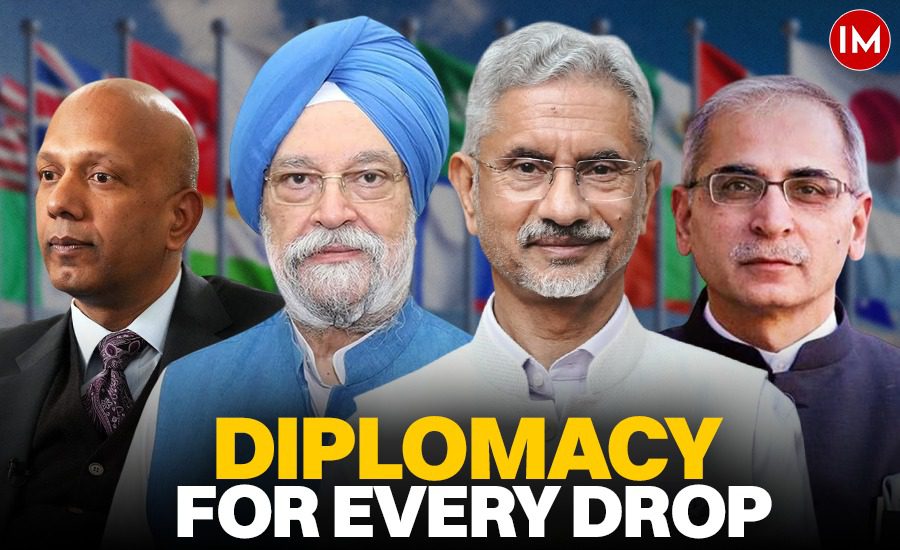
At the apex of this shift are two individuals who have blurred the lines between foreign policy and energy procurement: Foreign Minister Dr. S. Jaishankar and Petroleum Minister Mr Hardeep Singh Puri, both former ace diplomats themselves.
The Strategist
Dr. S. Jaishankar, Minister for External Affairs
A 1977-batch IFS officer and former Foreign Secretary, Dr. Jaishankar, has transformed energy procurement into a moral and strategic imperative. His “Jaishankar Doctrine” posits that India’s primary duty is to its own consumers. When Western capitals pushed for a total decoupling from Russian hydrocarbons in 2022-23, Jaishankar’s intellectual defence—notably his assertion that “European problems are not the world’s problems”—provided the diplomatic shield for India to increase its share of Russian oil from 1% to nearly 40%.
The Bridge
Mr. Hardeep Singh Puri, Minister for Petroleum & Natural Gas
If Jaishankar is the architect, Hardeep Singh Puri is the bridge. A 1974-batch IFS veteran, Puri’s background as India’s Permanent Representative to the UN gives him a unique “insider-outsider” advantage. He speaks the language of the oil markets and the UN Security Council simultaneously. Puri’s role is to translate diplomatic manoeuvres into commercial realities, ensuring the Ministry of External Affairs (MEA) and the Ministry of Petroleum (MoPNG) work as a single, cohesive unit to secure adequacy, affordability, and reliability.
Navigating Russian Labyrinth
Vinay Kumar (Ambassador to Russia)
The most critical theater for Indian oil diplomacy remains Russia. As the West imposed price caps and sanctions, India needed a “Mastermind” on the ground in Moscow to keep the taps flowing without triggering secondary sanctions.
Vinay Kumar (IFS: 1992), an IIT-Kharagpur graduate, took over the Moscow mission at a pivotal moment. His background in “conflict zones” like Afghanistan and Myanmar made him the ideal candidate to handle the complexities of the Russia-Ukraine energy landscape.
Kumar is tasked with the delicate “Managed Decline” or “Strategic Stabilization” of Russian oil imports. While global pressure mounts, The Negotiator Mr. Kumar ensures that technical payment channels—such as the Rupee-Vostro accounts—remain functional. He navigates the logistics of the “shadow fleet” and ensures that Indian refineries continue to receive the “Urals” grade crude at a discount that saves the Indian exchequer billions of dollars.
The American Pivot
Vinay Mohan Kwatra (Ambassador to the USA)
As India balances its Russian intake, it must simultaneously appease its most critical strategic partner: The United States. This requires a diplomat who understands both the oil rigs of Texas and the policy desks of Washington D.C.
Vinay Mohan Kwatra (IFS: 1988), the former Foreign Secretary, is arguably the most influential diplomat in the current cadre. Known for his clinical execution, Kwatra’s mission in Washington is to manage the India-US Energy Security Partnership.
With the US becoming one of India’s top five oil and LNG suppliers, Kwatra uses this “commercial dependency” as a lever. By committing to multi-billion dollar LNG deals with American firms, he softens the friction caused by India’s Russian purchases. In 2026, his role has been vital in negotiating tariff exemptions for Indian goods in exchange for increased off-take of American shale gas, effectively turning energy into a tool for broader trade peace.
The South American Frontier
With the Middle East remaining a tinderbox, the IFS has looked toward the “Unconventional Markets” of the Western Hemisphere. This is where the technical brilliance of the younger senior cadre comes into play.
The Asset-Securer
Dinesh Bhatia (Ambassador to Brazil)
Dinesh Bhatia (IFS: 1992) represents the new breed of tech-savvy diplomats. An Electronics Engineer by training, Bhatia’s approach is data-driven. In Brazil, he has presided over an 80% year-on-year increase in crude imports.
Bhatia is moving India beyond a simple buyer-seller relationship. Under his watch, Indian PSUs like ONGC Videsh (OVL) have invested over $3.5 billion in Brazilian offshore “pre-salt” basins. By securing “equity oil”—where India owns a share of the field itself—he is ensuring that India’s energy security is built on ownership, not just contracts.
The Greenfield Specialist:
Dr. Amit S. Telang (High Commissioner to Guyana)
Guyana is currently the world’s fastest-growing oil economy. Dr. Amit S. Telang has been instrumental in operationalizing the 2024 Hydrocarbon MoU. In a country where ExxonMobil holds significant sway, Telang has positioned India as a “Developmental Partner.” He offers Indian expertise in refining and digital-twin technology in exchange for long-term supply contracts, ensuring India isn’t priced out by Western majors.
The “Frozen” Assets:
Venezuela and Iran
Perhaps the most challenging roles are held by those in nations under heavy US sanctions. Here, diplomacy is a waiting game of high-stakes patience.
The Re-Entry Expert:
P.K. Ashok Babu (Ambassador to Venezuela)
P.K. Ashok Babu (IFS: 2007) is a “frontier diplomat.” As the US Treasury began easing some restrictions on Venezuelan oil to displace Russian barrels in the global market, Babu moved swiftly.
His Role: He is the point man for reclaiming India’s “dividends.” India has millions of dollars in trapped assets in the Orinoco Belt fields (San Cristobal project). Babu’s daily engagement with the Venezuelan oil ministry (PDVSA) is focused on ensuring that when the oil flows, it flows toward Indian shores first to settle old debts.
The Connectivity Guardian: Rudra Gaurav Shresth (Ambassador to Iran)
In Tehran, Rudra Gaurav Shresth (IFS: 1999) manages a relationship that is currently “energy-dry” but strategically “resource-rich.” While India stopped importing Iranian oil due to CAATSA sanctions, Shresth ensures the infrastructure remains ready.
Shresth focuses on the Chabahar Port and the International North-South Transport Corridor (INSTC). By keeping the transit routes alive, he ensures that the moment geopolitical winds shift, India is the first in line to resume imports from its closest hydrocarbon neighbor.
How the Levers are Turned
These diplomats do not work in isolation. They utilize a specific toolkit of “levers” developed by the MEA’s Economic Diplomacy division:
Demand Aggregation: Diplomats use India’s status as the world’s third-largest consumer (set to drive 25% of global demand growth) as a “carrot.” They tell producers: “Give us a fixed-price deal for 10 years, and you have a guaranteed customer for 1.4 billion people.”
Strategic Multi-alignment: By simultaneously signing deals with the US and Russia, the IFS prevents India from being “locked in” to any single geopolitical bloc.
The Biofuel Lever: Through the Global Biofuel Alliance (GBA), Indian diplomats are creating a new “OPEC for Clean Energy,” co-opting countries like Brazil into a new value chain where India sets the standards.
The Blueprint for Viksit Bharat
The mission of the IFS has fundamentally evolved. The “Masterminds” in South Block and in missions abroad now spend as much time analyzing Brent futures and refining margins as they do on consular affairs or border disputes.
By securing long-term deals in the Americas, navigating the Russian labyrinth, and keeping the Iranian and Venezuelan doors ajar, these officers have ensured that India’s growth engine never runs out of fuel. They have turned energy from a vulnerability into a strategic strength. As India moves toward 2047, these Energy Warriors remain the silent architects of the nation’s industrial future, securing every drop of energy needed to power the dreams of a billion-plus citizens.
(The author is Mr. Rishi Raj Vyas who is GM (E&T), Corporate Infocom Services, ONGC)