Crime scenes often speak in silence. A bloodstain, a fingerprint, a strand of hair or a forgotten object can hold the answer to a complex case. But that evidence becomes meaningful only when investigators know how to collect, preserve and interpret it.
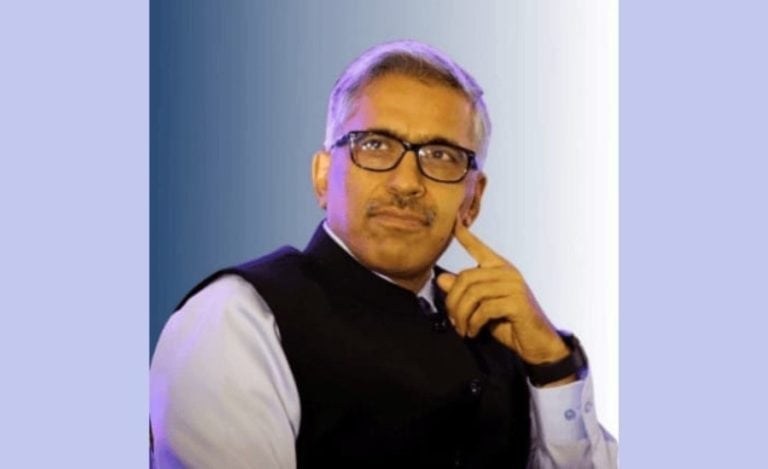
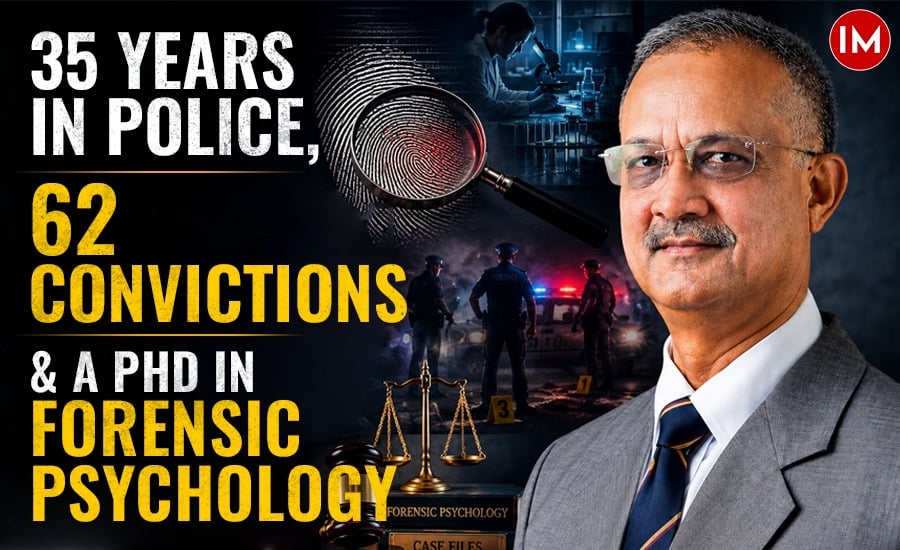
For Dr Keshav Kumar, a 1986-batch IPS officer of the Gujarat cadre, forensic science became much more than a specialised subject. Over nearly 35 years in the police service, he turned it into a professional skill and used it to investigate difficult cases, strengthen convictions and train generations of police officers.
Even after retirement, his work has continued. In 2021, he began devoting himself fully to his PhD in Forensic Psychology, which he completed in 2025. Today, he trains police officers and forensic professionals and advises governments on scientific investigation.
Speaking to Indian Masterminds, Dr Kumar recalled how an unexpected turn in his education eventually shaped his entire career.
Also Read – ‘My Path Has Not Been Straight’: Shakeel Ahmad Ganie’s Journey to the IRS
FROM HISTORY TO FORENSICS
Dr Kumar’s journey towards forensic science did not begin with a science degree.
As a student, he initially wanted to become a doctor and studied Biology. But his weak performance in Mathematics made him reconsider his choice.
After briefly trying Commerce, he eventually moved to the humanities and studied History. He completed his graduation from St Stephen’s College and later pursued postgraduate studies before clearing the UPSC examination and joining the Indian Police Service.
It was at the National Police Academy, Hyderabad, that forensic science caught his attention.
“When I saw forensic science in the training syllabus, I was very happy because it was almost something like medicine. It gave me an opportunity to do something connected with medical science,” Dr Kumar told Indian Masterminds.
He soon realised that forensic science could give an investigator an advantage.
“Whatever is taught to us in the IPC, CrPC and Evidence Act is common. But the use of forensics was a skill. It was an art. I kept experimenting with its application during investigation and gradually mastered that skill,” he said.
Watch the Interview Here :
WHEN FORENSICS BECAME A GAME CHANGER
His interest became practical when he was posted in Gujarat.
The turning point came during his tenure as DIG, CID Crime, Gandhinagar. His office was located close to the forensic science laboratory, allowing him to work closely with forensic experts.
Old and undetected cases regularly came to the CID. Dr Kumar began using forensic evidence to reopen investigative leads.
“I used a lot of forensics for detecting old cases and solved a number of undetected cases through forensic science,” he said.
Those four-and-a-half years became one of the most important phases of his professional life. Later, while serving in the CBI, he continued working with forensic investigation. For Dr Kumar, the objective was straightforward: a good police officer should not merely investigate a case but should be able to take it to conviction.
“I felt that through forensics we can ensure conviction of an accused. A good police officer is one who gets conviction in the cases he has investigated,” he explained.
His experience eventually contributed to 62 convictions, according to the profile shared during the conversation.
THE FORENSIC MISTAKE THAT CAN DESTROY A CASE
Movies often make forensic investigation look simple. Evidence is collected, sent to a laboratory and a report arrives.
Reality is very different.
Dr Kumar highlighted one of the most basic mistakes investigators can make: improper preservation of biological evidence.
Fresh blood, for example, should not simply be placed in a plastic bag and sent to a laboratory.
“If fresh blood is put in a plastic bag, aeration stops. If the sample remains there for months, fungal growth can take place. Then you may not be able to extract DNA from that sample,” he said.
The correct packaging and preservation of biological evidence are therefore critical.
But even correctly collected evidence can become useless if its movement is not properly documented.
THE CHAIN OF CUSTODY
Dr Kumar repeatedly stresses the importance of the chain of custody.
From the moment evidence is collected at a crime scene to the time it reaches the police station, is stored in the malkhana and finally reaches the forensic laboratory, every transfer must be documented.
“There should be no break in the chain of custody,” he explained.
If investigators cannot establish who carried an exhibit from one location to another, the defence can challenge the evidence.
“Forensic evidence may be scientifically perfect, but if the procedure is not followed and properly documented, the case can suffer,” Dr Kumar said.
This is one area, he believes, that popular crime films rarely portray accurately.
TAKING FORENSICS TO THE GRASSROOTS
Dr Kumar’s approach goes beyond training forensic experts. He believes the first responder at a crime scene must also understand basic forensic principles.
In many cases, the first person to reach the scene may be a constable or a newly recruited sub-inspector.
“If we empower these people, our hands become longer. They may not be forensic experts, but they can preserve the scene of crime and spot important things,” he told Indian Masterminds.
In Gujarat, he helped develop a system under which newly recruited sub-inspectors receive specialised forensic training.
He has also promoted the concept of Technical and Forensic Support Units, designed to bridge the gap between police investigators and specialised forensic experts.
BUILDING HOME-GROWN FORENSIC EXPERTS
While advising the Assam government, Dr Kumar identified another major challenge: the shortage of locally trained forensic professionals.
His solution was to develop home-grown forensic experts.
He proposed establishing a National Forensic Sciences University facility in Assam so that students could receive training locally and eventually serve the state.
The state provided 50 acres of land, while temporary facilities at Guwahati Medical College enabled courses to begin even before the permanent campus was ready. The initiative has since produced multiple batches of students.
For Dr Kumar, this is crucial because forensic investigation requires speed.Experts must reach the crime scene quickly. A delay can mean the loss of fragile evidence.
FROM POLICE SERVICE TO FORENSIC PSYCHOLOGY
Dr Kumar’s academic journey did not end with his police career.
Despite coming from a humanities background, he pursued a PhD in Forensic Psychology. He faced resistance initially because he did not have a conventional science background.
But he argued that his years of practical experience in forensic investigation gave him a different kind of expertise. After retirement, he devoted himself fully to the research and completed his PhD in 2025.
Today, he teaches forensic psychology at universities and forensic institutions.
His work now combines conventional forensic science with psychology to strengthen criminal investigation.
THE CHALLENGE IS CONVICTION
For Dr Kumar, India’s biggest challenge is not simply collecting evidence. It is ensuring that scientific investigation translates into stronger cases and convictions.
He points to the gap between overall conviction rates and conviction rates in major crimes as an area that needs urgent attention.
His message is simple: better training can change outcomes.
“Without training, if we are able to improve the conviction rate, it can certainly make a difference,” he said.
For nearly four decades, Dr Keshav Kumar’s journey has followed one central belief — science must become an integral part of policing, not an afterthought.
From investigating old cases in Gujarat to building forensic capacity in Assam, from training young police officers to completing a PhD in forensic psychology after retirement, he continues to push the same idea.
The future of policing may depend not only on how quickly officers reach a crime scene, but on how scientifically they understand what the scene is telling them.
Also Read – How IPS Officer Keshav Kumar Used Forensics to Crack Gujarat’s Lion Poaching Case