At 4 AM, while much of Mumbai was still asleep, a young boy would wake up to study. He lived with his family in a small room measuring barely 10 × 10 feet in a Mumbai slum. The neighbourhood was often noisy, with loud music, celebrations and constant activity making it difficult to concentrate. Those early morning hours were his only opportunity to study in peace.
His mother, meanwhile, would wake up an hour later and leave for work as a ragpicker.
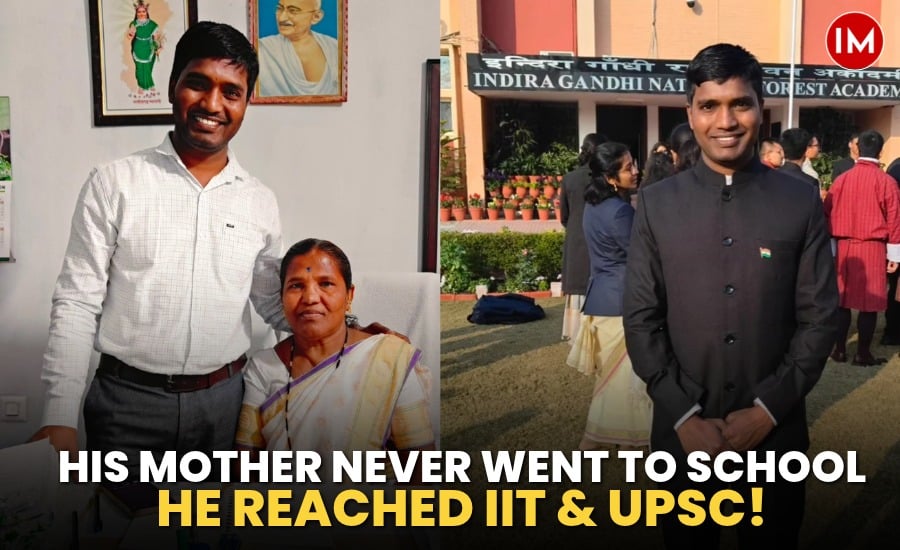
Years later, that boy would graduate from the Indian Institute of Technology (IIT) Madras, secure All India Rank (AIR) 139 in the Indian Forest Service Examination 2022 and join the Indian Forest Service as a 2023-batch officer in the Chhattisgarh cadre.
His name is Gautam Padhibhar.
His journey from financial hardship to one of India’s most prestigious civil services is not simply a story of academic achievement. It is also about a mother’s sacrifices, the opportunities created by education and a young man’s decision to dedicate his career to public service.
Also read: How IFS Officer Stylo Mandavi Turned Her Childhood Dream Into Reality
A Childhood Shaped by Financial Hardship
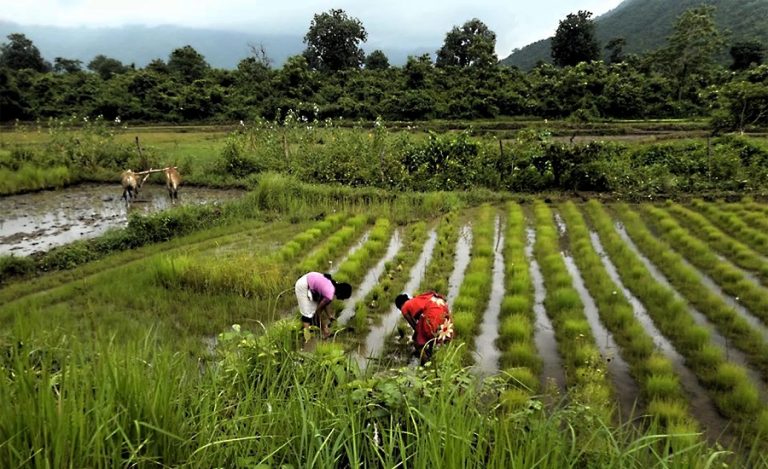
Gautam’s early years were marked by financial difficulties. His mother was the sole earning member of the family and worked as an agricultural labourer in their village, earning barely ₹20 a day.
The family’s circumstances meant that access to quality education and other opportunities could never be taken for granted.
His mother had never attended formal school herself, but she understood the importance of education. When Gautam’s elder brother started primary school, he began teaching both Gautam and their mother at home. Over time, she also learnt to read basic Marathi.
She wanted her children to have opportunities that she had never received.
Gautam’s admission to Jawahar Navodaya Vidyalaya (JNV), Jalna, after clearing its entrance examination, became a turning point. The school provided him with free quality education until Class 12.
However, pursuing education also meant staying away from his family. His mother and younger brother later moved to Mumbai, while Gautam continued his schooling in Jalna. He could meet them only during Diwali and summer vacations.
Reflecting on his mother’s influence, he shared with Indian Masterminds:
“My mother has always been my biggest inspiration and the strongest source of motivation in my life. Her sacrifices and struggles kept me focused on my goals, especially during the most difficult phases.”
For Gautam, her efforts became a constant reminder of why he needed to make the most of every opportunity.
From a Mumbai Slum to IIT Madras
After completing Class 12, Gautam took a year off to prepare for the IIT entrance examination. His preparation took place in the same difficult circumstances in which he had grown up.
Living in a small room in a crowded Mumbai neighbourhood, finding a quiet place to study was a daily challenge. He adapted his routine by waking up at 4 AM, making use of the few peaceful hours before the neighbourhood became active.
His mother continued working as a ragpicker, leaving home at 5 AM.
Eventually, his efforts paid off, and he secured admission to IIT Madras.
However, getting into one of India’s premier engineering institutions did not mean that financial challenges had ended. Arranging the fees for every semester remained a major concern. His mother would save whatever she could to ensure that his education continued without interruption.
Gautam believes his schooling at JNV Jalna played an equally important role in shaping his personality.
“It taught me to dream big and, more importantly, to believe in my own potential. It instilled in me positivity, vision, discipline and self-belief.”
At IIT Madras, he developed analytical thinking and problem-solving abilities. More importantly, the experience changed how he viewed his own potential.
Coming from a background with limited resources, he had initially been conscious of the advantages that many of his classmates enjoyed. His education helped him recognise that his circumstances did not make him any less capable.
The confidence he gained at JNV and the analytical approach he developed at IIT Madras would later complement each other in his administrative career.
Four Civil Services Mains Attempts and an Unexpected Turn
After graduating from IIT Madras, Gautam began pursuing his ambition of joining the civil services.
He appeared for the UPSC Civil Services Mains examination four times, keeping Civil Engineering as his optional subject. For his fifth mains attempt, he switched to agriculture.
Interestingly, the Indian Forest Service was not initially part of his primary career plan.
He admits that he was not particularly aware of the examination during his initial years of preparation and did not undertake any separate, dedicated preparation for it.
His optional subjects for the Indian Forest Service Examination were Civil Engineering and Agriculture.
During the Indian Forest Service mains examination, he was seriously unwell with a viral infection. He also did not undertake extensive preparation for the interview, as he had little expectation of making it to the final list.
However, he eventually secured AIR 139 in the Indian Forest Service Examination 2022 and was allotted the Chhattisgarh cadre.
Looking back at how he entered the service, Gautam says:
“Sometimes, life takes you down a path you never consciously chose, only to make you realise that you were meant to be there.”
For aspirants preparing for the Indian Forest Service, he recommends selecting optional subjects that overlap with civil services preparation or have accessible study material and guidance.
He also advises candidates to pay particular attention to the Preliminary Examination, as the cutoff for the Indian Forest Service is generally higher than that of the Civil Services Examination.
Mock tests, answer-writing practice and previous years’ question papers, he adds, are essential components of preparation, particularly for optional subjects.
Why He Chose to Stay in the Indian Forest Service
For IFS officer Gautam Padibhar, entering the Indian Forest Service gradually became more than an alternative career outcome.
He initially wanted to join the civil services to contribute meaningfully to society, particularly by working for marginalised and underprivileged communities. The opportunity to influence people’s lives through administrative decisions attracted him to public service.
Once he became part of the Forest Service, he discovered another dimension of that purpose: the opportunity to work for both people and nature.
Allotted to the Chhattisgarh cadre, he found himself in a state known for its rich forest and wildlife resources.
He views the Indian Forest Service as a career that brings together environmental conservation, wildlife protection, public administration and community development.
He also wants aspirants to reconsider the perception that the Forest Service is secondary to other civil services.
“The Indian Forest Service should never be considered an inferior or secondary service. Rather, it deserves to be seen as an equally attractive and fulfilling career option alongside other civil services.”
According to him, the service offers considerable scope for creativity, innovative initiatives and work that can produce tangible results on the ground.
For candidates interested in nature, conservation and public welfare, he believes it can be a fulfilling professional choice.
The Moment His Mother Sat in His Official Chair
Among the many milestones in Gautam’s journey, one moment holds a particularly special place.
He had once shared a photograph of his mother sitting in his official chair. For someone who had watched his mother work as an agricultural labourer and later as a ragpicker to support her children’s education, the photograph represented far more than an official achievement.
It brought together years of financial difficulties, separation, early morning study sessions, examinations and sacrifices.
When asked what went through his mind while watching his mother sit in that chair, Gautam found it difficult to put his emotions into words.
He recalled how the moment took him back through every phase of their lives, from the hardships of childhood to the achievement they were finally able to share.
His journey also reinforces his belief that education can change the circumstances of an entire family, even when opportunities are limited and the starting point is difficult.
For Gautam Padhibhar, becoming an Indian Forest Service officer was an achievement in itself. But the photograph of his mother in his official chair perhaps captures the larger meaning of that achievement.
It was a moment that belonged equally to the woman who worked every day to keep her children’s dreams alive.
Also read: When Children Are Heard, Governance Changes: How Koppal Is Building a Child-Friendly District