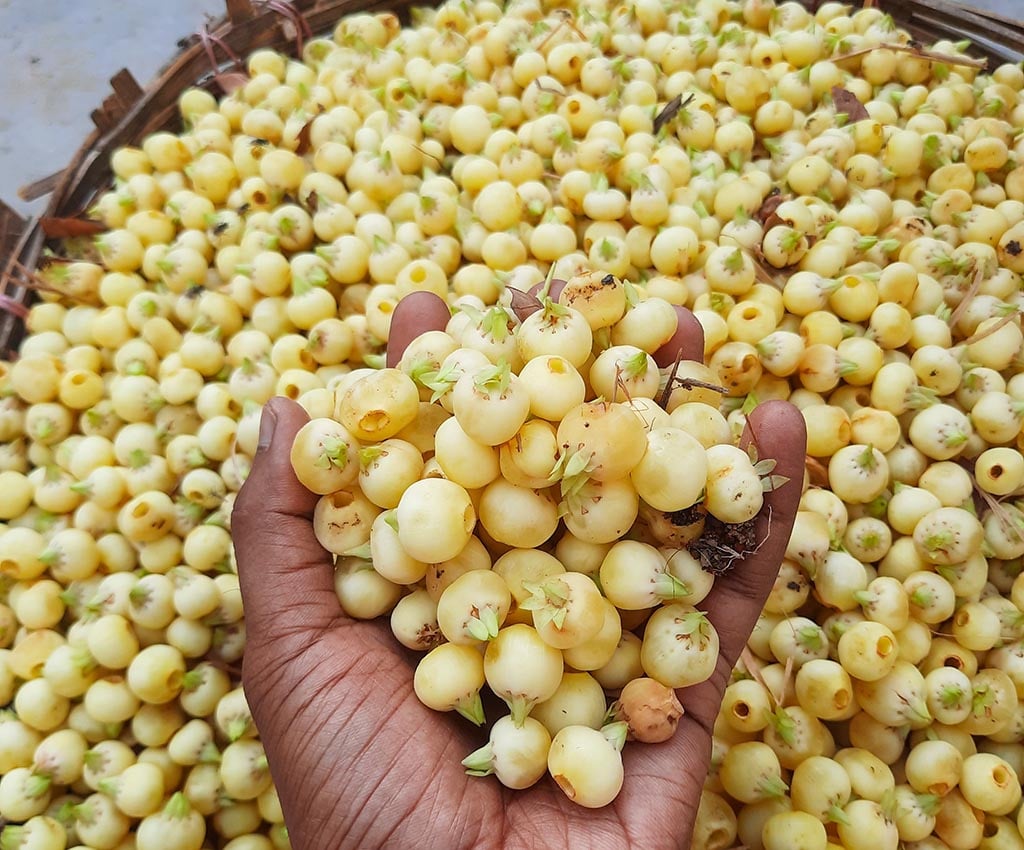
For 2011 batch Chhattisgarh cadre IFS officer Stylo Mandavi, the forests of Chhattisgarh have never been just stretches of trees, wildlife and wilderness. They are woven into her earliest memories, carrying the familiar fragrance of mahua flowers, the sounds of village life and the sight of women working through the seasons to make a living from the forest.
Some of her fondest childhood memories are of visiting her grandmother in Bhanupratappur, in Chhattisgarh’s Kanker district. Every morning, her grandmother would wake up at dawn to collect the small yellow mahua flowers scattered across the forest floor. The rest of the village did the same. Once collected, the flowers were dried and sold in rural markets.
Then came the tendu season. Women would gather tendu leaves, used in making beedis, and spread them across the school premises to dry.
While the village was busy collecting these important sources of forest income, young Stylo would hop around like any other schoolgirl. Her childhood also had its share of local flavours, from chapra (red ant) chutney to madia pej (porridge), a combination she fondly remembers.
But those seemingly ordinary days were quietly shaping her future.
Watching women depend on mahua and tendu for their livelihoods, she began understanding the close relationship between forests and the communities living around them. What she saw at her grandmother’s village eventually became the foundation of a career choice.
She wanted to become a forest officer.
Today, Stylo Mandavi is an Indian Forest Service officer, serving as the Divisional Forest Officer in Raigarh district of Chhattisgarh. The little girl who once watched villagers collect forest produce now works to protect the very forests that shaped her childhood.
Also read: From an Illicit Liquor Village to a Honey-Making Hub: How IPS Arvind Chaturvedi Changed Chanpurwa’s Story

From Forest Memories to Community Livelihoods
For Mandavi, joining the Indian Forest Service was not simply about working in the wilderness. She believed that being a forest officer would give her an opportunity to serve people, particularly communities whose lives and livelihoods are closely connected to forests.
Her understanding of this relationship has also influenced her work on the ground.
In the Orchha administrative block, she observed women collecting hill grass to make brooms. Rather than allowing their work to remain an individual livelihood activity, she organised the women into groups and helped them find ways to sell their products.
It was a practical intervention rooted in something she had understood since childhood: forests could provide communities with economic opportunities, and better organisation could help them benefit more from their work.
The importance of forest produce is particularly visible in Chhattisgarh, where mahua and tendu collection supports village economies during the lean agricultural season. For many families, these are not seasonal extras but important sources of income when farming activity slows down.
When the Forest Comes With Its Own Challenges
Mandavi’s present posting in Raigarh places her in a district where human-elephant conflict is a serious concern. With elephant movement frequently bringing people and wildlife into dangerous proximity, preventing casualties remains a major responsibility.
One of the measures adopted by the Forest Department is a phone-based messaging group involving local residents. People share information about elephant movements, allowing others and the department to respond to potential danger.
She is also considering a more stringent monitoring mechanism using alarms to alert residents in Dharamjaigarh and Raigarh, two areas where human-elephant conflict is common.
Another important part of the effort involves Hathi Mitras, or friends of elephants. These volunteers encourage people to remain alert, particularly while travelling during late hours when encounters with elephants can become dangerous.
For Mandavi, the job demands constant alertness. An elephant’s movement, a message from a villager or a developing situation in the forest can require immediate attention.
Human-elephant conflict is not the only challenge she encounters. Encroachment on forest land is another sensitive issue. Addressing it requires more than enforcement; she has to explain the importance of protecting forest land and make people understand the reasons behind departmental action, which is surely not easy.
Life Beyond the Office Walls
Her earlier posting in Narayanpur, a sensitive and heavily forested district, offered a different kind of challenge. Reaching remote forest areas often meant travelling on motorbikes alongside forest guards, taking her work far beyond conventional office settings.
Yet, the profession has its unexpected and memorable moments too.
During her tenure in Raigarh, Mandavi got an opportunity to meet Bollywood actor Akshay Kumar when he was shooting in her division. Earlier, she had also met actors Rajkummar Rao and Sanjay Mishra. She particularly remembers Sanjay Mishra for his down-to-earth nature.
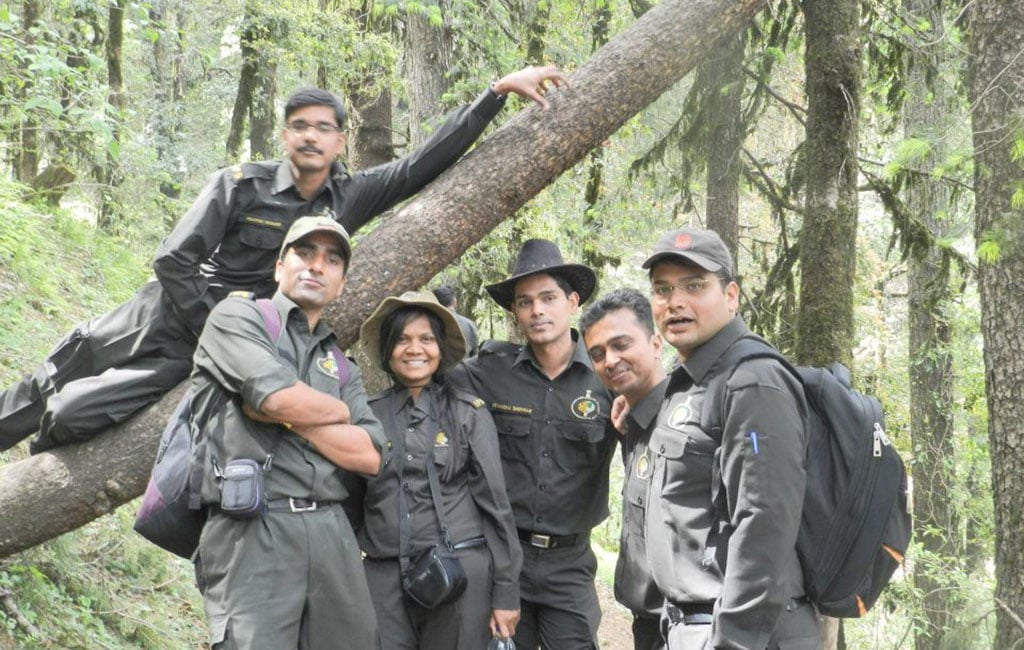
Away from official responsibilities, trekking remains one of her favourite ways to spend time. She used to trek much more frequently during her training at the Indira Gandhi National Forest Academy in Dehradun, though work does not always leave her with enough opportunities now.
For someone who once spent her childhood watching women gather mahua and tendu, the journey has come full circle in an unexpected way.
The forests that first introduced Stylo Mandavi to the relationship between nature and livelihoods eventually became her workplace. Today, she works to protect those landscapes, address the conflicts surrounding them and help the communities that depend on them.
Her childhood dream was to become a forest officer. Years later, she is living that dream, not as an observer of forest life, but as someone responsible for safeguarding it.
Also read: IPS Damayanti Sen: The Woman Who Took on the Park Street Case and Carved Her Own Path