For years, Chanpurwa in Uttar Pradesh carried a reputation that few villages would want. Its name was associated with illicit country liquor, police raids, arrests and recurring cases of violence. Brewing liquor was not merely an illegal occupation here; it had become part of the village’s economic and social fabric. Generations had grown up watching it, and for many families, giving it up meant giving up their only known source of income.
The consequences reached far beyond the law. The village’s social standing had deteriorated to such an extent that families outside Chanpurwa were reluctant to marry their daughters into the village. Its young women faced limited choices, while children grew up in an atmosphere of fear and insecurity.
But in 2020, when, now retired IPS officer, Arvind Chaturvedi was serving as Superintendent of Police in Barabanki, he decided that another police operation would not solve Chanpurwa’s deeper problem. The village did not simply need to stop making illicit liquor. It needed something to replace it.
Instead of approaching the community only through enforcement, Chaturvedi chose to address the economic circumstances that had kept families trapped in the illegal trade. His idea was straightforward but ambitious: create alternative livelihoods, bring government schemes to every eligible household, organise women into self-help groups and gradually give the village a different identity.
What began as an effort involving 135 families has since grown into a much wider community transformation, with women making candles and earthen lamps, producing honey, running small enterprises and finding opportunities beyond their village.
For Chaturvedi, the real measure of change is not simply that illegal liquor production has declined, but that an entirely different future has become imaginable for the next generation.
Also read: An IPS Officer Who’s Been Protecting Wildlife For 16 Years
Replacing an Illegal Trade With Opportunities
The first step was to understand why the families continued making illicit liquor despite repeated police action. For many women, it was not simply a question of breaking the law. It was a question of survival. With little access to employment and few alternative income sources, the trade had become a means of keeping their households running.
Chaturvedi, therefore, focused on building trust before expecting change. The initiative was institutionalised through the Chanpurwa Kayakalp Foundation, which became the platform for organising livelihood activities and coordinating support.
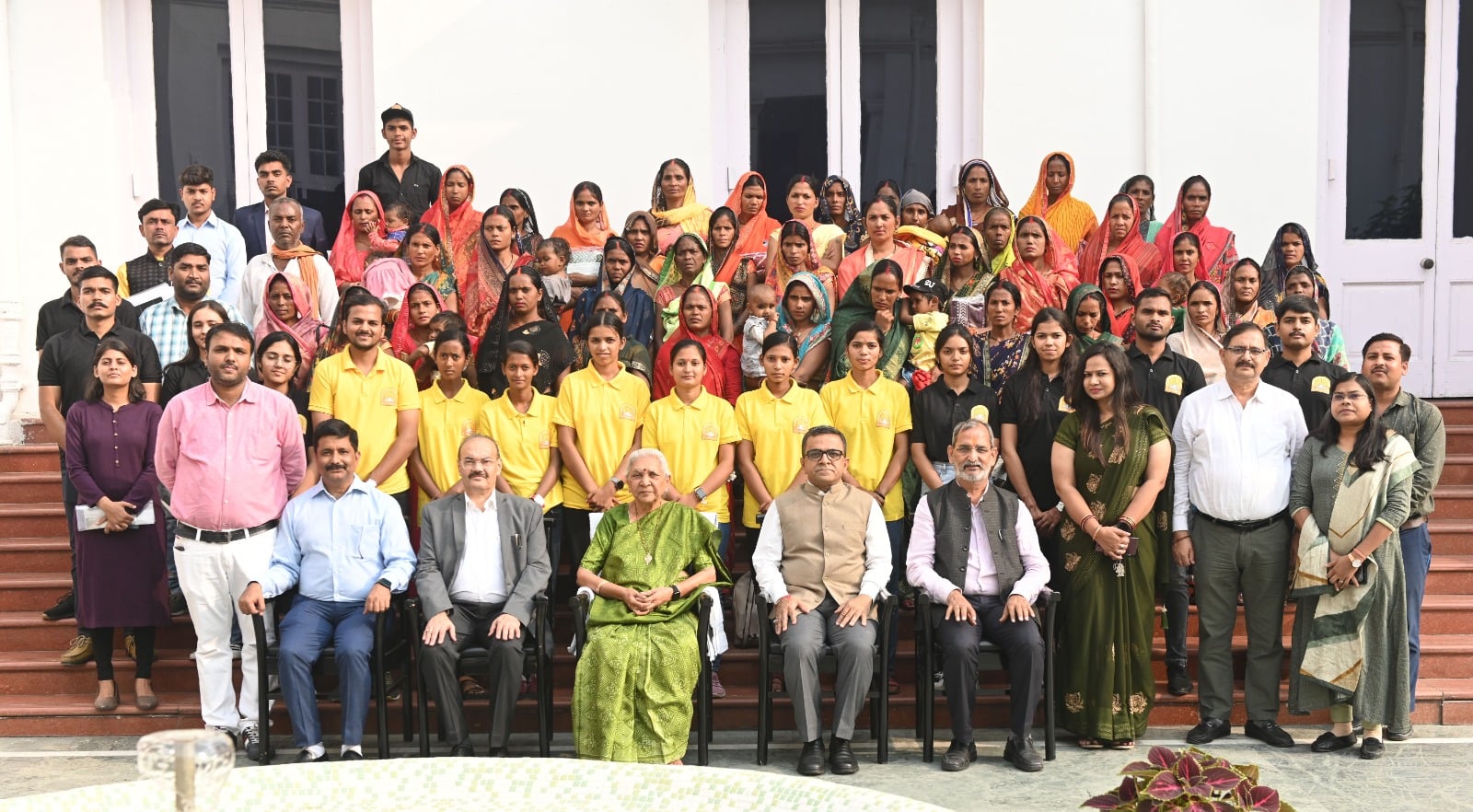
“Nine self-help groups were formed, bringing together 90 women, with around ten members in each group. Each group received an initial capital of Rs 1.15 lakh, and a further tranche of Rs 5 lakh was expected during the year. An encouraging aspect was that none of the groups had defaulted on its loans or accumulated outstanding dues from their business activities,” the officer shared in an exclusive conversation with Indian Masterminds.
The groups were not expected to depend on a single occupation. Instead, the foundation and district administration helped families explore several possibilities, including beekeeping, honey production, candle-making, diya-making, goat rearing, poultry farming and dairy-related activities. Some villagers also took loans to purchase e-rickshaws, while women with access to agricultural land began cultivating trees.
Government departments were approached to organise camps in the village so that residents could understand which schemes they were eligible for, how much financial assistance or credit was available and which occupations could generate sustainable income.
The idea was to ensure that government welfare schemes reached every eligible household. With the cooperation of the District Magistrate and Chief Development Officer, the village also received infrastructure that had once seemed beyond its reach. A community hall, panchayat building, public toilet, drinking water tank and interlocking roads were among the facilities developed as part of the wider transformation.
For Chaturvedi, these were not separate development projects. They were connected parts of the same effort to restore confidence in a community that had long been viewed through the lens of crime.
When Women’s Hands Began Lighting Diyas
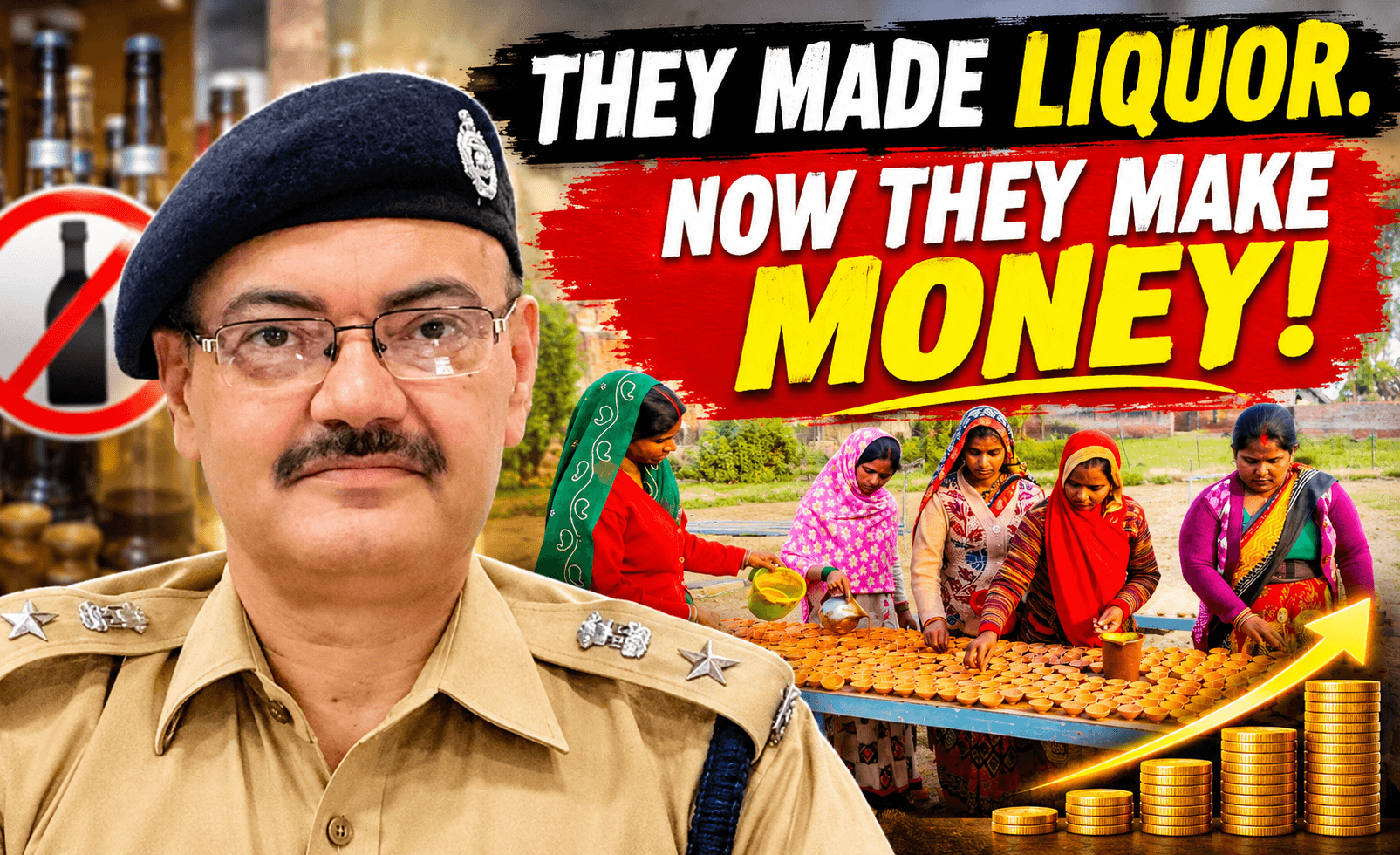
Perhaps the most visible symbol of Chanpurwa’s transformation is found in the earthen lamps and wax products made by its women.
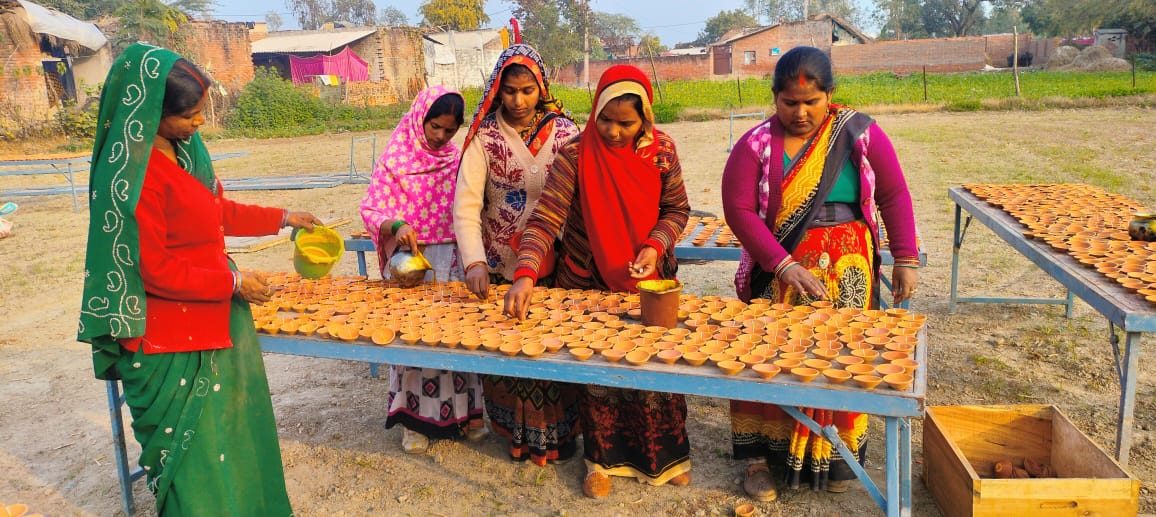
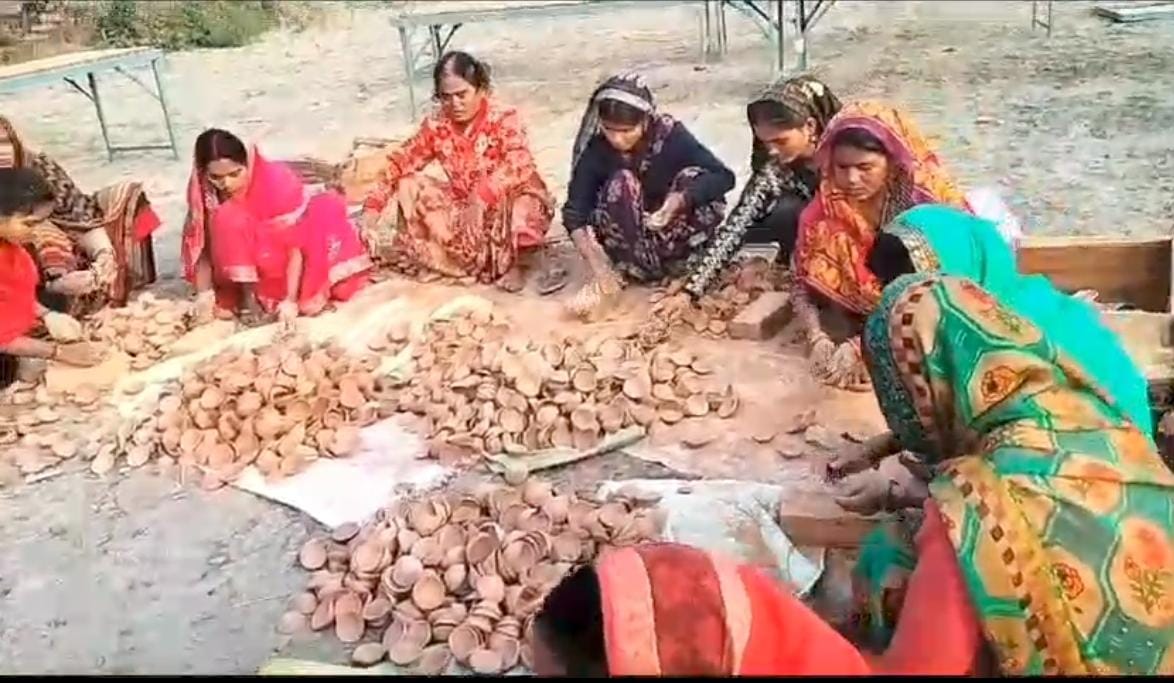
Every Diwali, women associated with the foundation prepare wax diyas and candles for sale through different channels. The arrangement is simple: the women receive Re 1 for every diya sold, ensuring that the festival season brings direct earnings into their homes.
During the latest Diwali season discussed by Chaturvedi, approximately 2.25 lakh diyas were sold through different channels, generating around Rs 2 lakh for the women involved in their production. Not every self-help group participates in diya-making, but those that do receive payments according to their production.
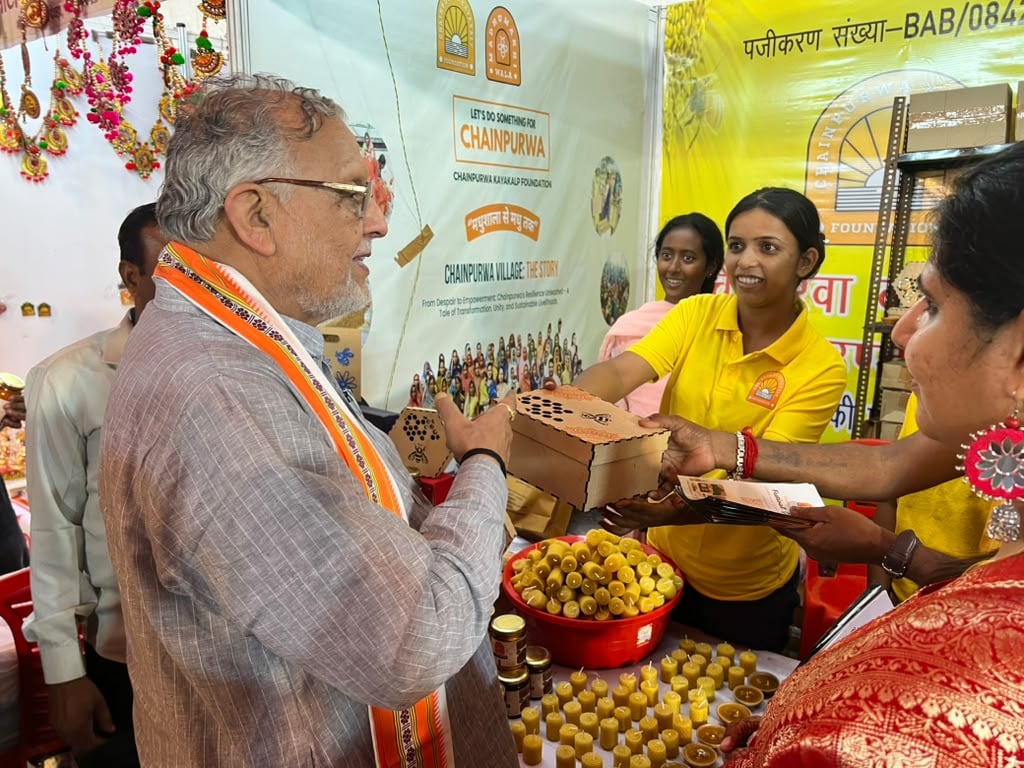
The products are also being marketed beyond the village. A pack of 50 diyas is priced at Rs 400, giving buyers an opportunity to support the women while purchasing something made locally.
The foundation has also worked to expand beekeeping. Through its engagement with the Confederation of Indian Industry (CII), it secured approximately Rs 4 lakh in CSR support. The arrangement included 100 beekeeping boxes, training and a mechanism through which the foundation could help market the honey produced by the women.
The Biggest Change Is Not Economic, But Social
For Chaturvedi, however, the most significant changes in Chanpurwa cannot be measured only through income, infrastructure or the number of businesses established. He identifies three fundamental changes: a change in daily routines, a change in economic activities and, most importantly, a change in people’s peace of mind.
He points out that the village has witnessed a remarkable improvement in its social environment. The fear and insecurity that once affected children, particularly young girls, have gradually given way to greater confidence.
One of the strongest indicators of this change, he believes, is the way the village’s young women now present themselves outside Chanpurwa.
“When these girls travel to Lucknow and stand at stalls, they speak confidently to customers and explain what they make. They are no longer hesitant about talking to people. In fact, they openly acknowledge that the path they followed earlier was wrong and that they have now chosen a better one,” he says.
The change is also reflected in the village’s social relationships. Before 2020, Chanpurwa’s reputation had become such a burden that families from outside were unwilling to marry their daughters into the village. Marriages increasingly took place within the community itself.
That situation has begun to change. Families from outside are now willing to establish matrimonial relationships with Chanpurwa, while young women from the village are also marrying outside.
Another important development has been the emergence of employment opportunities for young people. Around three years ago, the foundation took an initiative to train village youth in basic healthcare skills. They were taught practical tasks such as measuring blood pressure, checking pulse rates and maintaining patient charts.
These skills were intended to make them eligible for entry-level healthcare and nursing-support jobs. Several young men and women have since found employment in Lucknow, including opportunities in household healthcare assistance.
A Village Without the Old Cycle of Police Cases
According to Chaturvedi, before 2020, the village regularly saw FIRs relating to illicit liquor, excise violations, seizures and disputes. Since the initiative began, no FIR has been registered in the village for illicit liquor production or recovery, or for interpersonal disputes, he says.
He is careful not to claim that the entire problem of alcohol consumption has disappeared. Some older men, particularly those above 60, may still travel to neighbouring villages to consume legally sold liquor. But the focus of the initiative has remained firmly on preventing younger generations from entering the illegal trade and creating better opportunities for women and children.
“There are limits to what you can expect from someone who has spent 60 years living in a particular environment. Our greater focus is on the women, girls and younger boys of the village. If we can give them a different direction, the next generation will have a very different future,” he told Indian Masterminds.
This approach has also attracted international attention. The World Health Organization (WHO), through its association with the campaign documenting the village’s journey, has helped bring Chanpurwa’s story to a wider audience.
From a Village Initiative to International Possibilities
The next ambition is to take Chanpurwa’s products beyond local markets.
The foundation has received Income Tax approvals under Sections 12A and 80G, allowing it to avail of the applicable tax exemptions and offer tax benefits to eligible donors. It has also applied for FCRA registration, which would enable it to receive foreign contributions in accordance with the law.
New Zealand has emerged as a particularly promising opportunity. Known internationally for its honey production, the country has shown interest in exploring the honey produced by Chanpurwa’s women. The foundation has been in touch with organisations there and has discussed production standards and quality parameters that could help the village meet international expectations.
A delegation of 12 people from New Zealand is expected to visit Chanpurwa on November 25, 2026. Discussions have also included the possibility of grants for children’s and women’s development and introductions to government ministries and potential institutional buyers in different countries.
For a village once struggling to find buyers for its products, the possibility of reaching international markets represents an entirely new chapter.
The Light That Chanpurwa Is Creating for Itself
There is something particularly meaningful about the way Chanpurwa celebrates Diwali today. Women who were once caught in an illegal trade now spend their time making diyas that light up homes elsewhere. Every lamp sold puts money into their hands and gives their work a value that extends beyond the village.
Chaturvedi, now a retired DIG, does not attribute the entire transformation to himself. He acknowledges the contribution of the district administration, the foundation’s team, its partners and, most importantly, the women and families who agreed to take the first step.
Chanpurwa’s story is ultimately about choice. A village once known for making illicit liquor is now making honey, candles and diyas. And perhaps its biggest achievement is that its children can grow up imagining a future that has very little in common with the past.
Also read: Kitchen Gardens in Police Stations