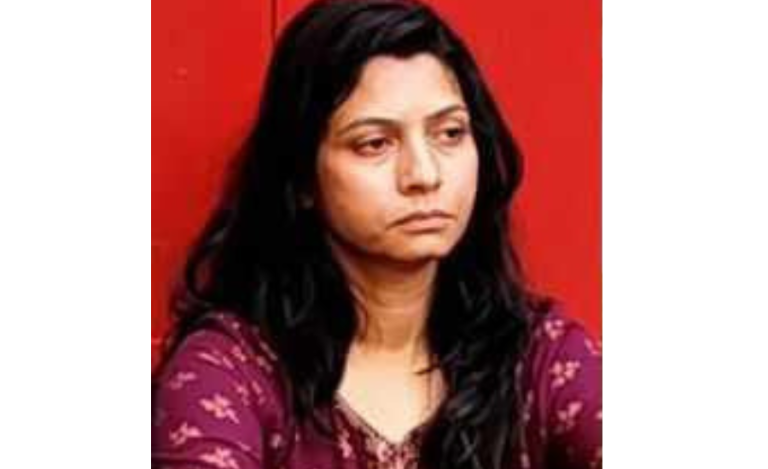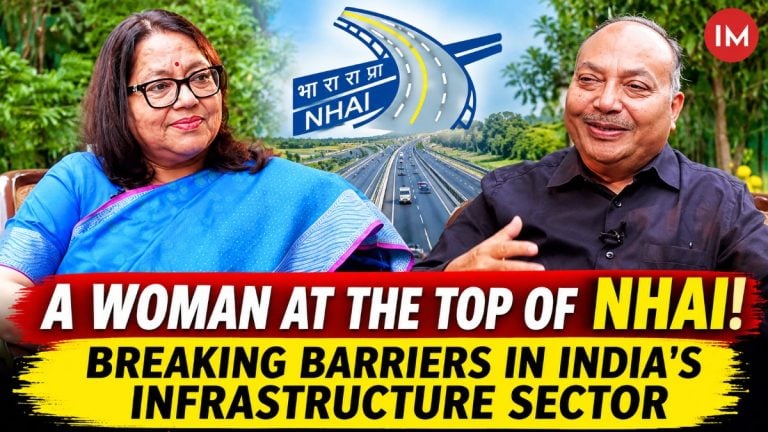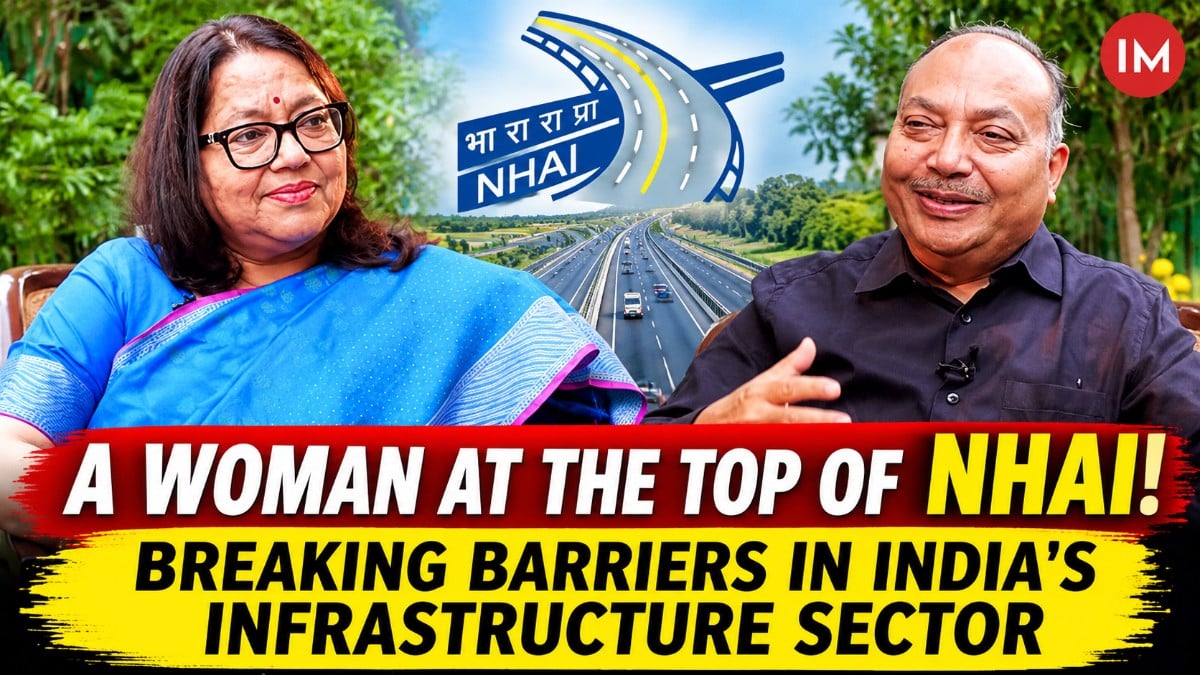
Alka Upadhyaya, a 1990-batch IAS officer, has traversed some of the most challenging terrains of Indian administration. From being the first woman to head the Madhya Pradesh Rural Road Development Authority to serving as Chairperson of the National Highways Authority of India (NHAI) and Secretary, Ministry of Road Transport and Highways, she has held leadership positions in traditionally male-dominated infrastructure sectors. Yet, she says, she never allowed gender to become a barrier.
Her journey into infrastructure administration began in January 2012, when she was appointed CEO of the Madhya Pradesh Rural Road Development Authority. It was the first time a woman officer had headed the organisation. Over the next five years, she oversaw rural roads under the Pradhan Mantri Gram Sadak Yojana (PMGSY) and several rural development initiatives.
Her subsequent assignments at the Centre included Joint Secretary, PMGSY, Director General of the National Rural Infrastructure Development Agency, Chairperson of NHAI and, eventually, Secretary, Ministry of Road Transport and Highways. This gave her more than a decade of experience in infrastructure development.
Also Read – Beyond the Uniform: UP Police’s Film ‘Vardi’ Pays Tribute to Those Who Never Returned Home
She recalls that people were initially unsure about how a woman officer would handle large engineering organisations and contractors. However, she focused on understanding the technical and administrative dimensions of the job. At NHAI, she made it a point to study contract management documents, tender conditions, specifications and departmental circulars. Her philosophy was simple: decisions must be timely, but they must also be informed and correct.
She also emphasised the importance of effective contract management and communication with contractors. Delays and disagreements, she believes, often become the starting points of litigation. A capable team of engineers and officers, coupled with clarity about contractual obligations, can help resolve disputes and accelerate projects.
Her administrative journey, however, began on a very different and challenging note. As a young SDM in Aurangabad, Maharashtra, she witnessed the communal disturbances following the demolition of the Babri Masjid in 1992. Managing law and order, working closely with the police and personally visiting affected families to distribute compensation demanded courage and sensitivity.
Watch the video here :
Later, as Collector of Khargone in Madhya Pradesh, she focused on education, women’s empowerment and healthcare. She organised mother-daughter gatherings to encourage girls’ education and introduced activities such as archery competitions to bring rural women into the public sphere. In healthcare, she facilitated the establishment of a neonatal ICU, gynaecological wards and a blood bank at the district hospital.
In politically sensitive Datia, she attempted to shift attention towards agriculture as the foundation of economic development. Her interactions with rural women also taught her valuable lessons. During a discussion on organic farming, a woman farmer explained why small plots should be converted gradually rather than bringing entire holdings under organic cultivation at once. Upadhyaya found this practical wisdom more instructive than theoretical prescriptions.
Her approach to handling political pressures has been equally pragmatic. She believes an officer must be convinced about the correctness of a stand but should never become aggressive. Recalling disagreements over politically influenced transfer lists, she explains how dialogue and negotiation helped her find workable solutions without compromising administrative principles.
For her, successful administration is ultimately about people management, conviction and the ability to get things done.
Balancing professional responsibilities with family life was another challenge. Her husband supported her career and never insisted that she seek transfers to be posted with him. She also made adjustments to her working schedule to spend more time with her children.
Looking back, Upadhyaya considers her journey an enriching experience shaped by teamwork, continuous learning and the willingness to take responsibility. Her career demonstrates that leadership in infrastructure is not determined by technical qualifications or gender alone, but by preparation, decisiveness and the ability to inspire confidence.
Also Read – IPS Damayanti Sen: The Woman Who Took on the Park Street Case and Carved Her Own Path