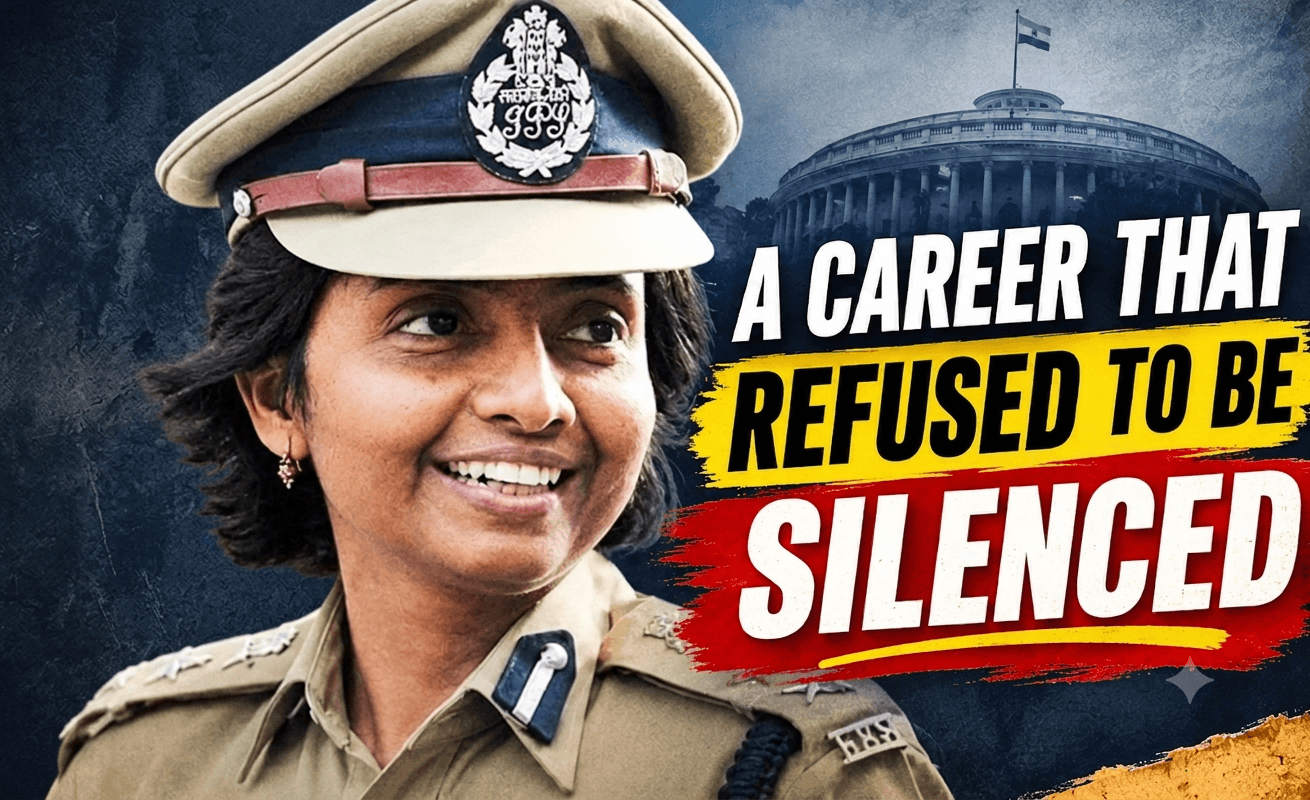
Some police officers are remembered for the positions they hold; others for the cases they investigate. IPS officer Damayanti Sen has built a career that brings both together.
A 1996-batch IPS officer of the West Bengal cadre, Sen’s journey began with an academic distinction. An economics graduate from Jadavpur University, she secured first-class first in both graduation and postgraduate studies before joining the Indian Police Service.
Also read: Inside IAS Pandve Rahul Tukaram’s Mission to Identify Childhood Disabilities Before It’s Too Late
Rising Through the Ranks
Sen began her career with field assignments in South 24 Parganas before moving to Kolkata Police. She served as Deputy Commissioner of Police in North Kolkata and Central Kolkata, and subsequently handled the Special Branch and Detective Department.
These assignments gave her experience in intelligence gathering, criminal investigation and conventional policing. She eventually became Kolkata Police’s first woman Joint Commissioner of Police (Crime), a significant milestone in the city’s police establishment.
Her professional standing would soon be tested by one of Kolkata’s most controversial criminal cases.
Park Street: The Investigation That Changed Everything
In February 2012, a woman alleged that she had been gangraped inside a moving car after leaving a nightclub in Kolkata’s Park Street area. The incident quickly became a political controversy after Chief Minister Mamata Banerjee publicly questioned the complainant’s account and described the incident as fabricated.
Sen, then Joint Commissioner (Crime), led the investigation that established the assault had indeed taken place.
Her team examined CCTV footage, followed leads connected to the vehicle and identified the men involved. The investigation resulted in arrests and brought the complainant’s allegations back into focus at a time when the incident itself was being publicly questioned.
In April 2012, she was transferred from Kolkata Police and posted as DIG (Training) at the Police Training College in Barrackpore.
From CID to Senior Leadership
Following Barrackpore, Sen served as DIG of the Darjeeling Range and later as DIG, Criminal Investigation Department. She subsequently became IG (Administration).
In September 2019, she returned to Kolkata Police as Additional Commissioner of Police III and later served as Special Commissioner. Her career had moved through field policing, intelligence, investigations and administration, giving her experience across several important branches of the force.
Her investigative experience again came into focus in April 2022, when the Calcutta High Court entrusted her with supervising investigations into four rape cases reported from Deganga, Matia, English Bazar and Bansdroni.
The petitioners had specifically suggested her name, citing her previous work and investigative record. The court accepted the proposal and directed that the cases be investigated under her supervision. It was another significant recognition of her professional credibility, particularly in cases involving crimes against women.
Sen was transferred as ADG (Training) in June 2023. She subsequently held senior assignments including ADG and IGP (Policy) and ADG and IGP, Armed Police.
A Career That Comes Full Circle
In May 2026, Sen was appointed member secretary of a commission headed by retired Calcutta High Court judge Justice Samapti Chatterjee. The commission has been constituted to examine allegations of atrocities against women and children.
For Sen, the assignment brings her professional journey back to an area that has featured prominently in several defining moments of her career.
From her early days in district policing to becoming Kolkata’s first woman Joint Commissioner of Police (Crime), from the Park Street investigation to the High Court’s decision to entrust her with sensitive cases, Sen’s career has taken several turns.
More than a decade after the Park Street investigation brought her national attention, Damayanti Sen continues to occupy important positions in the state’s police establishment. Her journey is that of a woman who entered a traditionally male-dominated service with a clear sense of purpose and gradually made her mark in its investigative and leadership ranks.
Also read: Urvashi Prasad’s ‘Still Here’: A Stage IV Cancer Diagnosis, and a Memoir That Refuses to Pretend Everything Is Fine