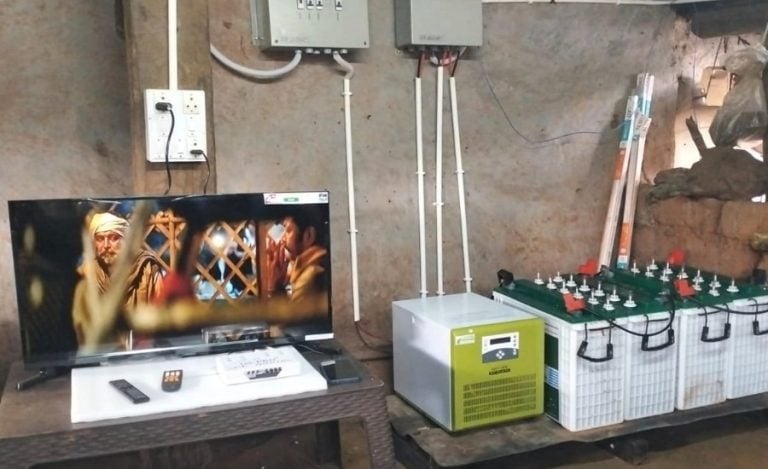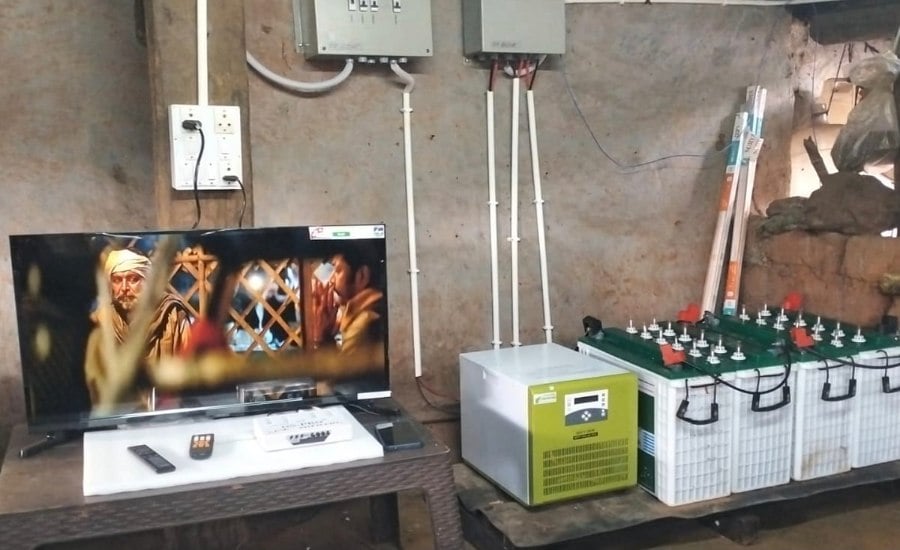
Dantewada: A solar-powered community TV in Dantewada has brought television access to the remote tribal hamlet of Lawa in Chhattisgarh for the first time. The initiative, jointly implemented by the Chhattisgarh State Renewable Energy Development Agency (CREDA) and the Dantewada district administration, will benefit 21 tribal families. It aims to connect residents with news, educational programmes, government schemes and modern information through solar energy.
Solar Community TV: Lawa Village Gets Its First-Ever Television Facility
Lawa, a remote tribal hamlet in the Kuakonda block of Dantewada district, has witnessed its first-ever television broadcast. The installation marks an important development for a village that has remained isolated from many modern facilities for years.
Read also: Diwali Job Bonanza: Chhattisgarh Announces 1,703 Vacancies Across Government Departments
The community television system has been installed with the support of CREDA and the Dantewada district administration. It operates using solar energy because the village does not have access to the conventional electricity grid.
The village is home to just 21 tribal families. For these residents, the new facility offers an opportunity to access information and entertainment without travelling outside their settlement.
Chhattisgarh Chief Minister Vishnu Deo Sai welcomed the initiative. He highlighted the government’s efforts to bring modern technology, education and development facilities to remote tribal communities.
Why Has Lawa Village Remained Isolated For Years
Located among the hills of the Bailadila range and surrounded by dense forests, Lawa is one of the geographically challenging settlements in South Bastar.
The village is approximately 8 kilometres from the Kirandul iron ore mining area operated by the National Mineral Development Corporation (NMDC).
Despite its proximity to the mining region, reaching Lawa remains difficult. The village does not have a paved road, and residents often travel long distances along rocky and uneven paths.
Even collecting essential supplies, including ration from the nearest Public Distribution System (PDS) outlet, can be difficult for villagers.
The surrounding Purengal region was also affected by Left-Wing Extremism (LWE) for several decades. Security challenges and difficult geographical conditions limited administrative access and the delivery of basic public services.
However, sustained security operations have improved access to the region. Government officials and local representatives can now visit the village, interact with residents and take development programmes directly to the community.
How Solar Energy Is Bringing Television To Remote Areas
The absence of conventional electricity infrastructure made installing a regular television system difficult in Lawa. To overcome this challenge, CREDA and the district administration adopted solar energy to operate the community television.
The solar-powered system uses a solar-battery arrangement to provide electricity without depending on the conventional power grid..This approach is particularly useful for remote villages where extending electricity infrastructure can be challenging. It also demonstrates how renewable energy can support essential services in geographically isolated communities.
Key Benefits Of Community Solar TV For 21 Tribal Families
The new television facility is expected to provide several benefits to residents of Lawa village.
1. Access To National And International News
Villagers can now watch television programmes covering developments in Chhattisgarh, India and other parts of the world.
This will help residents stay informed about important events and developments beyond their village.
2. Information About Government Schemes
Television programmes can help residents learn about government welfare schemes, public services and development initiatives.
They can also receive useful information about agriculture, modern farming practices and healthcare programmes.
3. Educational Opportunities For Children
Children in Lawa village will have access to educational and knowledge-based television programmes.
These programmes can introduce them to new subjects, general knowledge and learning opportunities that were previously unavailable through television in their settlement.
4. Entertainment And Community Participation
The community television will provide a common place where members of all 21 families can gather and watch programmes together.
After spending the day working in agricultural fields and collecting forest produce, villagers will have a shared source of entertainment.
It may also encourage social interaction and strengthen relationships among community members.
5. Clean And Renewable Energy
The television operates using solar energy and a battery-based system.
This reduces dependence on conventional electricity infrastructure and provides a practical solution for settlements located far from the electricity grid.
Improved Security Is Helping Development Reach Remote Bastar Villages
The installation of community television also reflects wider efforts to improve government access to remote areas of Bastar. For many years, difficult terrain and security challenges affected the delivery of public services in the region.
Improved security conditions have allowed district officials and public representatives to visit previously inaccessible settlements more regularly.
These visits help officials understand local problems, interact directly with villagers and identify areas where development facilities are needed.
The Lawa initiative shows how technology and renewable energy can support development in communities that face geographical and infrastructure challenges.
Read also: Chhattisgarh Plans ‘Riyasat Veethika’ Gallery to Preserve Heritage of 14 Former Princely States