When Uttarakhand was created in November 2000, its police force had to begin almost from scratch. There was no grand headquarters or well-established administrative structure. In the early days, the police headquarters operated from two tents in the lawns of the Dehradun SSP’s residence. Files arrived in trunks. Furniture came later. Even basic infrastructure had to be arranged.
For the young officers who were part of the new state, this was not simply a policing assignment. It was an opportunity to build an institution and shape its future. They had to decide how many districts the state needed, how its armed police should function and how policing would work across the difficult terrain of the hills and plains.
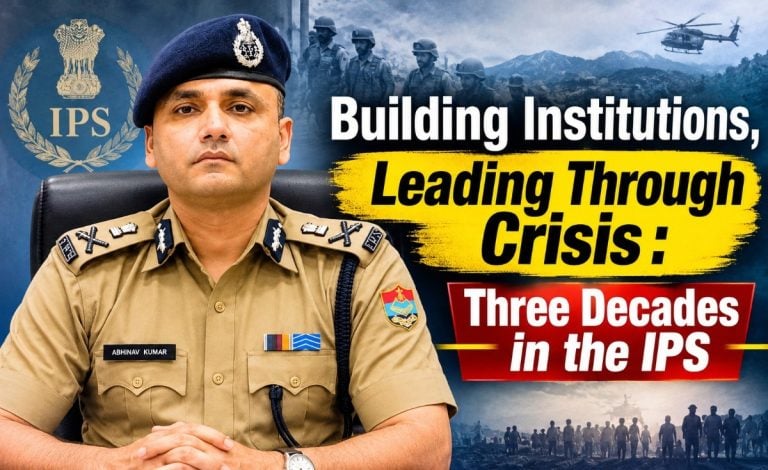
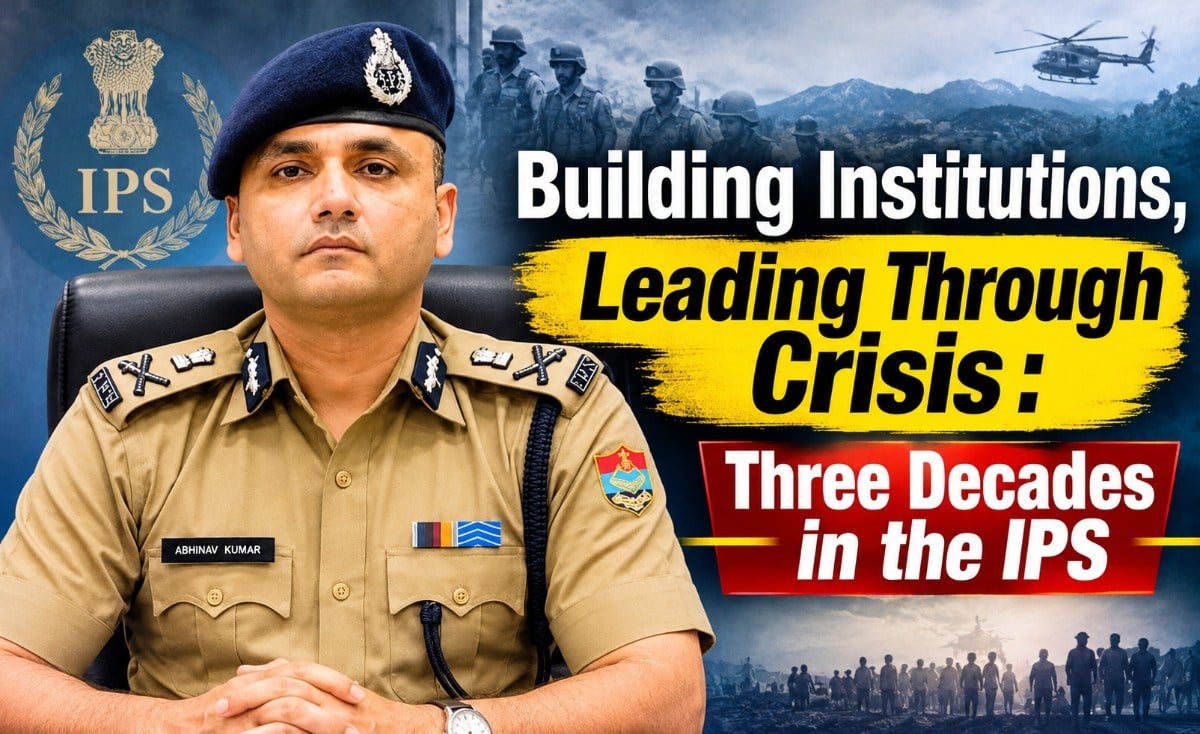
For Abhinav Kumar, a 1996-batch Indian Police Service officer of the Uttarakhand cadre, those early years became an important lesson in institution-building. He saw how an organisation could be created with limited resources but a strong sense of purpose. He also learnt that leadership required more than issuing orders. It demanded patience, practical thinking and the ability to keep people motivated through uncertainty.
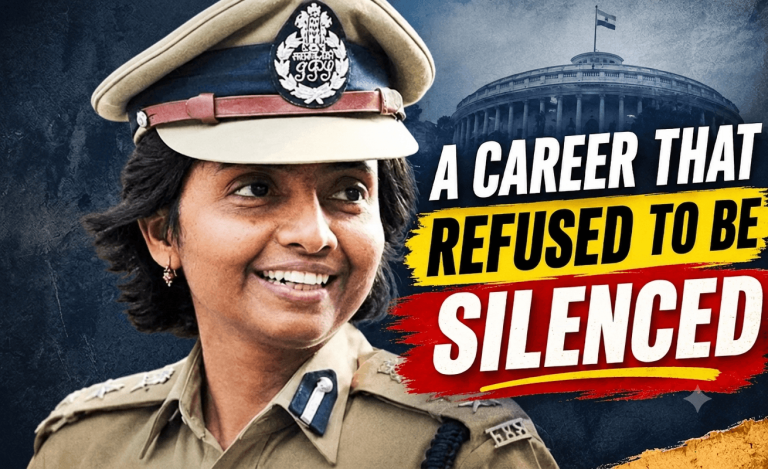
Today, Kumar is serving as Director General, Intelligence and Security, Uttarakhand, and Director General, Prisons Administration and Correctional Services Department, Government of Uttarakhand. He also served as Director General of Police, Uttarakhand, from 30 November 2023 to 25 November 2024.
In a conversation with Indian Masterminds, Kumar spoke about building the police force of a new state, the emotional pressures of serving in Kashmir, the lessons he learnt from personnel on the ground, and the need to make prisons more focused on rehabilitation. His experiences offer a close look at how policing in India has changed since he joined the service in 1996.
Also Read – From Makhana Jalebi to Healthy Drinks: How Katihar Is Turning a Traditional Crop into a Business Opportunity
BUILDING A POLICE FORCE FROM TWO TENTS
The creation of Uttarakhand brought a unique responsibility for its police officers. The new state inherited personnel and several challenges from Uttar Pradesh, but had limited infrastructure and resources of its own. The police had to establish its headquarters, develop its administrative systems and create structures suited to the state’s geography.
Kumar remembers the early period as a time of extraordinary energy. The current Police Headquarters building in Dehradun was taken over from its previous occupants, ONGC. But building the institution required much more than securing an office. Staff strength, equipment, district structures and arrangements for policing remote hill areas all had to be worked out.
The challenges were considerable. The terrain made movement and deployment difficult. There were shortages of personnel and funds. Expectations in the hills were also different from those in the plains. Yet, the officers working in the new state shared a belief that they could create something better.
Kumar describes those days as having the energy of a start-up, but with the resources of a small tehsil. He told Indian Masterminds, “We were not merely running a police force; we were designing one.”
The experience gave him a lasting understanding of institution-building. Systems cannot be created overnight. They require people who are willing to work through basic difficulties and remain committed to a larger purpose. While some of the early idealism faded with time, he believes much of it continues to guide the institution.
THE EMOTIONAL TEST OF KASHMIR
Among the most demanding assignments of Kumar’s career was his tenure as Inspector General with the Border Security Force in Kashmir. During approximately 15 months in the region, he witnessed several major developments that shaped India’s security landscape.
The period included the unrest following the encounter of Burhan Wani, the imposition of President’s Rule, the Pulwama terror attack, the Balakot air strikes, the 2019 General Elections and, finally, the abrogation of Article 370.
For Kumar, the challenge was not limited to operational pressure, long working hours or personal safety. What weighed on him most was the scale of responsibility. Decisions affected the lives of people in Kashmir, the wider national interest and the personnel serving under his command. Their families also lived with the uncertainty and anxiety that came with such a posting.
Senior officers are expected to remain composed during crises. Kumar understands why. Fear and panic can spread quickly through a force, just as calm can help people respond better. But maintaining composure does not mean an officer is untouched by events. It often means setting aside personal reactions until the immediate responsibility has been handled.
Reflecting on that period, he told Indian Masterminds, “Leadership is not about being unaffected. It is about remaining useful while being affected.”
For him, this remains one of the most important lessons of command. Personnel do not need leaders who pretend to feel nothing. They need officers who understand the seriousness of a situation but can still provide direction, make decisions and support their teams.
THE PEOPLE BEHIND EXTRAORDINARY EVENTS
Kumar believes that the public often sees only the larger political and security developments surrounding a crisis. Much of the work that keeps people safe happens away from television cameras and public attention.
During his time in Kashmir, he saw the quiet professionalism of BSF personnel working in difficult conditions. Their responsibilities continued even as major national events unfolded. They had to remain alert, manage their daily duties and protect civilians and colleagues in a sensitive environment.
He believes the contribution of these men and women deserves greater recognition. The public may remember the major events of that period, but the people working on the ground often remain outside the public narrative.
For an officer in command, every decision also involves balancing several responsibilities. The safety of personnel, the security of civilians living near the border and the wider national interest must all be considered. Such decisions demand discipline and sound judgement, particularly when information is limited and the situation can change quickly.
His experience reinforced the importance of looking beyond operational outcomes and recognising the people who make them possible.
LEADERSHIP BEGINS WITH LISTENING
One of the important lessons in Kumar’s understanding of leadership is the value of listening to people at every level. Police organisations are hierarchical by nature. Rank and discipline are necessary for effective functioning. But he believes hierarchy should never become a barrier between senior officers, personnel on the ground and ordinary citizens.
A constable’s experience of policing can be very different from that of a senior officer. The constable deals directly with people, often in difficult conditions. Similarly, a citizen’s trust in the police may depend less on a policy announcement and more on how an officer at the police station treats them.
Kumar believes that a leader must pay attention to these everyday experiences. Orders and instructions matter, but so does understanding whether the people expected to carry them out have the support and confidence they need.
He also sees respect as central to public trust. A force may have efficient systems and modern equipment, but citizens will not trust it if they feel ignored or disrespected. Good leadership therefore requires officers to listen not only to those above them but also to those below them in the hierarchy.
GOVERNANCE NEEDS BOTH FIELD EXPERIENCE AND POLICY UNDERSTANDING
Kumar’s career has also given him an opportunity to view governance from different levels. Field assignments bring officers face to face with immediate problems. These may include missing children, land disputes, communal tensions or law and order challenges. Decisions often have to be taken quickly, with limited resources and direct consequences for people.
At higher levels of government, the same problems appear in a different form. They become competing demands on budgets, administrative attention and policy priorities. Even a well-designed proposal has to pass through financial constraints, institutional processes and public expectations.
This difference has shaped Kumar’s understanding of administration. Field officers may feel that policymakers do not fully understand ground realities. Sometimes that criticism is justified. But those working in the field may also underestimate the limitations within which policy decisions are made.
He believes effective governance needs both perspectives. Officers must understand the realities faced by citizens while also appreciating the practical constraints involved in designing and implementing policy.
For Kumar, this has been a lesson in humility and patience. Both are important qualities in a system where good ideas often take time to become meaningful action.
THE FIRST HOURS OF A CRISIS
Police leadership is often tested when an officer has to take charge of a difficult situation at short notice. Kumar believes that years of service prepare an officer for such moments, but the immediate response still requires clear thinking.
When called to a new location during a crisis, he focuses on three things. First, he tries to obtain the most accurate picture of the situation. Second, he identifies the two or three actions that must be taken immediately. Third, he manages his own state of mind.
A commander who is visibly unsettled can make the entire force anxious. In a tense situation, the first few hours are particularly important. Communities observe the police closely and judge their actions. They look for fairness, visibility and firmness.
Kumar believes that the police must act firmly without becoming vindictive. Any appearance of bias or inaction can deepen mistrust and make a difficult situation worse. The challenge is to maintain law and order while ensuring that citizens feel protected rather than targeted.
PRISONS MUST PREPARE PEOPLE FOR LIFE AFTER RELEASE
Kumar’s present responsibility as Director General of Prisons Administration and Correctional Services has brought another important part of the criminal justice system into focus.
Prisons are often neglected in public discussions. Yet, as he points out, almost every prisoner will eventually return to society. What happens inside a prison therefore affects public safety outside it.
One of the concerns he highlights is undertrial detention. A significant number of people in prisons are awaiting trial and have not been convicted. Many come from poor backgrounds and may not have the resources to secure bail or proper legal assistance. Their circumstances raise difficult questions about access to justice and the treatment of vulnerable people within the criminal justice system.
Kumar believes prisons must move towards rehabilitation without compromising security or ignoring victims’ rights. Punishment alone cannot address the reasons behind crime. Education, vocational training, mental healthcare and support in reconnecting with families after release can help prisoners rebuild their lives.
For him, rehabilitation is not a soft approach. It is also a practical investment in crime prevention. A prison system that helps people return to society as responsible citizens can contribute to safer communities.
THREE DECADES OF CHANGE IN INDIAN POLICING
When Kumar joined the IPS in 1996, policing relied heavily on wireless sets, jeeps and local informers. Records were maintained in handwritten registers, and even a fax machine was considered modern technology.
The transformation since then has been remarkable. CCTV footage, call records, forensic tools and digital evidence have changed the way crimes are investigated. A constable today carries more computing power in a mobile phone than an entire district control room once had.
But Kumar believes the biggest change is not technological. It is the rise in public expectations and the visibility of police actions. Social media can bring an incident to public attention within minutes. This creates pressure on the police, but it also makes the institution more accountable.
At the same time, misinformation can spread rapidly and inflame tensions before the facts are established. Crime has also become more complex. Cyber fraudsters can target thousands of people across state and national borders without ever meeting their victims. Traditional policing structures, built around the jurisdiction of a police station, often struggle to respond to such crimes.
Despite these changes, Kumar believes the foundations of effective policing remain the same. Technology can support investigation and improve efficiency, but it cannot replace the beat constable, community engagement or public trust.
His journey through institution-building, security operations, governance and prison administration has reinforced one central belief: policing is ultimately about people. Modern tools and strong systems matter, but their value depends on how they serve citizens. And for an institution entrusted with protecting society, fairness, dignity and the ability to listen remain as important as ever.
Also Read – From Journalism to Advertising to IPS: How Abhinav Kumar Found His Calling in Public Service