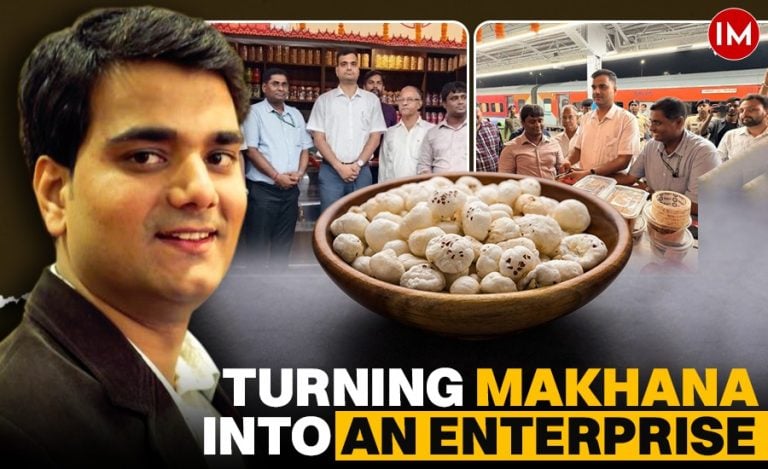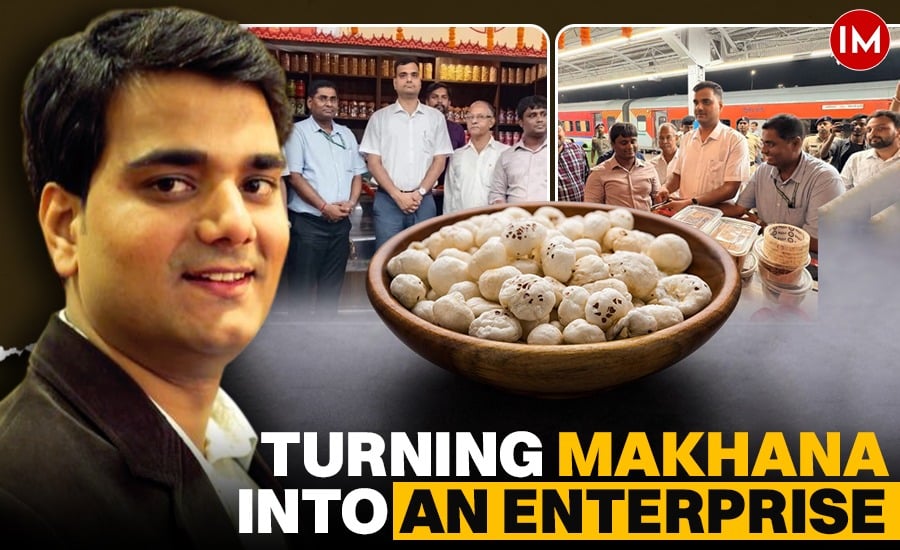
What if a traditional agricultural product could become much more than a farm commodity? What if it could be turned into sweets, snacks, healthy drinks and other products that reach customers across the country?
In Katihar, Bihar, this idea is taking shape around Makhana. Known for its Makhana production, the district is now working to give the crop a wider identity through food innovation, processing, branding and marketing. From Makhana Peda and Barfi to Jalebi, Laddoo and even a proposed Makhana Sattu Healthy Drink, the focus is shifting from selling raw produce to creating products with greater market value.
The initiative is being taken forward under the guidance of Ashutosh Dwivedi, a 2018-batch IAS officer of the Bihar cadre, who is currently serving as Collector and District Magistrate of Katihar. With the dedicated efforts of District Agriculture Officer-cum-Project Director, ATMA, Rajeev Kumar, the district administration is connecting Makhana farmers, Farmer Producer Organisations (FPOs) and women farmer groups with scientific production methods and new business opportunities.
Speaking to Indian Masterminds, the district administration highlighted how a series of coordinated interventions is helping Katihar move from traditional Makhana production towards value addition and wider market recognition.
Also Read – Delhi’s BS-IV Vehicle Ban: Why Should Registration State Determine Who Can Enter the Capital?
MAKHANA JALEBI: AN INNOVATIVE START
One of the most visible steps in this journey was the launch of Makhana Jalebi on Independence Day. District Magistrate Ashutosh Dwivedi formally launched the product during the celebrations at Maheshwari Academy Ground in Katihar.
The event was attended by former Bihar Deputy Chief Minister and Katihar In-charge Minister Dr. Pramod Kumar, former MP Nikhil Choudhary, MLC Ashok Agrawal and Mayor Usha Agrawal, along with other public representatives and officials.
The launch was more than a food promotion activity. It reflected the district’s effort to explore new uses of Makhana and create products that could attract a wider range of consumers.
The administration wants to move beyond conventional Makhana snacks and establish it as an ingredient for different food categories. Such diversification can create additional income opportunities for farmers, FPOs and rural entrepreneurs.
SCIENTIFIC TRAINING TO IMPROVE QUALITY AND INCOME
The first stage of the initiative focused on strengthening production and creating awareness about value addition.
In July 2026, the Agricultural Technology Management Agency (ATMA), Katihar, organised an interaction and awareness programme at the District Joint Agriculture Building. Progressive Makhana farmers, farmer groups and FPO representatives participated in the programme, which was chaired by District Agriculture Officer Rajeev Kumar.
Farmers were introduced to scientific cultivation practices, modern agricultural technologies and research-based production methods. Discussions also covered improving product quality and reducing cultivation costs.
Rajeev Kumar encouraged farmers to look beyond the traditional sale of raw Makhana. He explained that value addition could help them earn better returns and reduce their dependence on selling unprocessed produce.
He also highlighted that around 20–25 varieties of food products could be prepared from Makhana. These include Peda, Barfi, Thekua, Laddoo and Jalebi.
Deputy Project Director, ATMA, Shashikant Jha, also spoke about efforts to organise Makhana growers into a district-level Makhana Farmers’ Association. The objective is to strengthen collective action and improve access to national and international markets.
Following the programme, farmers and FPO representatives met the District Magistrate and presented products such as Makhana Peda, Barfi and Thekua. Dwivedi appreciated their efforts and directed the District Agriculture Officer to explore dedicated sales outlets for Makhana-based products.
WOMEN FARMER GROUPS ENTER THE VALUE-ADDITION MARKET
A major part of Katihar’s strategy is to bring rural women into food processing and entrepreneurship.
During Ganesh Chaturthi, Makhana Laddoos prepared by women farmer groups were offered as Prasad to Lord Ganesha at the Ganpati Pandal near Shiv Mandir Chowk in Katihar.
Sadar Sub-Divisional Magistrate Suraj Kumar and District Agriculture Officer Rajeev Kumar jointly offered the Laddoos to Ganpati Bappa. They also tasted the Laddoos and Makhana Jalebi prepared by the women’s groups.
The occasion provided an opportunity to discuss ways to expand the market for these products. Suraj Kumar stressed the importance of attractive packaging, consistent quality, branding and appropriate pricing.
He also suggested exploring online platforms such as Amazon, Flipkart and Swiggy. Product photography, digital marketing and customer outreach were discussed as important tools for reaching consumers beyond local markets.
The products were prepared by women groups from Musapur village in Korha block with support from Jata FPO, Katihar.
This effort is helping women move beyond traditional agricultural activities and participate in processing, product development and marketing. It also creates opportunities for collective income generation through local food enterprises.
MAKHANA JUNCTION TAKES LOCAL PRODUCTS TO RAILWAY PASSENGERS
Another important milestone came on 23 October 2026, when the district introduced Makhana Junction at Katihar Railway Station under the Indian Railways’ One Station One Product (OSOP) scheme.
The stall was jointly inaugurated by District Magistrate Ashutosh Dwivedi and the Divisional Railway Manager. It was established through the efforts of the District Administration and the District Agriculture Department.
The idea is to take Katihar’s Makhana products to a larger audience. A railway station offers access to passengers travelling from different parts of the country. This creates an opportunity for local producers to showcase their products beyond the district.
Makhana Junction offers a variety of products, including roasted Makhana, Peri-Peri Makhana, Cheese Makhana, spicy Makhana and Caramel Makhana. It also stocks value-added products such as Makhana Barfi, Thekua, Laddoo, Peda and Kheer Mix.
The stall is expected to strengthen market connections for local producers and give their products greater visibility.
District Agriculture Officer Rajeev Kumar said that connecting local agricultural products with wider markets, improving farmers’ returns and strengthening Katihar’s agricultural identity remain key priorities.
The District Magistrate also appreciated the initiative, describing it as a positive step towards promoting healthy food habits, local products and farmers’ prosperity.
FROM MAKHANA SWEETS TO A HEALTHY BEVERAGE
The district’s plans are not limited to sweets and snacks. Another product being explored is the Makhana Sattu Healthy Drink.
The proposed beverage will use Makhana-based Sattu and can be developed in different formulations with milk or water. Ingredients such as jaggery, other natural sweeteners and cardamom can be added to improve its taste.
Preparations are underway to develop the product and introduce it in the market as a nutritious and refreshing beverage.
Women farmer groups and FPOs are being encouraged to explore its production, packaging, branding and marketing. The idea is to connect traditional nutritional ingredients with the growing demand for health-oriented drinks.
If successfully developed and marketed, the beverage could add another category to Katihar’s expanding Makhana product range.
A ROADMAP FROM FARMS TO NATIONAL MARKETS
The district administration is now working on a broader roadmap to make the Makhana sector more organised and market-oriented.
One priority is to bring growers together through a district-level Makhana Farmers‘ Association and strengthen collective production and marketing through FPOs. Another is to support women farmer groups in processing, packaging and selling Makhana-based products.
Product quality, hygiene, attractive packaging and standardised branding will also receive attention. Dedicated sales outlets, railway stations, exhibitions, fairs and local markets are being explored as important marketing channels.
The administration also wants to improve online market access through e-commerce and food-delivery platforms. At the same time, product development and promotion will continue, including the proposed Makhana Sattu Healthy Drink.
The larger objective is to ensure that farmers earn more from their produce through processing and value addition, rather than depending only on the sale of raw Makhana.
BUILDING A NEW IDENTITY FOR KATIHAR
Katihar’s Makhana initiative reflects a wider approach to rural development. It connects agricultural production with food processing, entrepreneurship, women’s participation and market access.
Farmers are being encouraged to improve the quality of their produce. Women groups are getting opportunities to develop and market new products. FPOs are helping connect producers with organised markets, while public spaces such as railway stations are being used to showcase local products.
Under the guidance of District Magistrate Ashutosh Dwivedi and the efforts of District Agriculture Officer Rajeev Kumar, Makhana is gradually emerging as more than an agricultural commodity. It is becoming a platform for rural enterprise and local economic growth.
The journey is moving from farms to processing units, from traditional recipes to new food products, and from local markets to wider consumer networks.
The ultimate vision is to build a stronger identity for Katihar’s Makhana, improve farmers’ incomes, empower rural women and create sustainable business opportunities. If these efforts continue to grow, Katihar could establish itself not only as a major Makhana-producing region but also as a centre for Makhana-based food innovation and value addition.
Also Read – UPSC CSE Mains Result 2026 Out; 2,526 Candidates Qualify for Interview, Shailesh Parmar Tops Shortlist