What if children were not just the recipients of government schemes, but active participants in decisions that shape their lives? What if a child could walk into a public institution, raise a concern and know that someone would listen and act?
In Koppal district of Karnataka, this idea is becoming a reality. Through its initiative, Listening to Children, the district administration is creating spaces where children can speak about their problems, understand their rights and participate in local governance. More importantly, it is connecting their concerns with institutions that can provide solutions.
The initiative was taken under the leadership of Deputy Commissioner Suresh B. Itnal, an Indian Administrative Service officer of the 2016 batch, Karnataka cadre. The effort is based on a simple principle: listening to children must lead to action.
FROM GIVING CHILDREN A VOICE TO MAKING THEIR VOICES COUNT
Koppal is part of Karnataka’s Kalyana Karnataka region. The district faces several challenges, including child marriage, school dropout, child labour, violence against children and concerns related to health, nutrition and access to education.
Also Read – Beyond the Uniform: UP Police’s Film ‘Vardi’ Pays Tribute to Those Who Never Returned Home
Children often experience these problems directly. Yet, they may not have the confidence or opportunity to take their concerns to decision-makers. The Listening to Children initiative seeks to bridge this gap.
The approach was initiated in August 2025 through discussions in the District Child Protection Committee. During 2025-26, it was implemented across all 152 Gram Panchayats in the district.
Children are encouraged to identify issues, discuss their priorities and approach elected representatives and government officials. The initiative uses several platforms, including Children’s Grama Sabhas, school and college interactions, Child Rights Parliament, Open House programmes and visits to public institutions.
The aim is to create a clear link between a child raising a concern and the relevant institution taking responsibility for it.
CHILDREN’S GRAMA SABHAS: WHERE YOUNG VOICES MEET GOVERNANCE
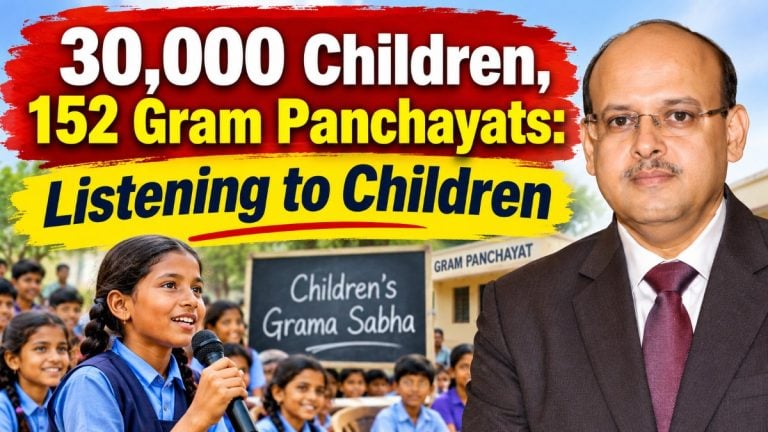
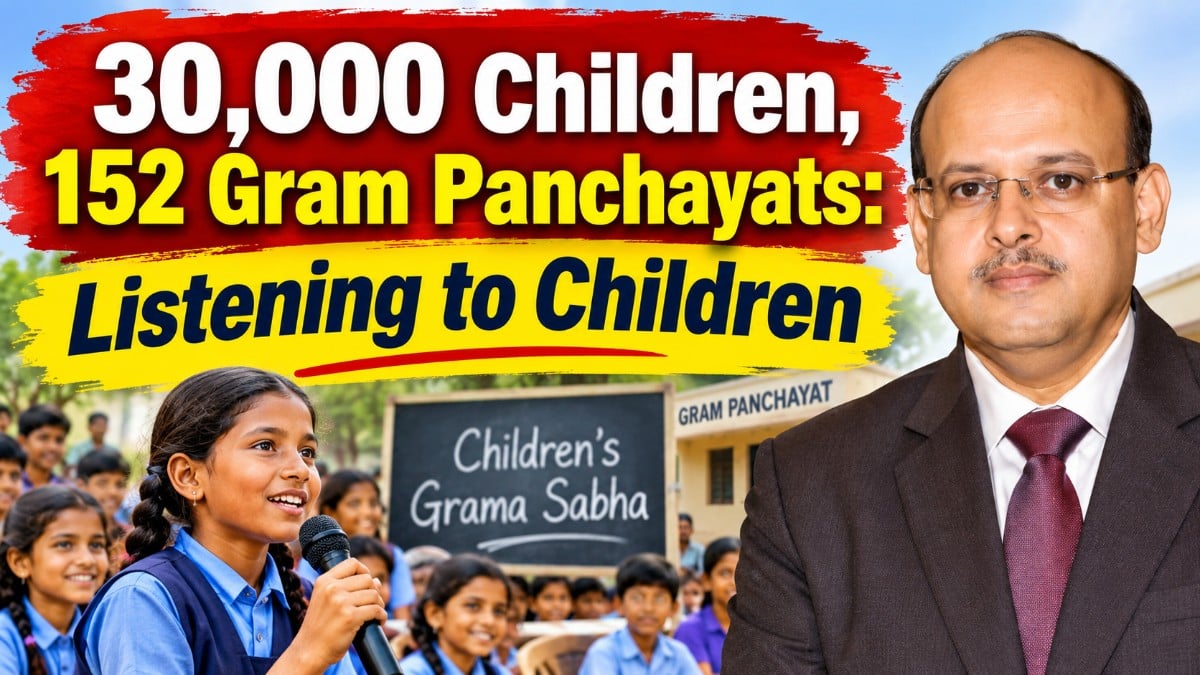
Children’s Grama Sabhas are at the heart of the initiative. These meetings give children a recognised platform to discuss matters that affect their everyday lives.
They can raise concerns about drinking water, sanitation, school attendance, transport, menstrual hygiene, health, nutrition and access to government schemes. Issues such as child marriage, child labour, violence and digital safety can also be discussed.
The concerns are placed before elected representatives, Panchayat Development Officers and officials from relevant departments. Local infrastructure and service-delivery problems can be taken up by Gram Panchayats, while child-protection concerns can be referred to the appropriate authorities.
The scale of participation has been significant. During 2025-26, more than 30,000 children and 15,000 adult stakeholders participated in Children’s Grama Sabhas across Koppal. They raised over 3,000 infrastructure and social issues, of which more than 70 per cent were resolved.
The district administration believes that participation becomes meaningful only when institutions respond and follow up on the issues raised.
“Children should not have to wait until they become adults to be heard. They experience many problems in their homes, schools and communities, and their views can help us understand these challenges better. Our responsibility is to create platforms where they can speak freely and ensure that their concerns reach the right departments,” Itnal said in a draft statement prepared for Indian Masterminds.
WHEN AWARENESS GIVES CHILDREN THE COURAGE TO ACT
One incident documented by the District Child Protection Unit shows how the initiative can make a difference beyond formal meetings.
A Class VII student from a government girls’ high school learnt that one of her classmates was at risk of child marriage. The girl had stopped attending school, and her friends discovered that her family had arranged her marriage.
Remembering the guidance received during institutional interactions, the student and her friends approached the local police for help. The police responded, sought further information and committed to taking necessary action.
The incident shows why children must know where to seek help and feel confident about approaching public institutions. It also highlights the importance of child-friendly policing and accessible reporting channels.
The wider child-protection efforts have also addressed more than 2,000 child-marriage prevention cases. The system has handled over 800 POCSO cases in a child-friendly manner.
BUILDING CONFIDENCE THROUGH LEARNING AND LEADERSHIP
For children to participate meaningfully, they must first understand their rights and develop the confidence to express themselves. Koppal’s approach therefore goes beyond public meetings.
The district is strengthening 152 Gram Panchayat libraries with support from civil-society organisations. These libraries provide spaces for reading, discussions and creative activities. Their programmes include storytelling, book talks, library clubs, librarian training and the development of home libraries. The activities directly benefit more than one lakh children.
The experience of eleven-year-old Rupa Virupaksha Badigera from Ginigera reflects the impact of these efforts. Encouraged by school book-talk sessions and her librarian, Rupa developed a strong reading habit and built a home library of more than 100 books. She now motivates other children to read.
Adolescent empowerment programmes, including Sphoorthi and Balika Sangha, are also helping young people become more confident. Annapurna from Muddabali village sought help when she faced an attempted forced marriage. With support from adolescent peers, community organisers and child-protection services, she was rescued. She continued her education and later became a cluster-level leader.
These examples show how awareness and peer support can help children and adolescents protect themselves and support others.
CONVERGENCE: BRINGING DEPARTMENTS TOGETHER
A key strength of the Koppal model is that it does not create a separate administrative structure. Instead, it brings existing institutions together around children’s needs.
The District Administration, Zilla Panchayat and UNICEF provide coordination. Gram Panchayats offer the local governance platform, while departments dealing with education, health, women and child development, police, labour and child protection contribute to the process. Organisations such as Karnataka Health Promotion Trust, TATA Kalike Trust and APF support mobilisation, adolescent leadership and learning activities.
During 2025-26, complementary activities such as school interactions, Child Rights Parliament, Open House programmes, police-station visits and library engagement reached more than one lakh children.
The approach is also supported by evidence from adolescent empowerment programmes. An external evaluation reported that school dropout among peer girls aged 13-16 declined from 29 per cent at baseline to 16 per cent at endline. Improvements were also reported in educational aspirations, confidence and participation in decision-making.
The Karnataka Government has allocated more than ₹10 crore to expand the Koppal model to five districts, indicating its potential for wider adoption.
“The idea is to make child-friendly governance part of the way our institutions function. When departments, Gram Panchayats, schools and communities work together, children’s concerns can receive a more timely response. We want children to grow up knowing their rights, feeling safe and believing that their voices can bring change,” Itnal said in a draft statement prepared for Indian Masterminds.
A MODEL FOR RESPONSIVE GOVERNANCE
Koppal’s experience offers an important lesson. Child-friendly governance cannot be achieved simply by inviting children to meetings. It requires institutions to listen regularly, respond responsibly and remain accountable.
By connecting schools, libraries, adolescent groups, Children’s Grama Sabhas and government departments, the district is building a system in which children can participate in decisions that affect them.
Ultimately, the success of Listening to Children will not be measured only by the number of children who speak at a forum. It will be measured by whether their concerns reach the right people and lead to meaningful solutions.
Koppal is demonstrating that when children are heard, communities become more aware, public institutions become more approachable and governance becomes more responsive. Listening to children is not merely an act of inclusion. It is an investment in safer childhoods, confident young citizens and a stronger local democracy.
Also Read – “Leadership Is About Remaining Useful While Being Affected”: IPS Officer Abhinav Kumar