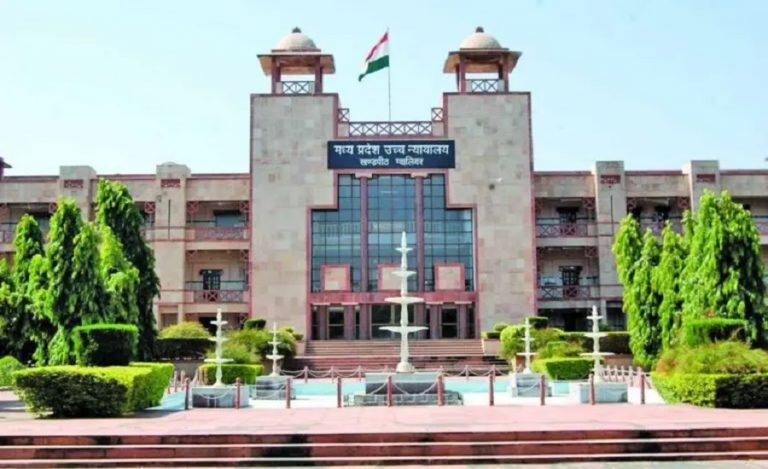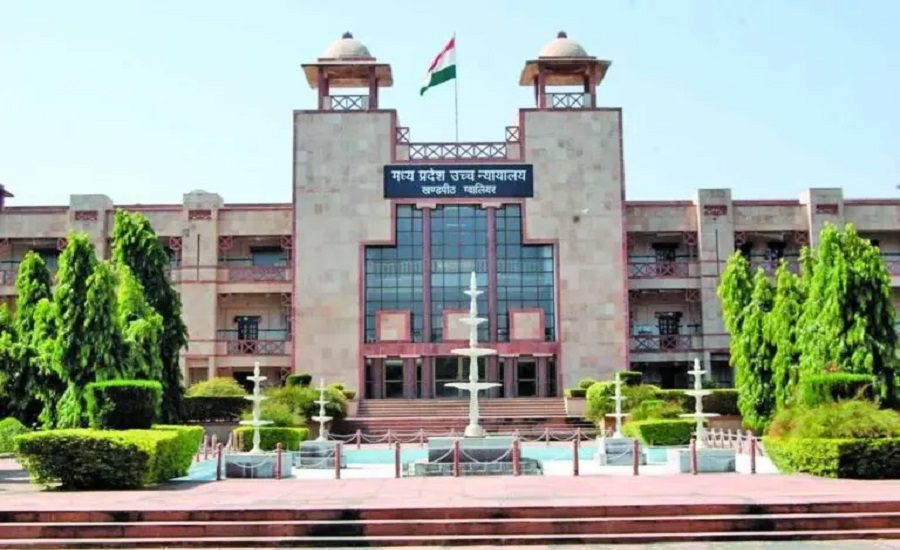
Bhopal: The Madhya Pradesh High Court has ruled that an Aadhaar card is not conclusive proof of age and is primarily an identity document. The Court gave greater importance to a postmortem report while determining the age of a minor boy who died in a road accident. The ruling came while deciding a compensation appeal filed by the boy’s parents. The Court also increased the compensation amount from ₹5.45 lakh to ₹8.25 lakh.
Why Did The Madhya Pradesh High Court Reject Aadhaar As Proof Of Age
The case involved the death of a minor boy, Harendra Singh Baghel, in a road accident on December 24, 2019.
Read also: Aadhaar Vision 2032: India’s Bold Step Toward AI-Driven, Privacy-First Digital Identity
His parents had approached the Madhya Pradesh High Court seeking an increase in the compensation awarded by the Motor Accident Claims Tribunal (MACT), Bhind.
The Tribunal had earlier awarded ₹5.45 lakh in compensation on September 14, 2022. It determined the boy’s age as 14 years, 7 months and 9 days based on his Aadhaar card. However, the insurance company challenged this age calculation before the High Court.
The insurance company argued that the postmortem report recorded the boy’s age as 13 years. It also said that Aadhaar was not conclusive proof of age.
What Did The Madhya Pradesh High Court Say About Aadhaar Card Proof of Age
Justice Amit Seth examined the Aadhaar card and the postmortem report before deciding the boy’s age.
The Court observed that Aadhaar is primarily an identity document and cannot, by itself, establish the age of its holder conclusively.
It also explained that the age mentioned in a postmortem report is based on medical assessment conducted during the postmortem examination. Therefore, the Court considered the medical opinion in the postmortem report more reliable in this particular case.
The High Court accepted the boy’s age as 13 years at the time of the accident instead of the age recorded by the Tribunal.
Aadhaar Card Proof of Age: Why Did The Court Apply A Multiplier Of 15 Instead Of 18
The Court also examined the correct method for calculating compensation in cases involving the death of a minor.
The Motor Accident Claims Tribunal had used a multiplier of 18 while calculating the compensation. However, the insurance company argued that a multiplier of 15 should apply because the boy was below 15 years of age.
The High Court considered earlier Supreme Court decisions, including Divya v. National Insurance Company Limited and Meena Devi v. Nunu Chand Mahto. Based on the applicable legal principles, the Court held that a multiplier of 15 was appropriate for the deceased boy.
The Court also noted that 50% of the notional income should be deducted towards personal and living expenses.
How Did The Court Increase The Compensation To ₹8.25 Lakh
The High Court accepted the parents’ argument that the boy’s notional monthly income should be calculated using the minimum wages applicable to an unskilled worker. It fixed his monthly notional income at ₹7,950 instead of the ₹25,000 used by the Tribunal.
After applying the relevant deductions and multiplier, the Court recalculated the compensation. The final compensation included loss of dependency, parental consortium, funeral expenses and loss of estate. The revised calculation was as follows:
| Compensation Details | Amount |
| Monthly Notional Income | ₹7,950 |
| Annual Income | ₹95,400 |
| Deduction For Personal Expenses (50%) | ₹47,700 |
| Multiplier | 15 |
| Loss Of Dependency | ₹7,15,500 |
| Loss Of Parental Consortium | ₹80,000 |
| Funeral Expenses | ₹15,000 |
| Loss Of Estate | ₹15,000 |
| Total Compensation | ₹8,25,500 |
The Court increased the compensation by ₹2,80,500, taking the total amount from ₹5.45 lakh to ₹8.25 lakh.
It also directed that the enhanced compensation would carry interest at 6% per annum from the date of filing the original compensation claim until the amount is realised.
Aadhaar Card Proof of Age: What Is The Final Decision Of The Madhya Pradesh High Court
The Madhya Pradesh High Court partly allowed the appeal filed by the boy’s parents.
It also accepted the insurance company’s objections regarding the determination of the boy’s age and the application of the multiplier.
The Court modified the earlier compensation award and directed that the revised amount be paid according to its order.
The judgment was delivered on November 3, 2026, by Justice Amit Seth in Rajesh Singh And Another vs. Rahul Singh And Others (Miscellaneous Appeal No. 6071 of 2022).
The ruling highlights the importance of examining reliable evidence while determining age in motor accident compensation cases. It also clarifies that an Aadhaar card alone may not be sufficient to establish a person’s age in such proceedings.
Read also: No Biometric Aadhaar, No GST Registration: Delhi High Court’s Nationwide Order Explained
FAQs
The Madhya Pradesh High Court held that an Aadhaar card cannot, by itself, be treated as conclusive proof of age. In this case, the Court considered the postmortem report more reliable because it was based on medical assessment.
An Aadhaar card is primarily an identity document and is not conclusive proof of age. Courts may examine other reliable documents and evidence to determine a person’s actual age.
The Madhya Pradesh High Court increased the compensation from ₹5.45 lakh to ₹8.25 lakh. The enhanced amount was ₹2,80,500, carrying interest at 6% per annum from the date of filing the original claim petition until realisation.