For an elephant walking through a forest, a railway track is simply another path cutting through its habitat. But for a speeding train, that same path can become a deadly barrier.
For years, this was the reality in Madukkarai Range of Tamil Nadu’s Coimbatore Forest Division. Elephants regularly crossed the railway tracks running through the forest. Despite round-the-clock patrolling, warnings and joint efforts by the Forest Department and Railways, accidents continued to happen.
Then came a different approach. Instead of waiting for forest staff to spot an elephant, the system would detect the animal first and send an alert before it reached the tracks.
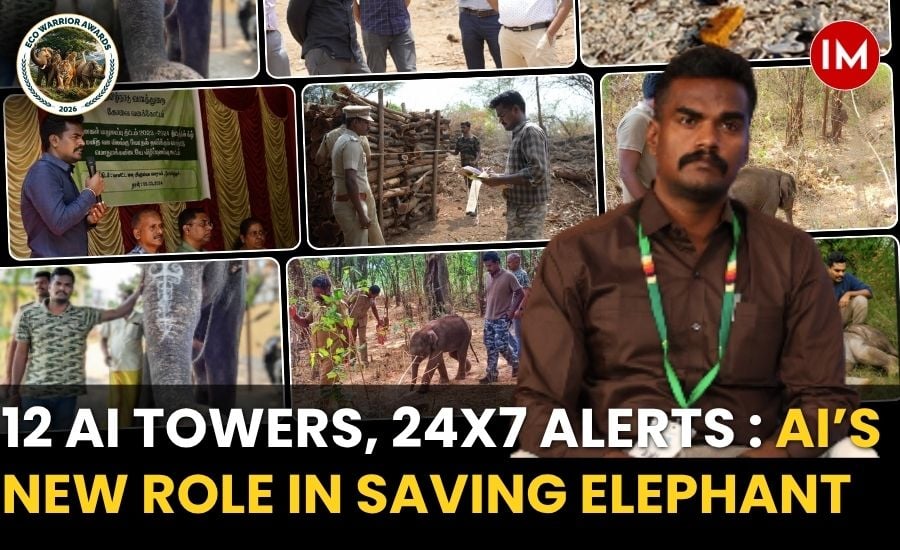
This shift towards technology-led prevention was taken forward under Thiru. N. Jayaraj, IFS, a 2013-batch Indian Forest Service officer of the Tamil Nadu cadre, who is currently posted as Wildlife Warden, Hosur. Under his leadership and with coordination between the Forest Department and Railways, an Artificial Intelligence-based surveillance system was installed along a vulnerable railway stretch in Madukkarai.
A DEADLY STRETCH THROUGH THE FOREST
Elephant movement has long been a major human-wildlife conflict issue in Coimbatore Forest Division. Records show that elephants strayed out of forest areas around 9,000 times over a three-year period.
Also Read – IFS Dr C. Zupeni Tsanglai on Nagaland’s Conservation Future: Forests, Wildlife and Communities
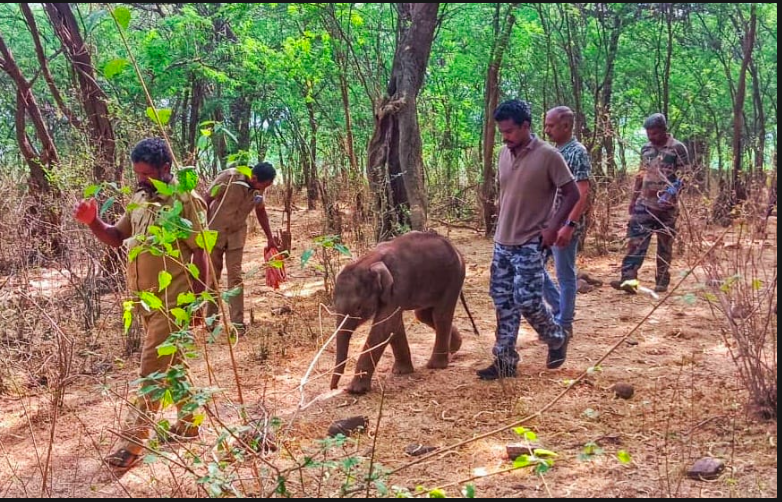
The railway tracks passing through Solakarai Beat and Bolampatti Block-I Reserved Forests were particularly dangerous. Two railway lines pass through the area, connecting Tamil Nadu with Kerala. Since 2008, 11 elephants had died in train collisions, including young calves and juveniles.
Forest staff and watchers patrolled the tracks day and night. Underpasses and other safety measures were also developed jointly by the Railways and Forest Department. Yet the problem remained.
The challenge was not simply a lack of manpower. It was a lack of timely information.
THE INFORMATION GAP
Forest personnel could patrol the railway track throughout the day. They could observe elephant movement. But they could not always know exactly when an elephant would approach the track or where it would emerge.
That uncertainty was critical.
“The biggest challenge was the information that was unavailable to us. Although we patrol 24×7 on the track, the animal movement is known, but the frequency, exact time of movement along with location is always uncertain,” Jayaraj explains.
The solution was to bring technology into the existing system.
The Government sanctioned ₹7.24 crore for installing an AI-based surveillance system. Work began on March 23, 2023, covering a seven-kilometre vulnerable stretch of both railway lines. The project was completed in September 2023 and inaugurated on February 9, 2024.
TWELVE TOWERS WATCHING THE TRACK
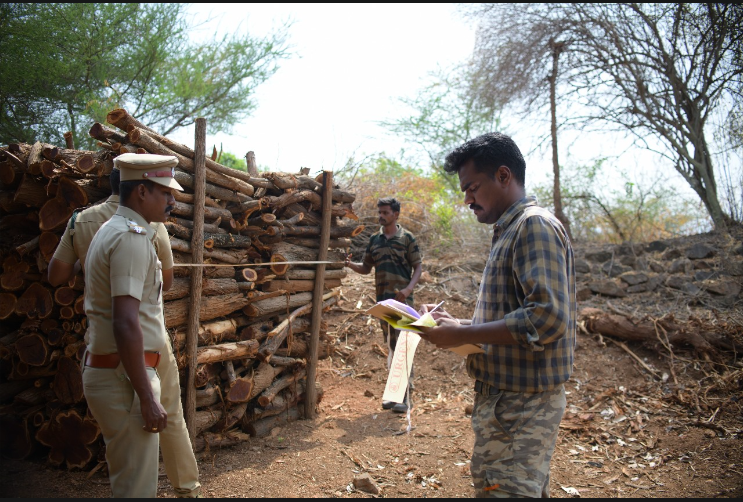
The system uses 12 high towers, placed at strategic locations around 500 metres apart. Each tower has thermal as well as conventional cameras.
Together, they cover important elephant crossing points and monitor an area extending around 150 metres on either side of the railway track.
The thermal cameras are especially useful at night. The conventional cameras provide visual confirmation. AI helps detect animal movement and generate alerts.
The information is sent in real time to a 24×7 control room, where Forest Department personnel and technical staff monitor the feeds.
When an elephant approaches the monitored zone, alerts are generated. The animal’s location and the nearby railway stone reference are communicated to forest officials and railway personnel.
The information is also passed to loco pilots through calls, SMS and alerts. Hooters installed on the camera towers sound warnings. Digital display boards along the railway track also alert train drivers to elephant movement.
The idea is simple: detect early, communicate quickly and give the train enough time to slow down or stop.
TECHNOLOGY AND PEOPLE WORK TOGETHER
The system does not depend on AI alone.
Human monitoring remains an important part of the process. Once an alert is generated, control room personnel verify and communicate the information to field staff and railway officials.
This creates a chain of response between the technology, forest staff and Railways.
“Technology works best when supported by strong inter-departmental coordination. The key lesson is that people, processes, technology and ecological understanding must work together,” says Jayaraj.
This coordination is particularly important because the Forest Department and Railways have different responsibilities. A warning is useful only if it reaches the right person at the right time.
FROM ACCIDENT PREVENTION TO ELEPHANT SCIENCE
The system is doing more than preventing train hits.
Every detection also creates information about elephant movement. Over time, this can reveal crossing points, movement patterns and seasonal trends. It can also help in understanding the behaviour of individual elephants.
Such data can support future decisions on corridor management, habitat planning and human-elephant conflict mitigation.
In this way, the railway surveillance system is gradually becoming a source of ecological knowledge.
A SIGNIFICANT CHANGE AT MADUKKARAI
The results have been encouraging.
After the system became operational, 1,698 safe animal crossings were recorded in the area, involving around 3,435 elephants, with zero elephant deaths on the railway track during the reported period.
For an area that had witnessed repeated fatalities, this marks a major change.
The Madukkarai experience also shows that technology does not have to replace traditional forest protection methods. It can strengthen them.
The forest staff continue to patrol. Railway personnel remain involved. Loco pilots receive warnings. But now, all of them have access to faster and more precise information.

A MODEL THAT CAN TRAVEL
Jayaraj believes the Madukkarai model can offer lessons to other elephant landscapes, but not as a one-size-fits-all solution.
Every railway corridor has different terrain, forest conditions, animal movement patterns and operational challenges. The technology must therefore be adapted to local needs.
The larger principle, however, remains the same: preventing wildlife deaths requires early detection, real-time communication and a coordinated response.
For N. Jayaraj, IFS, the initiative represents a wider shift in conservation thinking. Forest protection is no longer only about patrolling and reacting to incidents. It is increasingly about using technology, data and collaboration to anticipate risks.
At Madukkarai, that approach has placed an early warning system between elephants and speeding trains.
And sometimes, in wildlife conservation, a few minutes of advance information can mean the difference between an animal safely crossing a railway track and never making it to the other side.
Also Read – From Forests to Wetlands: The Conservation Leadership Transforming Odisha’s Wild Landscapes