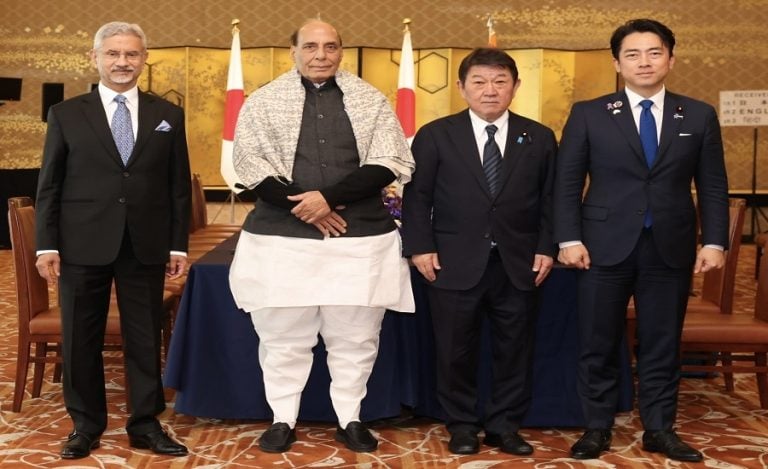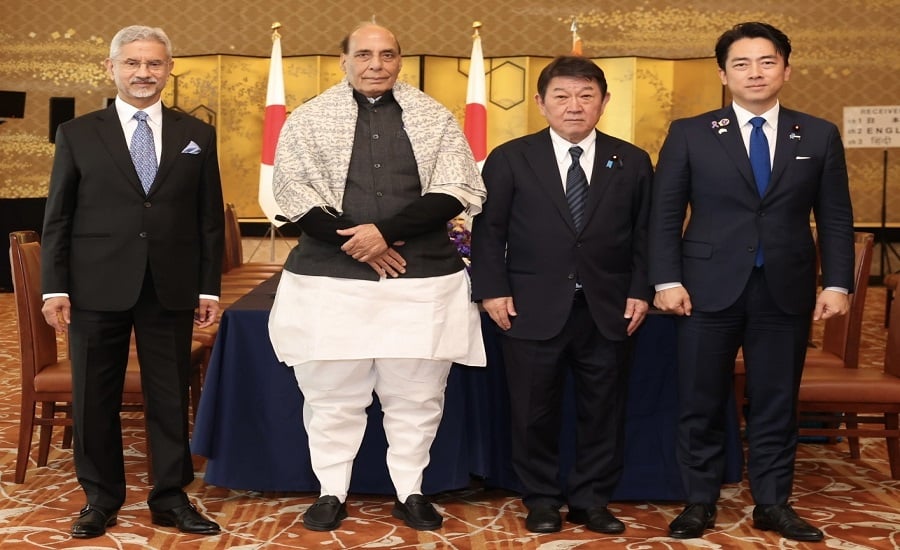
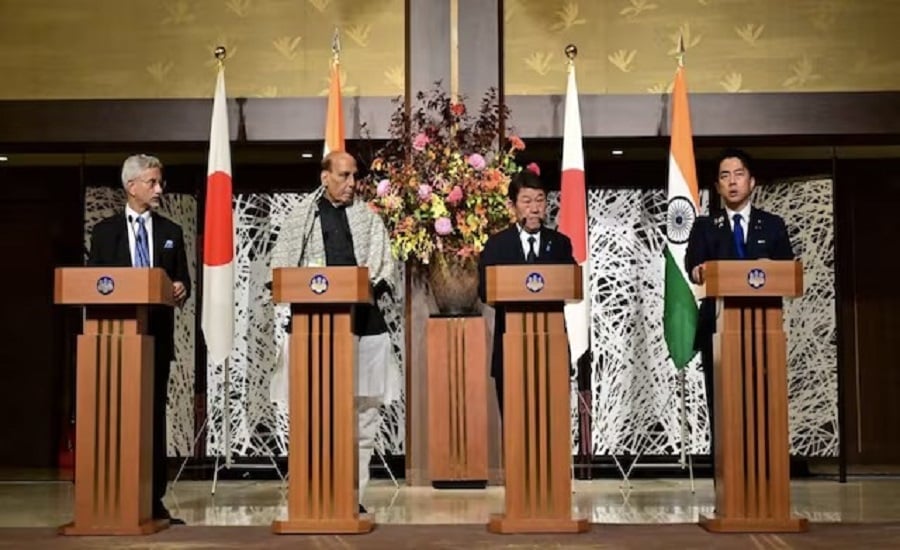
Tokyo: India and Japan have agreed to strengthen defence cooperation, cybersecurity, economic security, artificial intelligence (AI), maritime security and supply chain resilience during the fourth India-Japan 2+2 Foreign and Defence Ministerial Meeting held in Tokyo on November 19, 2026.
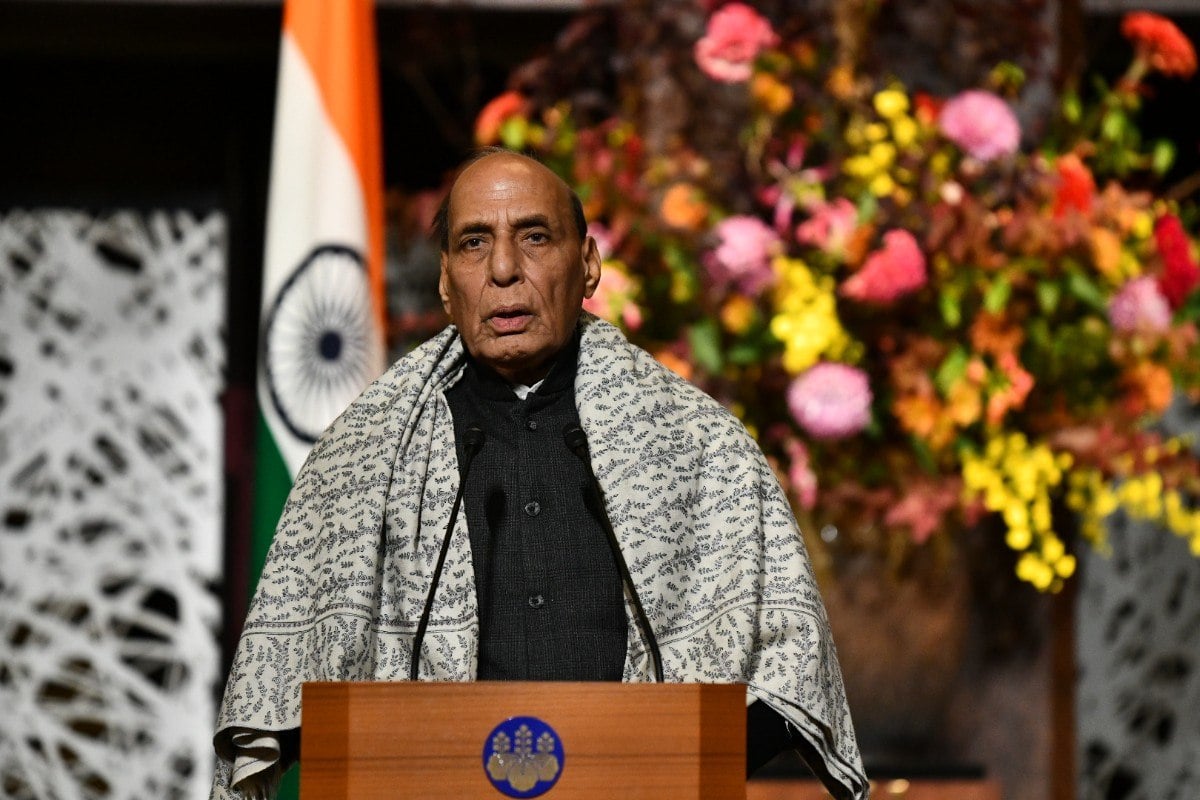
The meeting was attended by Defence Minister Rajnath Singh, External Affairs Minister Dr S Jaishankar, Japan’s Foreign Minister Motegi Toshimitsu and Defence Minister Koizumi Shinji.
The Ministers underscored the growing strategic convergence and mutual trust between the two countries amid an increasingly complex international environment. They stressed the need for closer coordination under the India-Japan Special Strategic and Global Partnership to address emerging geopolitical, economic and security challenges.
Both sides reaffirmed their commitment to maintaining a free, open and rules-based international order, respecting national sovereignty and territorial integrity, and resolving disputes peacefully without the threat or use of force.
India and Japan Reaffirm Commitment to Free and Open Indo-Pacific
The Ministers emphasised the importance of strengthening cooperation to promote peace, prosperity and resilience across the Indo-Pacific region.
They welcomed the synergy between India’s Indo-Pacific Oceans’ Initiative (IPOI) and MAHASAGAR (Mutual and Holistic Advancement for Security and Growth Across Regions), alongside Japan’s updated Free and Open Indo-Pacific (FOIP) vision.
The two countries also reviewed progress made since their previous 2+2 meeting in 2024 and welcomed the outcomes of the 15th and 16th India-Japan Annual Summits held in August 2025 and July 2026, respectively.
These summits provided strategic direction for strengthening defence and security cooperation, economic partnership, energy resilience, technology, innovation and people-to-people exchanges.
The Ministers agreed to expand policy consultations on regional developments involving Africa, Asia and the Middle East/West Asia, as well as on multilateral issues such as United Nations reform, space, maritime affairs, climate change, terrorism and the Arctic.
Defence Cooperation and Military Exercises to Be Expanded
India and Japan welcomed the growing defence and security partnership under the Joint Declaration on Security Cooperation adopted during the August 2025 Annual Summit.
Japanese Ministers outlined ongoing efforts to revise Japan’s National Security Strategy, National Defence Strategy and Defence Buildup Program, which are expected to contribute to enhanced cooperation with India in maintaining regional and global security.
The Ministers expressed satisfaction over the expansion of bilateral military exercises, including cooperation between the two air forces.
They highlighted the first-ever visit to India by Japanese Air Self-Defence Force fighter aircraft during the India-Japan air exercise Veer Guardian 26, along with the visit of Japan’s Air Self-Defence Force Chief of Staff.
Both sides agreed to make military exercises more complex, integrate unmanned systems and explore bilateral and multilateral exercises at short notice.
They also welcomed the signing of a Letter of Intent (LOI) on the utilisation of firing ranges in India, which will enable Japan’s Self-Defence Forces to conduct live-fire training in India for the first time, including training involving surface-to-ship missiles.
The defence authorities of both countries will accelerate coordination to implement the arrangement.
Defence Industrial Cooperation and UNICORN Initiative
The Ministers expressed expectations for the early formulation of arrangements related to UNICORN and India’s Acceptance of Necessity (AoN) by February 2027.
They also called for further strengthening defence industrial cooperation under the framework of “Design with Japan, Make in India.”
The two sides welcomed the third India-Japan Defence Industries Forum, held in Tokyo in October 2026, as an important platform for promoting defence industry collaboration.
Maritime Security Cooperation and Naval Collaboration
India and Japan welcomed the recently signed Memorandum of Arrangement on Maritime Security Cooperation and agreed to accelerate its implementation.
The cooperation will focus on addressing the strategic and operational requirements of the Indian Navy and Japan Maritime Self-Defence Force through areas including:
- Maritime and Air Domain Awareness (MDA)
- Search and Rescue (SAR)
- Information sharing
- Humanitarian Assistance and Disaster Relief (HADR)
The Ministers also affirmed their commitment to enhancing mine countermeasure capabilities and exploring joint development opportunities in naval shipbuilding and design.
They welcomed expanding cooperation between the two countries’ coast guards and highlighted the upcoming fifth Coast Guard Global Summit (CGGS), scheduled to be held in India in February 2027.
Consular Cooperation and Assistance to Nationals
The Ministers agreed to establish a dialogue between the consular authorities of India and Japan to discuss a wide range of consular matters.
The proposed dialogue will also include a tabletop exercise to strengthen cooperation in providing assistance to their respective nationals in distress or requiring support overseas.
Cybersecurity and Digital Connectivity
India and Japan reaffirmed their commitment to developing secure and resilient digital connectivity across the Indo-Pacific.
The two countries agreed to enhance cooperation in developing trusted, redundant and high-speed undersea cable networks, including through industry partnerships.
They will also share best practices to improve the security, reliability and resilience of critical undersea communications infrastructure.
Amid rising cyberattacks, the Ministers stressed the need to strengthen cybersecurity cooperation, particularly in AI-enabled cybersecurity and the security of AI systems, with a focus on critical infrastructure.
They directed officials to renew the existing Memorandum of Cooperation on cybersecurity and convene the next India-Japan Cyber Dialogue at an early date.
India and Japan to Expand Cooperation in Space
The Ministers agreed to deepen cooperation in the space sector, including Space Situational Awareness (SSA), the use of space-based capabilities for Maritime Domain Awareness (MDA), international rules and norms related to space, and other areas of mutual interest.
They also called for holding the next India-Japan Space Dialogue at an early date to advance cooperation in the sector.
Cooperation Through Quad and ASEAN Frameworks
Recognising the alignment between bilateral India-Japan cooperation and the Quad’s priority areas, the Ministers reaffirmed their commitment to strengthening initiatives in the Indo-Pacific.
The cooperation will complement the Quad’s focus on maritime and transnational security, economic prosperity and security, critical and emerging technologies, and humanitarian assistance and emergency response.
They welcomed the series of Quad Foreign Ministers’ Meetings and the Quad Leaders’ Summit held in November 2026.
The Ministers also highlighted the importance of working with ASEAN member states to strengthen regional resilience and promote peace, stability and prosperity.
In this regard, they welcomed the first India-Japan-Philippines Trilateral 1.5 Dialogue held in October 2026 and the first trilateral naval PASSEX exercise involving India, Japan and Indonesia in February 2026.
Economic Security and Resilient Supply Chains
India and Japan expressed serious concerns over economic coercion, arbitrary export restrictions and non-market policies and practices resulting in overcapacity and disruptions to global supply chains in critical industries.
The Ministers stressed the importance of maintaining fair global competition and building resilient and reliable supply chains among like-minded partners.
They welcomed the Joint Declaration on Economic Security Cooperation adopted during the 16th India-Japan Annual Summit and agreed to promote concrete, project-based cooperation in strategic sectors, including:
- Semiconductors
- Critical minerals
- Information and communication technology (ICT)
- Clean energy
- Pharmaceuticals
The Ministers welcomed progress under the second round of the Economic Security Dialogue and the inaugural Private-Sector Economic Security Dialogue.
They encouraged closer engagement among government agencies, industries and research institutions to identify opportunities for diversifying supply chains, strengthening resilience and reducing strategic vulnerabilities.
Both sides also agreed to convene the inaugural Track 1.5 Dialogue and Follow-up Mechanism at an early date.
India-Japan AI Cooperation Under JAI Initiative
The Ministers reaffirmed that India and Japan are strategic research and development partners in artificial intelligence.
They welcomed the India-Japan Joint Statement on AI cooperation adopted during the Leaders’ Summit and agreed to deepen collaboration under the Japan-India AI Cooperation Initiative (JAI).
The initiative aims to strengthen the AI ecosystem in both countries, enhance national capabilities and accelerate co-creation in AI to address strategic, economic and societal priorities.
Joint Condemnation of Terrorism and Violent Extremism
India and Japan unequivocally condemned terrorism and violent extremism in all forms and manifestations, including cross-border terrorism.
The Ministers called for coordinated action against all UN-listed terrorist groups and entities, including Al Qaeda, ISIS/Daesh, Lashkar-e-Tayyiba (LeT), Jaish-e-Mohammad (JeM) and their proxies.
They stressed the need for decisive action to eliminate terrorist safe havens, disrupt financing channels and links with transnational crime, and prevent cross-border movement of terrorists.
Support for United Nations Security Council Reform
The Ministers reiterated their commitment to reforming the United Nations Security Council (UNSC), including expanding both permanent and non-permanent membership to reflect contemporary geopolitical realities.
They expressed mutual support for each other’s candidature for a permanent seat in a reformed UNSC.
India and Japan also confirmed mutual support for their respective candidatures for non-permanent seats for the 2028-29 and 2033-34 terms.
India-Japan Year of Shared Horizons to Mark 75 Years of Diplomatic Relations
India and Japan will celebrate the 75th anniversary of the establishment of diplomatic relations in 2027 through commemorative programmes throughout the year, designated as the India-Japan Year of Shared Horizons.
The Ministers welcomed the unveiling of the official anniversary logo and the India-Japan cricket match held in Sano City, Japan, which served as the curtain-raiser for the celebrations.
They said the milestone would provide an important opportunity to strengthen friendship, mutual understanding and people-to-people exchanges between the two countries.
Next India-Japan 2+2 Meeting to Be Held in India
The Ministers reaffirmed their commitment to regular consultations on regional and international security developments and agreed to further strengthen exchanges in this regard.
They decided that the next India-Japan 2+2 Foreign and Defence Ministerial Meeting will be held in India on a mutually convenient date.
The fourth meeting reflects the growing scope of India-Japan cooperation, with both countries seeking to strengthen their strategic partnership across defence, maritime security, technology, economic security and regional diplomacy.
Read also: Rajnath Singh Visits Japan Naval Base, Highlights Growing India-Japan Maritime Cooperation