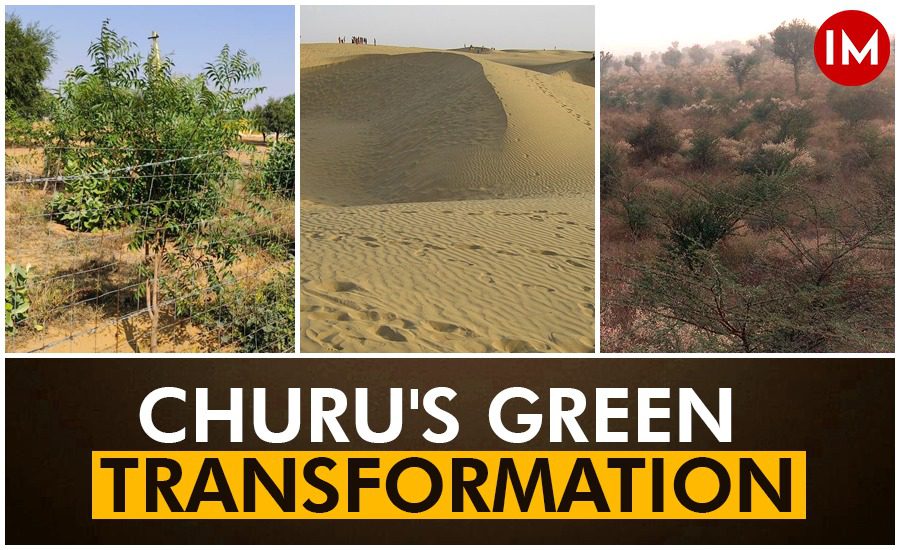
Churu, a district that falls in the Thar desert region of Rajasthan, is undergoing a green transformation these days. Once a dry arid landscape, it is now full of green spaces where birds and small animals live, and people visit to feast their eyes and senses on the refreshing greenery.
These green spaces are a much needed breather for the residents of Chruru who for long have grown accustomed to living in dry and unfriendly conditions surrounded only by sand. Seeing only the vast expanse of the desert as far as their eyes go, depression and lifestyle diseases had come home to roost among them.
Under such prevailing conditions, the forest department of Churu undertook massive afforestation projects, creating green lungs and green belts to provide breathing spaces to the people in this desert-locked district.
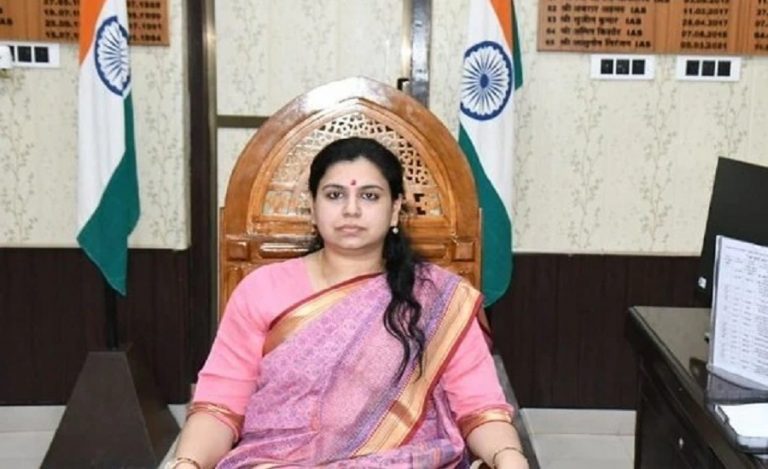
Indian Masterminds spoke to 2013-batch IFS officer Savita Dahiya, DCF Churu, to get details about the green transformation of the desert district.
HARSH CONDITIONS
Just like any other desert area, Churu district has extreme weather conditions with temperature variations between -3 degrees to 50 degrees. On top of that, it has no natural water bodies and the rainfall is less than 30 cm a year. The ground water is found at more than 300 feet depth and is extremely saline.
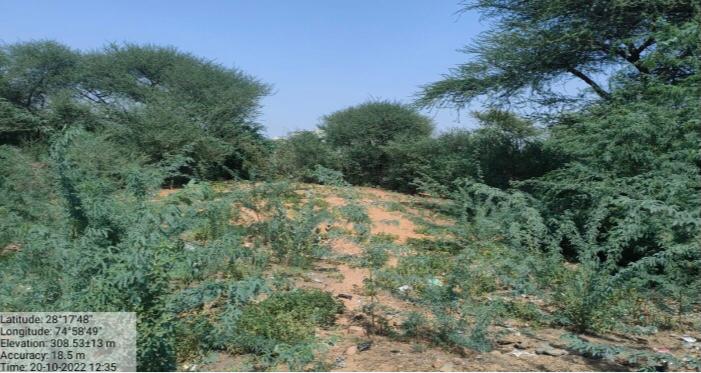
The few cities and towns are encircled by large shifting sand dunes which are scanty in vegetation. So these areas were being used as dumping grounds for solid and liquid waste which destroyed the soil and whatever little vegetation grew there.
Due to these factors, no major industries had come up in the district and associated infrastructure and recreation places were absent. As a result, social problems like unemployment, drinking and associated illegal activities were also present and attempts to develop forest land were met with heavy public resistance.
CONNECTING PEOPLE TO NATURE
So, one of the first steps undertaken by the forest department was to educate people about environment conservation and provide them the opportunities to understand about the various aspects of nature conservation. The idea was to connect people with the environment and forests.
“We focussed on creating open, clean and healthy spaces and made the existing forest areas accessible to the public,” Ms. Dahiya said.
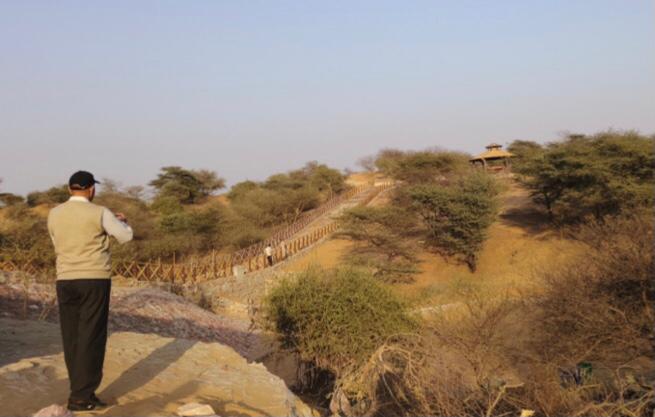
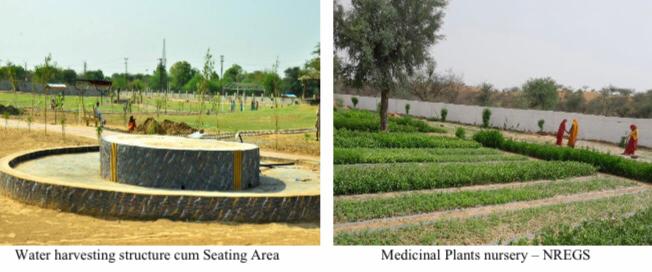
Churu’s famous Shyam Pandya temple is situated in a forest area which had little accessibility. A 2.5 km long eco-trail and pathway was constructed here and plantation taken up along the tracks and in open areas. Water holes were constructed for wildlife and water harvesting structures built for storing rain water and ground and supply water. The water harvesting structures were modified to act as seating spaces. The eco-trails were provided with small ‘pucca gullies’ to check water erosion as well as for discouraging vehicles into the area.
MEDICINAL PARK
The district has just 0.56% of total area under forest cover and that too is classified as degraded forest. People needed more green spaces and forest department needed to protect its land.
Forest patches that are vulnerable to becoming dumping ground or encroached or degraded, were taken up for long term conservation to provide space for the community for walking, running, exercising, hiking. In addition, recreation places for kids and open air gym and toilet facilities have also been built.
In Tara Nagar tehsil, a small medicinal park was created by developing a medicinal nursery in a degraded forest patch. Species like Neen, Shisham, Siras, Phrash, Shehtoor, Lesua grow there now. Eco trails were also laid out which are now frequented by the elderly morning walkers.
“Here they can experience nature at its best in their neighbourhood and get associated health benefits,” Ms. Dahiya said.

CONVERGING FOREST & NREGS SCHEMES
To strictly stick to eco-friendly measures, solar pumps and lights have been utilised for irrigation and lighting purposes. “Also, geo-tagging and RFID identification of planted medicinal species will be started for educational purposes. And, bio-waste derived from nearby places will be recycled and used as manure,” Ms. Dahiya added.
Yet another achievement is the completion of a 90 km green belt along NH 52 in the district with funds from NHAI.
By dovetailing of forest schemes with NREGS, a model has been created that converges nature and forest conservation works with another government mandate of safeguarding the physical and mental health of the community. An excellent example of convergence that can be replicated in small peri-urban areas to create green useful spaces by utilising locally available labour.