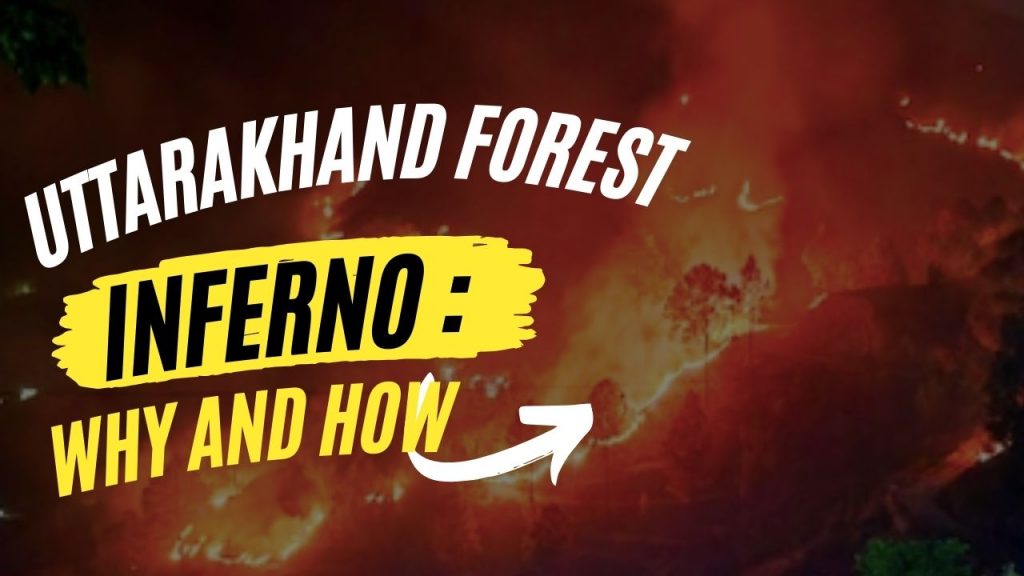
Uttarakhand, known for its breathtaking landscapes and serene beauty, is grappling with a fiery crisis as forest fires rage across its expanse. With over 814 hectares already engulfed in the infernos, surpassing last year’s alarming record, the situation has reached critical levels.
From the verdant forests of Kumaon to the majestic reaches of Garhwal, the flames spare no terrain, posing a grave threat to the region’s ecosystem and inhabitants. While the forest department of Uttarakhand is continuing its battle against these relentless fires, the NDRF and IAF have also united to support them. However, this disaster has been raising a lot of questions about the occurrence and handling of such a situation.
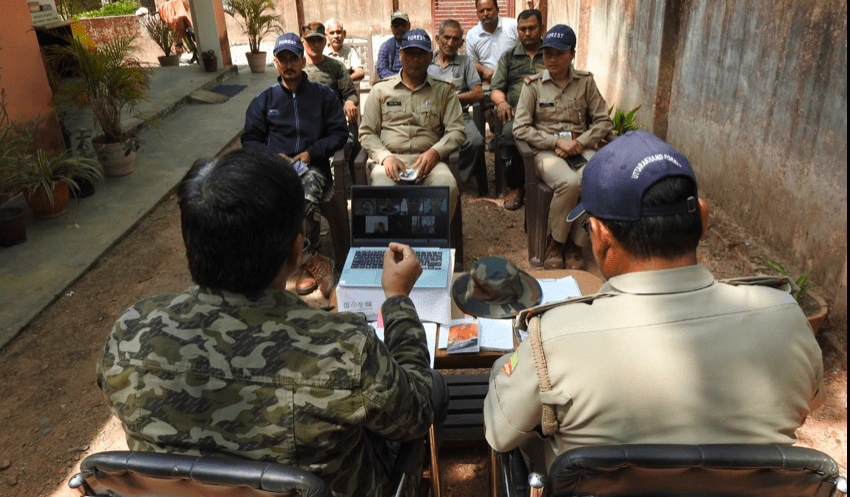
Indian Masterminds spoke with a few officers in Uttarakhand, including the Chief Conservator of Forest (Kumaon Range), Mr. Prasana Kumar Patro, and CCF, Forest Fire and Disaster Management & Wildlife Administration (Uttarakhand), Mr. Nishant Verma, to understand the cause of these fires; what the limitations are in tackling them, and how forest staff has been taking control of the situation.
THE REASONS
Unlike previous years, this year, Uttarakhand didn’t have any winter rainfall. The temperature in the plain areas has also risen to 40 degrees, and this is the fall season for pine needles. “There is enough fodder and fuel for the fire to spread. As a result, when someone starts a fire anywhere, it quickly spreads and becomes uncontrollable. Every year, we take safeguards such as starting a controlled fire, but forests cover a vast territory. One cannot control all things, particularly humans,” says Mr. Nishant Verma.
The officer emphasized that it is not a natural disaster but has become a social problem. CCF Patro elaborated on this and said there are many ways in which the current fire situation can be deemed a man-made disaster. Many farmers have their agricultural land in fringe areas or adjacent to forests. When they burn the crop residue, sometimes, due to the wind, the fire moves towards the forest and spreads. Besides this, some people purposely go to the forest and burn the fallen leaves and dry grasses so that new grass can grow, which is good for their cattle. Due to the increased cases of human-animal conflict, many incidents have been reported in Uttarakhand, where fire was lit to clear the area from lantanas or other bushes and spread to other areas.
IT IS NOT A COMPLETELY BAD THING
When asked about the precautions taken to control these incidents, Mr. Patro said that measures are taken beforehand, but due to the difficult terrain, it is impossible to cover the whole area with 100% protection.
He also said that forest fires are cyclic events. It happens across the country, from the USA to Australia and Russia. One needs to understand the dynamics of forest fires. “This year there is weather factor plus the availability of fuel in abundance. Pine needles are extremely flammable and catch fire easily. Due to fire this year, next year the fodder will be less, which can result in few to zero such incidents”, he said.
The officer also pointed out that while forest fires can be dangerous, they also allow new plants and grasses to grow.
THE DIFFICULTY
On April 30th, when contacted by Indian Masterminds, Mr. Patro was managing 10 active fire cases. The forest department receives continuous alerts from the Forest Survey of India via satellite footage regarding fire ignition.
However, the primary challenge lies in containing the fires within a limited timeframe. “People question the delay in controlling the fires. With temperatures already soaring, the fires exacerbate the situation by raising temperatures further by 10-20 degrees. Three of our forest staff have already sustained injuries while combating the fires,” Mr. Patro added.
Moreover, Kumaon’s terrain is rugged, making access to fire sites time-consuming. While technologies like the Bambi bucket (used for water dispersal from helicopters) and fireball (a fire extinguisher) are employed in many states, they are less effective in hilly areas due to height limitations and are suited for enclosed spaces, respectively.

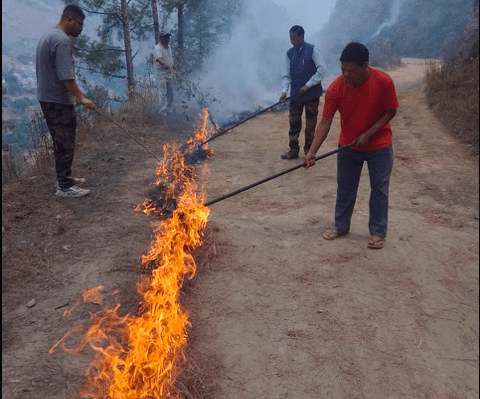
In Uttarakhand, the forest department primarily relies on traditional methods to combat fires. Forest officials employ the Jhapa technique (using branches to beat out fires) and counterfire tactics (creating fire lines from top to bottom in flat areas) to manage the situation.
Mr. Dheeraj, DFO of JIM Corbett, stated that forest staff are working diligently within their means. The national park has only experienced a few fire incidents. With the support of the district administration, police, and NGOs, the situation remains under control, with an increase in the number of fire watchers deployed.
CREATING AWARENESS
Many incidents have been attributed to human involvement, prompting the forest department, in coordination with the police, to make several arrests. Additionally, an awareness camp has been initiated. The forest department has been actively organizing seminars and engaging in public outreach to educate people about the dos and don’ts of preventing arson incidents. Mr. Nishant emphasized the importance of community involvement, stating that every village’s ‘Van Panchayat’ will receive incentives for maintaining a fire-free area. Furthermore, efforts are being made to raise awareness about the responsible disposal of cigarette butts. Mr. Nishant Verma stressed the severe consequences of forest fires, highlighting their destructive impact on wildlife habitat and contribution to climate change. He urged individuals to take moral responsibility for preventing such incidents.
दिनांक 29/04/24 को लम्बगांव के ग्राम बौंसाडी के भेडी नामे तोक में वन क्षेत्र में अज्ञात कारणों से लगी आग को फायर Watchers avam स्थानीय महिला द्वारा अथक प्रयास से वनाग्नि पर काबू पाया गया जिससे लगभग 90% से अधिक जंगल को बचा लिया गया, Tehri van prabhag, उत्तराखंड. pic.twitter.com/WEzI8xz7ln
— Nishant Verma (@Nishant68260070) April 30, 2024