In the Great Trigonometrical Survey of India conducted in 1907, the Zero Milestone (ZM) to measure distances across the country was established at Nagpur. Featuring four horses and a pillar made of yellow sandstone, the ZM is located at the intersection of lines connecting major metro cities—Mumbai, Chennai, Kolkata, and New Delhi—making it the heart of the Indian subcontinent. Geography apart, it is also the headquarters of the RSS, the ideological fountainhead of Hindutva thought on the one hand, and is also the place of the sacred monument Deekshabhumi, which is a major pilgrimage centre of Navayana Buddhism, where Dr B.R. Ambedkar converted to Buddhism on October 14, 1956. To him can be traced the incorporation of provisions relating to reservations for SCs and STs, which were later extended to the non-creamy OBCs in 1990 and to EWS in 2019.
Two Nagpur-based Books
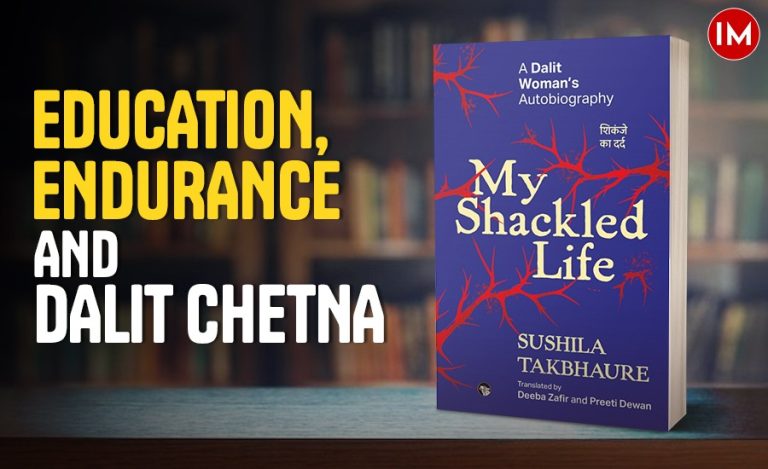
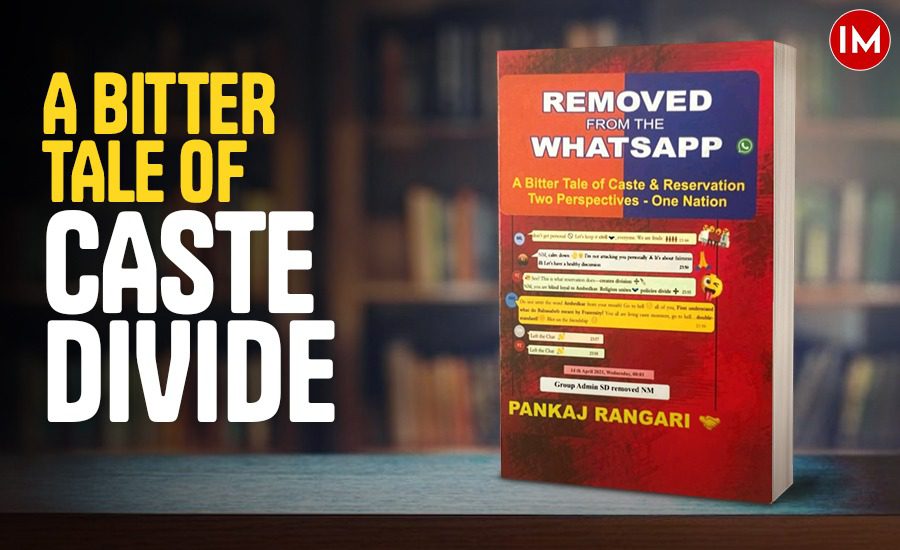
The opening paragraph is important, for this is also the city of Sushila Takbaure, whose Hindi book Shikanje Ka Dard was recently translated into English as A Shackled Life and reviewed in this column a few weeks ago. This week’s book is also a Nagpur-based entry in the genre of non-fiction: Removed from the WhatsApp: A Bitter Tale of Caste and Reservation – Two Perspectives, One Nation, written by engineer and proud Ambedkarite Pankaj Rangari. As the name suggests, this is based on a real-life exclusion from a school WA group of middle-aged professionals. Spread across cities and continents, the digital reunion after twenty-four years (since 1997) was ‘like opening a time capsule’. Old friends swapped photos, stories of teenage infatuation, receding hairlines and the struggles of ballooning midlines. All this was fine – but then one fine morning, after a group member forwarded posts and messages ridiculing the caste-based reservations in education and employment, all hell broke loose. Before sunset that evening, fault lines had become more than visible in questioning the very element of ‘fraternity’, which, along with liberty and equality, is embedded as a founding principle in the Preamble to our Constitution.
Let’s take a look at this group of eight active members (and others who come in with their occasional insights). This includes our protagonist, NM, and his mentor, KK, an Ambedkar acolyte who supports reservation and is willing to engage on this subject with conceptual clarity, empirical data and the arguments brought up while signing the Poona Pact. Then we have a well-educated Brahmin boy (KJ) who professes a liberal outlook but supports the caste system as divinely ordained. The third is a Brahmin girl (DN) from a family of priests, who opposes reservation, albeit less vehemently, since she sometimes takes a neutral stand. The next member of the group (PB) is an ancestral landowner from the Kshatriya caste who rejects caste and opposes reservation. An OBC girl, KB, from a traditional background with no clear views on the reservation debate, is the fifth member of the group. The sixth, an OBC male SD, is aware of the evils of the caste system and takes advantage of the reservation while arguing against it. Then there is the ST (ML) male who has leveraged the reservation to his benefit but prefers to remain silent on the reservation debate. The eighth (SG) is an SC girl from a well-educated Ambedkarite family who vocally supports reservations.
As many of us are aware, administrators of WhatsApp groups often stipulate that controversial topics like religion, reservation and politics should be avoided. However, whether we like it or not, the subject does come up – sometimes deliberately, but often inadvertently in the guise of a debate on ‘merit’. During T20 and other cricket matches, the debate becomes more toxic when comments like extending the quota to sport are made rather loosely. Then there are the odd comments which we are all familiar with about the lackadaisical quality of engineers and medicos from the ‘special stream’.
Our protagonist helps us steer this conversation by talking of five big ideas. The first of these is the Constitutional Promise, for the right to vote is not synonymous with social equality. Then there is the historical wound—the brutal realities of caste which refuse to die down in our social discourse and interaction. The third is the merit myth, which insulates talent from context, especially when those who sit in judgement are blissfully unaware of their own implicit bias(es). The time frame required to correct these anomalies is the fourth point, but this depends more on the on-ground situation rather than propositions on paper. Last but not least is the strongest – that of human connection, which offers a possibility to bridge deep ideological fissures.
KK helps NM understand the finer nuances of the debate by listing the thirteen historical milestones in the reservation discourse, starting with the Hunter Commission of 1882, which in turn was based on the memorandum of Jyotiba Phule. This was followed by the Morley-Minto reforms of 1909, which expanded the legislative councils but introduced separate electorates for Muslims. The 1919 Southborough Committee, before which Ambedkar now proposed a separate electorate for the Depressed Classes. In 1920, under the auspices of Manegan Parishad, a pact was signed between Ambedkar and the Kolhapur ruler Sahu Maharaj. Four years later, the Bahishkrit Hitkarini Sabha adopted the mantra of ‘Educate, Agitate, Organise’. This was followed by the Mahad Satyagrah in 1927 on the right to access drinking water from the Chavdar tank. The seventh milestone was Dr Ambedkar’s representation to the Simon Commission. This was also important in the context of the ‘Simon Go Back’ call of the Congress. This was followed by the Round Table Conferences and the Communal Award of 1932, which created a separate electoral college of the Depressed Classes. The 1932 Poona Pact accepted the principle of reserved seats in legislatures, but the Depressed Classes were counted as Hindus. The Constitutional provisions were the tenth milestone: Articles 14, 15, 16, 17 (Fundamental Rights), 46 & 335 (Directive Principles of State Policy), Articles 330 & 332 (political reservation in legislatures), Articles 338 & 338A (National Commission for SCs/STs) and Articles 341 & 342 (Presidential power to notify SCs and STs). The eleventh point was on the guidelines for the implementation of the Mandal Commission’s recommendations for OBCs. The Indira Sawhney judgement of 1992 froze the reservation cap at 50%, besides not extending benefits to promotion. The last milestone relates to the 103rd CSTA of 2019, which breached the 50% quota for the EWS.
Society and Social Media
Buttressed by these arguments, KM was able to speak facts with firm equanimity and without anger. And finally, when the group met again physically in the city of Nagpur, all members raised a toast to ‘friendship, the ultimate affirmative action’. That this conversation had a positive ending is indeed heartening, because I am aware – both from my personal experience and the anecdotal recall of others – that these discussions can indeed be quite toxic. And let me also confess and question: but for reservations, would I have made the friends I did while at JNU (1979-1982) and in the Service (1985-2021)? In the interregnum of three years that I worked at the Times of India (1982-1985) there was not a single Dalit in either the newsroom or the editorial desk.
On behalf of Team VoW, I would like to congratulate the publisher of this book, Sujit Murmade, for ensuring that the manuscript has seen the light of day. For even after eight decades of independence, the fact that as a society and a nation, these faultlines continue to define our public discourse is proof enough that travellers on the journey of the ‘Annihilation of Caste’ are ‘Still Waiting for a Visa’.
(Sanjeev Chopra is a distinguished retired Indian Administrative Service officer, former director of the Lal Bahadur Shastri National Academy of Administration, and an author-historian known for his writings on India’s governance and state formation)