Every week, a child vanishes into the sugarcane fields of Maharashtra — not lost, but taken. The Leopards responsible enjoy the nation’s highest legal shield – under Schedule 1 of India’s Wildlife Protection Act of 1972. Schedule I confers the highest tier — prohibiting hunting, imposing the steepest penalties, and making any intervention involving the species a process laden with bureaucratic clearances. Schedule I’s protections make the process of catching or killing “man-eating” leopards a restricted and complicated process.
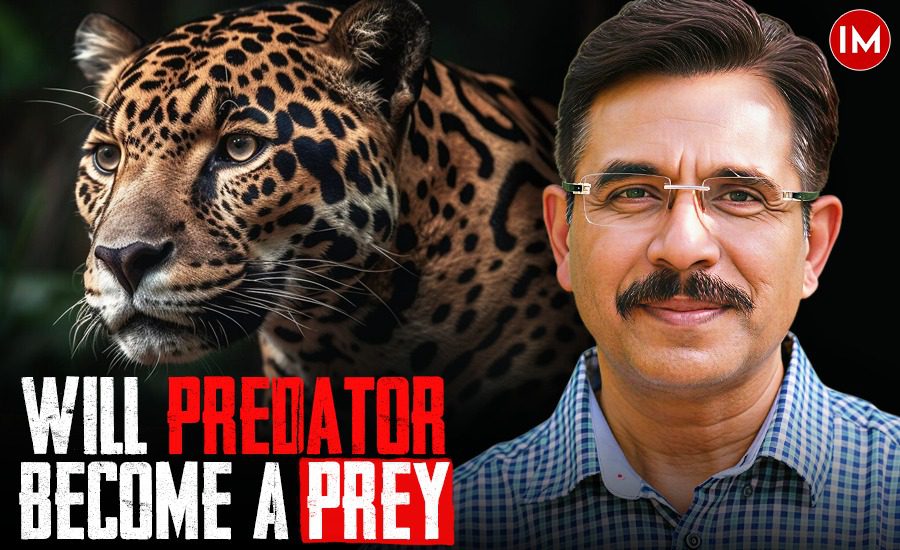
Schedule II species still have legal protection, but penalties for offenses are lower, and the protections are less stringent, making it easier to manage conflicts with humans, Dr Y.V. Jhala, eminent scientist and dean of Wildlife Institute of India (WII) told Indian Masterminds in an exclusive interview.
It is this legal wall that Maharashtra’s government has been pushing against. Forest Minister Ganesh Naik has formally requested the Centre to move leopards from Schedule I to Schedule II of the Wildlife Protection Act, citing that the burgeoning man-animal conflict has been extensively discussed and requires urgent intervention.
Watch the Interview Here :
The Numbers
To understand the urgency driving this political push, one must look at the data. Maharashtra is not a state at the fringes of India’s leopard territory — it is the second most leopard-dense state in the country. According to the 2022 national leopard census, Maharashtra’s population stood at 1,985 leopards, up from 1,690 in 2018 as per a Press Information Bureau release — a 17.5% increase in just four years.
With dense human settlements, expanding agricultural land, and significant sugarcane cultivation across Pune, Nashik, and Ahilyanagar districts, this growing leopard population is colliding with human space in increasingly deadly ways.
There were 113 human deaths from 2017 to 2022 due to leopard attacks in Maharashtra. The situation worsened in later years, with 14 deaths in just two months in 2025. A field survey found that while 25 people were killed in the first 16 years of the conflict (2000–2016), 26 people died in the next eight years alone, suggesting that deaths have effectively doubled in frequency.
The death toll for humans across Maharashtra from January to April 2025 alone stood at 21, all attributed to wild animal attacks. The average human death rate due to leopards in Maharashtra in recent years has been approximately 18 per year.
From the leopard’s side, the mortality picture is equally grim. Maharashtra lost 675 leopards between 2021 and early 2026, with 2021 recording the highest single-year toll at 167. Road accidents accounted for 135 deaths over three years, and 30 deaths were linked to poaching.
What the Move Means
The Maharashtra government’s proposal has generated considerable noise, but the legal reality is more nuanced than the political messaging suggests. According to Dr. Jhala the state cabinet’s decision to list the leopard under Schedule II has largely symbolic value, since the Wildlife Protection Act is central legislation.
Changing the leopard’s status would require a formal amendment by Parliament, involving the MoEFCC publishing a draft bill, public consultation, and passage in both Houses.
Avoiding Legal Maze
When the Maharashtra Legislative Assembly passed the Wildlife Protection (Maharashtra Amendment) Bill, 2026, Forest Minister Naik himself clarified that the bill is not about shifting leopards from Schedule I to Schedule II, but rather about amending Section 12 of the Wildlife Protection Act — which empowers the Chief Wildlife Warden to grant permits for specific purposes including scientific management for population control.
The amendment aims at allowing quicker administrative responses to human-wildlife conflicts within Maharashtra, without needing to approach the Centre every time. The bill still requires clearances from the Governor, the President, and the Union government before taking effect.
Mere Optics
In practical terms then, the reclassification is as much about optics and administrative convenience as it is about law. The proposed change would ensure that people who kill a leopard in self-defence are not prosecuted, addressing a significant fear in rural and fringe communities. It would also give forest officials more latitude to act swiftly in conflict zones without navigating a maze of central approvals.
The Root Cause
Reclassifying the leopard misidentifies the cause of the crisis. The real problem is not that leopards enjoy too much legal protection; it is that their habitat has been systematically destroyed.
Maharashtra has seen a rise in leopards entering villages and towns due to deforestation and urban expansion. The sugarcane belt across Pune, Nashik, and Ahilyanagar has long been a conflict hotspot. Leopards are drawn to these agricultural zones because dense cane fields provide excellent cover, and the adjacent villages supply easy prey — stray dogs, livestock, and unfortunately, children. A growing urban sprawl has fragmented forest corridors, pushing leopards into human-dominated landscapes with no safe passage back.
Translocation Needed
The failure of translocation as a solution adds another layer of complexity. A study found that before the large-scale translocation program in Junnar (2001–2003), there were an average of 4 leopard attacks per year between 1993 and 2001. After the program, the average rose to 17 attacks. Studies on leopard translocation found that attacks persisted in capture areas and increased in release areas, spreading into areas experiencing conflict for the first time. In other words, moving the leopard moves the problem — often making it worse.
In a two-month period in 2025, more than 150 leopards were captured across three districts in Maharashtra. Yet this did not improve the crisis. The Manikdoh Leopard Rescue Centre, set up in 2002, has faced persistent overcrowding even after a 2024 expansion that added 100 cages.
The Vantara Shadow
One dimension of the reclassification proposal that has drawn sharp criticism from conservationists is its potential link to the Reliance-owned Vantara facility in Gujarat’s Jamnagar. Maharashtra has decided to transfer 50 leopards to Vantara, and experts allege the reclassification is partly aimed at facilitating these transfers.
The Supreme Court has an SIT report on Vantara that has not been made public, casting further legal and ethical uncertainty over the transfers.
The Slippery Slope
Perhaps the most consequential argument against the reclassification is the precedent it sets. Experts say Maharashtra’s move is setting a wrong precedent with regard to conservation. India’s wildlife protection law was deliberately designed to make it difficult to downgrade a species’ legal status — precisely to insulate conservation decisions from short-term political pressures.
Former environment minister Aaditya Thackeray warned that there is no scientific evidence to suggest that moving a species from Schedule I to Schedule II would improve management outcomes, and that it could increase the risk of poaching and illegal trade.
Poaching Pressure
The leopard is already under significant poaching pressure. India’s 2022 leopard status report identified the biggest threats to leopards as poaching for skins and body parts, habitat loss due to mining and other human activities, and road accidents. Weakening legal penalties would reduce deterrence precisely when it is most needed.
Effective Response
The government’s instinct to act is understandable given the scale of human suffering. But reactive, legally diluted solutions are unlikely to produce lasting results. A more effective approach would combine several threads:
First, proper investment in forest corridors and habitat connectivity — addressing the structural reason leopards are entering human zones in the first place. Second, scientific population monitoring and long-term telemetric studies, rather than ad hoc mass captures. Third, genuine community engagement; the Warli community has coexisted with leopards for centuries, and their knowledge is an underutilised resource. Fourth, better waste management in rural areas to reduce the concentration of stray dogs — a primary prey base — near human settlements. Fifth, adequately staffed veterinary and rescue teams, a chronic shortfall in Maharashtra’s forest department.
Steps in Right Direction
The government’s own measures — deploying drones to locate leopards near human settlements, building new rescue centres, and installing cages in conflict zones — are steps in the right direction and deserve to be implemented well. The Union government has also permitted the capture and sterilisation of five female leopards on a pilot basis, a non-lethal long-term measure to stabilise populations. These are more promising avenues than legal reclassification alone.
The Maharashtra government’s push to reclassify leopards reflects a genuine and escalating human safety crisis. With over 113 human deaths in five years, 14 deaths in two months in 2025, and a leopard population that has grown nearly 18% since 2018, the pressure on state authorities to act is real and legitimate. But the proposed solution — downgrading legal protection — is a political instrument masquerading as a conservation strategy.
The evidence accumulated over two decades of conflict management in Maharashtra suggests that removing leopards from their habitat, weakening penalties for killing them, or shipping them to private facilities does not solve the underlying problem. It displaces it, often amplifying it. India’s leopards are not merely a conservation symbol — they are apex predators whose presence regulates ecosystems across some of the country’s most biodiverse landscapes. Protecting people from leopards and protecting leopards from people are not mutually exclusive goals. Achieving both demands not a weaker law, but a smarter and better-resourced one.