Government administration often depends on something deceptively simple: accurate information about its own employees. Who is posted where? Who is due for promotion? Who is nearing retirement? Who is eligible for benefits? For decades, answering such questions required government departments to navigate stacks of files, scattered records, and lengthy correspondence.
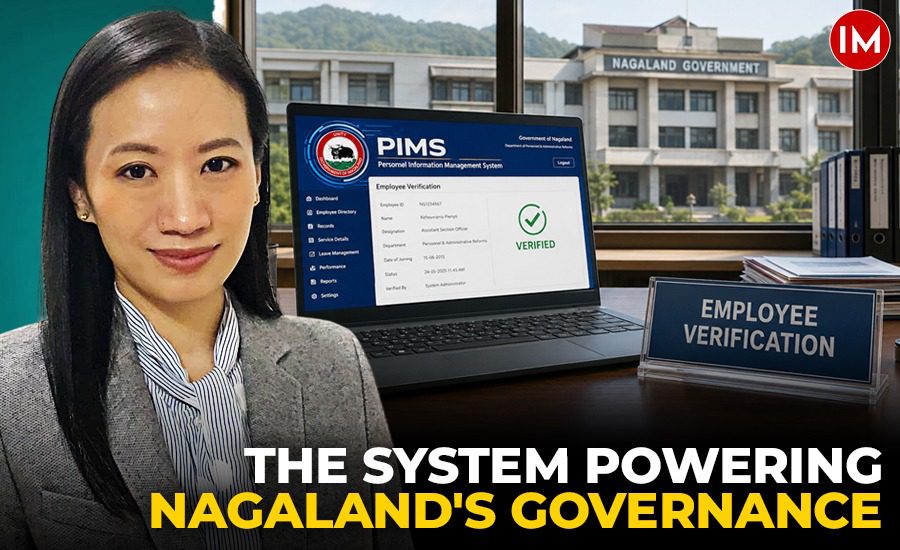
In Nagaland, this challenge led to the creation of one of the state’s most consequential governance reforms—the Personal Information Management System (PIMS).
Launched on April 21, 2016, PIMS was conceived as a comprehensive digital platform to manage the service records of government employees from the day they enter service until retirement. What began as an effort to create a centralised employee database has gradually evolved into a foundational component of Nagaland’s e-governance ecosystem.
“PIMS was never conceived merely as a database. The larger objective was to create a reliable foundation for employee management and ensure that government decisions are backed by accurate and accessible information,” Livitoli Sukhalu, Deputy Secretary, Department of Personnel & Administrative Reforms (P&AR), Government of Nagaland, shared in an exclusive interview with Indian Masterminds.
According to Ms Sukhalu, the initiative was driven by a clear administrative need: to establish a transparent, efficient, and reliable mechanism for managing the state’s human resources while generating accurate data for informed policymaking.
Moving Beyond Fragmented Records
Before PIMS, employee information was dispersed across departments, often maintained through physical records and manual processes. Retrieving details about an employee’s service history, posting records, promotions, or retirement status could be a lengthy and inconsistent exercise.
The absence of a consolidated state-wide database created challenges not only for routine administration but also for larger governance decisions. Departments lacked ready access to accurate employee data, making workforce planning difficult and increasing dependence on manual verification processes.
As government functions expanded and service delivery expectations increased, the limitations of the existing system became increasingly evident. The need for a centralised repository that could provide timely, authentic, and accessible information emerged as a priority.
PIMS was designed to address precisely this gap.
Building a Digital Service Record
The system assigns every registered employee a unique identification code. This code remains linked to the employee throughout their service career and continues to serve as a reference even after retirement.
The initial phase of implementation focused on creating a comprehensive database through large-scale data entry. Modules were developed to capture personal details, service history, transfer and posting records, and management information system (MIS) reports for government employees across Nagaland.
However, the long-term vision extended far beyond record digitisation.
PIMS was envisioned as a fully automated human resource management platform capable of handling multiple aspects of employee administration, including salary management, promotion assessments, Annual Performance Appraisal Reports (APARs), training records, leave management, and recruitment-related processes.
The objective was not merely to store information but to create an integrated system that could support the entire employee lifecycle.
Bringing Transparency into Service Administration
One of the most significant outcomes of PIMS has been the establishment of a centralised and authenticated data environment.
With a single source of verified employee information, departments can access real-time data while reducing duplication and inconsistencies. The system has strengthened adherence to established government procedures by ensuring that service-related actions are supported by updated records and documented workflows.
The benefits extend beyond internal administration.
As part of the state’s transparency initiatives, the government developed a public search facility based on PIMS data. Citizens can verify basic information regarding government employees, allowing greater public oversight and accountability.
This approach reflects a broader shift toward data-driven governance, where transparency is supported not only through policy commitments but also through digital infrastructure.
From Database to Governance Platform
A major milestone in the evolution of PIMS came when multiple government services began integrating with the platform.
“The real value of PIMS emerged when other government services began integrating with it. Whether it is salary disbursement, vigilance clearance, pension processing, or health insurance enrolment, a verified employee database makes every process more efficient,” says Ms Sukhalu.
One of the most important integrations was the introduction of the e-Pay Bill System. Using verified employee records available through PIMS, the government linked salary disbursement directly to the database. Since November 2021, salary payments have depended on updated PIMS records.
This integration significantly improved data integrity while ensuring that employee information remains current.
Another area transformed by the system is vigilance clearance. Previously dependent on physical file movement and multiple layers of verification, the process is now fully digitised. Applications can be processed and clearances issued within hours based on authenticated information available through PIMS.
Government Identity Cards have similarly moved to a digital framework. Identity cards generated through the system include QR-code verification, allowing instant authentication through smartphones. Verification that once required multiple administrative steps can now be completed within minutes.
The pension process has also benefited from integration with PIMS. Service verification, often one of the more time-consuming stages of pension settlement, is now conducted using data already available in the system, helping reduce delays for retiring employees.
Perhaps one of the most citizen-facing applications of the database has been its use in the Chief Minister Health Insurance Scheme. Employee registration under the scheme was made entirely online using PIMS numbers. Since employee records already existed in a verified format, registration became significantly simpler while reducing the possibility of duplicate or fraudulent beneficiaries.
Together, these integrations transformed PIMS from a personnel database into a governance platform supporting multiple public services.
Making Adoption a Government-Wide Priority
Introducing a new digital system across government departments is rarely straightforward.
Officials acknowledge that adoption required sustained effort. Departments had to be repeatedly instructed to update records related to confirmation of service, promotions, postings, pay revisions, and retirements.
To ensure compliance, the responsibility for maintaining updated employee information was placed on heads of departments. Over time, registration in PIMS became mandatory for all categories of government employees, including personnel working under Centrally Sponsored Schemes.
The linkage between PIMS and salary payments proved particularly effective in driving adoption. Once employee records became essential for salary disbursement, departments had a strong incentive to maintain accurate and updated information.
Today, PIMS is no longer viewed as a standalone project but as a standard administrative requirement across government offices, including those in remote districts.
Overcoming Technical and Administrative Challenges
The implementation journey was not without obstacles.
“Technology was only one part of the challenge. The bigger task was ensuring participation from every stakeholder, because a system is only as effective as the quality and completeness of the data entered into it,” Ms Sukhalu notes.
Technical limitations also posed difficulties. Internet connectivity in districts such as Kiphire, Tuensang, and Mon affected data uploads and system access during the early stages of implementation.
The transition to digital salary processing introduced additional pressures. In some cases, incomplete employee records led to delays in salary payments when the e-Pay Bill System was rolled out.
To address these challenges, the government invested heavily in training and capacity building. Departments and employees received extensive orientation on both the purpose and functionality of PIMS. Similar training exercises continue whenever new applications or modules are introduced.
“Every new digital initiative requires trust and understanding from users. Continuous training and handholding were critical in helping departments adapt to the system and appreciate its long-term benefits,” she adds.
Safeguarding Data Integrity and Privacy
As PIMS expanded, ensuring the accuracy and security of employee information became a central concern.
The system incorporates multiple safeguards to prevent unauthorised modifications. Critical fields such as names, dates of birth, Aadhaar numbers, dates of joining, and service status can only be edited by authorised personnel within the Department of Personnel & Administrative Reforms.
Any correction requires documentary evidence, formal verification, and approval by the designated officer responsible for PIMS.
Departments also play an active role in maintaining data quality, with both employees and Heads of Departments sharing responsibility for ensuring the accuracy of records.
Access controls further protect employee information. Sensitive personal data remains restricted within the system, while information sharing with other departments occurs only through authorised channels. API access is granted selectively and governed by policy decisions.
Although basic employment profiles are publicly visible to promote accountability, personal information remains protected through controlled access mechanisms.
A Foundation for Future Governance
A decade ago, PIMS was primarily a data collection exercise aimed at creating a reliable employee database. Today, it supports salary administration, vigilance clearances, identity verification, pension processing, health insurance enrolment, and multiple other governance functions.
Its evolution illustrates how digital infrastructure can strengthen public administration when supported by policy commitment, institutional ownership, and continuous refinement.
“Today, PIMS has become an essential component of governance in Nagaland. Our focus is on continuously improving the system so that it remains a dependable platform for service delivery, administrative efficiency, and policy planning,” says Livitoli Sukhalu.
For Nagaland, PIMS has become more than a personnel management tool. It serves as the digital backbone connecting employees, departments, and government services through a shared and authenticated information system.
What began as an administrative reform has grown into a governance platform that enables faster decision-making, improves service delivery, and ensures that public administration is built on accurate, accessible, and trusted data.