Some police officers build their reputation in the glare of public attention. Others spend decades working behind closed doors, where information is currency, silence is a skill, and success is rarely announced.
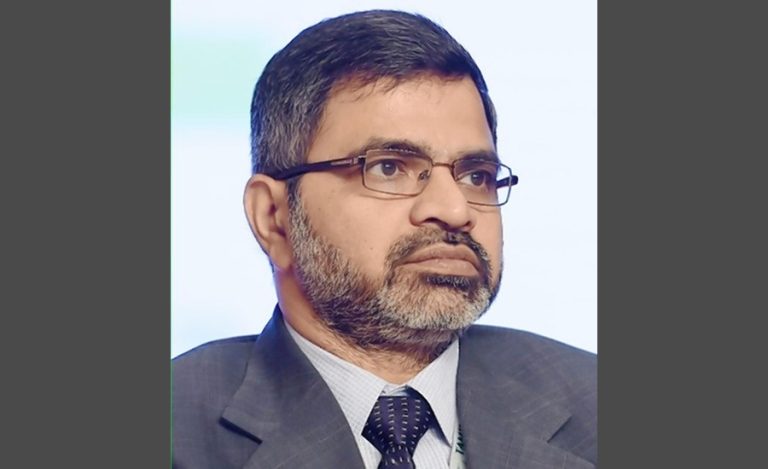
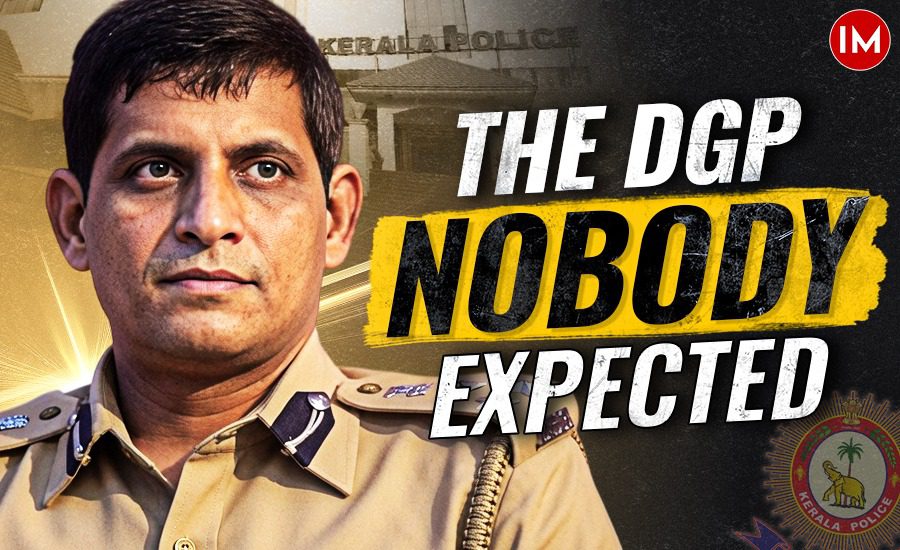
Ravada A. Chandrasekhar belongs to the second category.
When he walked into the office of Kerala’s State Police Chief in July 2025, he was not just assuming charge of one of the country’s most respected police forces. He was returning from a world few officers ever reach: the world of intelligence assessments, national security briefings, and decisions that shape the internal security landscape of an entire nation.
His journey to the top was neither simple nor straightforward. It moved through politically charged streets, difficult controversies, demanding field assignments, and the secretive corridors of India’s intelligence establishment.
Today, as Kerala’s 41st Director General of Police, Chandrasekhar carries with him more than three decades of experience that span both state policing and national security.
FROM ANDHRA PRADESH TO THE IPS
Born on July 5, 1966, in West Godavari district of Andhra Pradesh, Ravada Azad Chandrasekhar grew up far from the state he would one day police.
His roots lie in the fertile Godavari region, particularly the town of Veeravasaram. Like countless young Indians who viewed public service as a path to meaningful impact, Chandrasekhar chose the Civil Services route and successfully entered the Indian Police Service.
In 1991, he joined the IPS and was allotted the Kerala cadre.
At the time, few could have predicted that this officer from Andhra Pradesh would eventually become the face of policing in Kerala.
LEARNING POLICING IN KANNUR’S POLITICAL BATTLEGROUND
Every police officer has a posting that shapes his understanding of the profession.
For Chandrasekhar, that place was Kannur.
One of his earliest major assignments was as Assistant Superintendent of Police in Thalassery. It was a region known for intense political rivalries and recurring clashes between opposing political groups.
Policing in Kannur was not merely about enforcing the law. It demanded constant vigilance, quick assessment of evolving situations, and the ability to make difficult decisions under pressure.
Those early years exposed Chandrasekhar to the realities of frontline policing at a level few young officers experience. The lessons learned there would remain with him throughout his career.
THE INCIDENT THAT FOLLOWED HIM FOR DECADES
In November 1994, Kerala witnessed one of the most debated law-and-order incidents in its modern political history: the Koothuparamba police firing.
The firing resulted in the deaths of five DYFI activists and injuries to several others. As a young officer serving in the region, Chandrasekhar became closely associated with the episode.
The incident generated intense political debate and legal scrutiny. For years, the case remained a sensitive subject in Kerala’s public discourse.
The controversy followed him long after the event itself.
Yet as investigations, court proceedings, and legal examinations unfolded over the years, no criminal culpability was established against him. The judicial process eventually cleared the path that had once seemed uncertain.
Ironically, decades later, the same state whose political landscape had fiercely debated the incident would see Chandrasekhar rise to its highest policing office.
It remains one of the most remarkable turns in his career.
CLIMBING THE RANKS
Following his early years in Kannur, Chandrasekhar steadily moved through the ranks of Kerala Police.
His career would span district policing, urban policing, intelligence work, and senior administrative responsibilities.
He served in several important positions, including:
- Superintendent-level assignments in various districts.
- Deputy Inspector General roles.
- DIG of Thrissur Range.
- DIG of Kochi Range.
- Police Commissioner of Thiruvananthapuram City.
Each assignment expanded his understanding of policing in different environments.
The challenges of a major city were different from those of a district. Intelligence gathering required a different mindset from law-and-order management. Administrative leadership demanded a broader perspective than field operations.
Over time, Chandrasekhar accumulated experience across nearly every major dimension of police work.
ENTERING INDIA’S INTELLIGENCE ESTABLISHMENT
For many officers, becoming a state police chief would represent the pinnacle of a career.
For Chandrasekhar, however, a significant chapter was still ahead.
He moved to central deputation and entered the Intelligence Bureau. What followed was a period that would fundamentally shape his professional identity. For nearly eleven years, he worked within India’s premier internal intelligence organisation.
Unlike district policing, intelligence work operates away from public view. There are no public announcements of successful operations. There are no visible celebrations. Much of the work involves identifying threats before they become crises.
During these years, Chandrasekhar gained extensive experience in internal security, strategic intelligence, threat assessment, counter-terrorism monitoring, political intelligence, and security analysis.
His rise through the organisation reflected the confidence placed in him by the national security establishment. Eventually, he reached one of the highest positions in the Intelligence Bureau: Special Director.
Very few IPS officers reach that level. The appointment placed him among the most senior intelligence professionals in the country.
THE OFFICER TRUSTED WITH NATIONAL SECURITY
By the time Chandrasekhar reached the rank of Special Director, he had become part of the small group of officers responsible for analysing some of the country’s most significant internal security concerns. His work demanded discretion, judgment, and the ability to process enormous volumes of information.
Colleagues often describe officers from intelligence backgrounds as individuals who think differently. They focus on patterns. They anticipate developments. They prefer prevention over reaction.
Years inside the Intelligence Bureau appeared to shape Chandrasekhar in exactly that way. His approach increasingly reflected the mindset of an intelligence strategist rather than a conventional field commander.
CHOOSING KERALA OVER DELHI
As his distinguished central career approached its final phase, Chandrasekhar had options.
Reports suggested that he was considered for the powerful position of Secretary (Security) in the Cabinet Secretariat, a role carrying immense responsibility within the Government of India.
Instead, he chose to return to Kerala. It was a decision that surprised many observers. After years in Delhi’s security ecosystem, he expressed his willingness to come back to the state cadre and lead Kerala Police.
That decision would prove decisive.
THE RACE FOR THE TOP JOB
In 2025, Kerala began the process of selecting its next State Police Chief. The UPSC shortlisted three senior officers. Among them was Ravada A. Chandrasekhar.
Though not the senior-most contender, he brought something few others could match: extensive national intelligence experience combined with decades of policing exposure in Kerala.
The state government ultimately selected him to lead the force.
On July 1, 2025, he formally assumed office as Kerala’s State Police Chief and became the state’s 41st Director General of Police.
The officer who had begun his Kerala journey as a young ASP in Kannur had now reached the very top.
A DIFFERENT KIND OF POLICE CHIEF
Chandrasekhar’s leadership style reflects his years in intelligence. He is not known for dramatic public appearances or headline-grabbing statements. Instead, his focus tends to revolve around systems, information, planning, and prevention.
Observers often describe him as an officer who prefers measured action over spectacle.
His years in intelligence also made him comfortable working away from public attention, a trait that distinguishes him from many contemporary police leaders.
THE CHALLENGES HE WANTS KERALA TO CONFRONT
Soon after taking charge, Chandrasekhar identified a set of threats that he believes will define the future of policing in Kerala.
The Drug Menace
Among his strongest concerns is the growing narcotics problem.
He has repeatedly argued that drug abuse is not merely a policing issue but a societal challenge requiring participation from parents, educational institutions, communities, and law enforcement agencies.
His approach combines enforcement with awareness and prevention.
The Rise of Cybercrime
Another major concern is cybercrime.
As fraud, digital scams, and online criminal networks become increasingly sophisticated, Chandrasekhar has emphasised technology-driven investigations, digital literacy, and stronger cyber capabilities.
Community Participation
Rather than relying solely on traditional enforcement, he advocates community engagement.
His vision places families, schools, colleges, and local communities at the centre of preventive policing efforts.
A CAREER DEFINED BY CONTRASTS
Few careers contain as many contrasts as that of Ravada A. Chandrasekhar. He began as a field officer in one of Kerala’s most politically sensitive districts. He became associated with one of the state’s most discussed policing controversies.
He spent years in the demanding world of intelligence. He rose to one of the highest positions in India’s internal security framework. He was considered for a powerful national security role in Delhi.
And then he returned to Kerala to become the state’s police chief. Each phase added a new layer to his professional identity.
THE ROAD AHEAD
Chandrasekhar was originally scheduled to retire in June 2026. However, his tenure was extended until June 2027, ensuring continuity in leadership and giving him additional time to pursue his priorities for the force.
The extension also means that Kerala Police will continue to be led by an officer whose career has moved across two very different worlds: the visible challenges of frontline policing and the invisible complexities of intelligence operations.
As Kerala confronts emerging threats ranging from narcotics trafficking to cybercrime, Ravada A. Chandrasekhar brings to the role a perspective shaped by more than three decades of service.
For a man who spent much of his career working in the shadows, the responsibility before him is now entirely in the spotlight.
And the next chapter of his story is being written at the helm of one of India’s most respected police forces.
Also read: Devangi Meena: The UPSC Candidate Who Stopped Studying to Start Understanding Herself