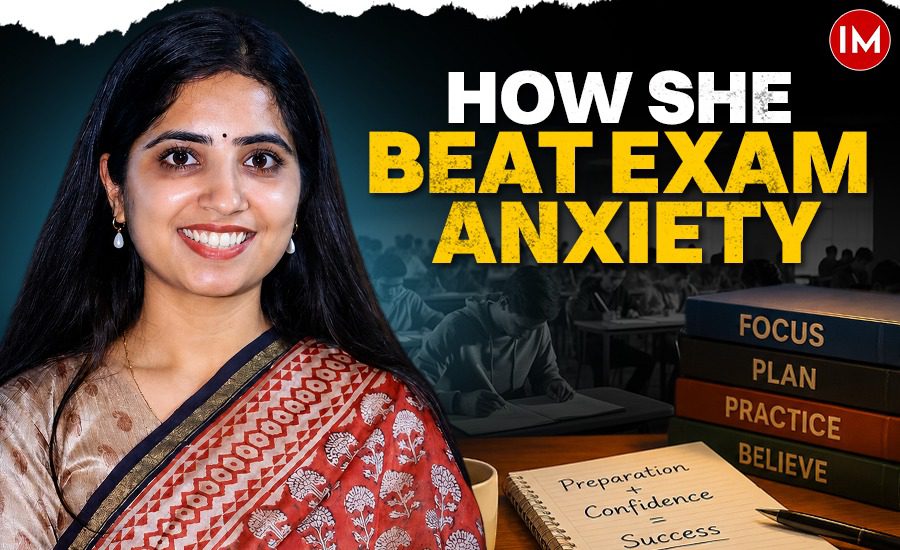
For most of her academic life, Devangi Meena had never really experienced failure.
Born and raised in the Guna district of Madhya Pradesh, she grew up in the township of National Fertilisers Limited, where her father worked in the public sector undertaking. A bright student from the very beginning, she completed her schooling at DPS NFL Vijaypur and chose Physics, Chemistry and Mathematics in Class 11 and 12.
Yet even while studying science, she knew engineering was not the path she wanted to pursue.
That realisation led her to make an unconventional shift. She left the traditional engineering route behind and moved towards Geography, a decision that would eventually shape both her academic and civil services journeys.
She pursued Geography Honours from Miranda House, University of Delhi, followed by a Master’s degree in Geography from the Delhi School of Economics. During the first year of her postgraduate studies, she also qualified for the NET-JRF, creating a strong alternative career option in academics.
Civil services, however, remained a possibility she wanted to explore.
“It was never a childhood dream per se. But somewhere during my school years, I realized my interests lay elsewhere, and I wanted to explore that path,” she shared in an exclusive conversation with Indian Masterminds.
What followed was a journey far longer and far more demanding than she had imagined.
Also read: “Leave Everything Behind for a Few Years”: How Anjani Mishra Cracked UPSC With Simplicity And Self-Control
THE EXAMINATION THAT REFUSED TO LET HER THROUGH
Devangi’s UPSC journey began in 2020. Her first attempt ended at the Preliminary Examination stage.
So did the second.
And the third.
Three consecutive failures in Prelims can break the confidence of even the most capable candidates. For someone who had consistently performed well throughout her academic life, it was particularly difficult.
The challenge wasn’t just the result. It was the questions that came with it.
People around her began measuring her worth through a single examination. Relatives and acquaintances made comparisons. Some even told her parents that school toppers often do not succeed later in life and that others eventually move ahead of them.
For the first time, Devangi found herself confronting something she had never dealt with before: repeated failure.
“This was perhaps the first time I had failed in any examination,” she says. “Taking failure became very difficult after a point because people start questioning your worth based on one examination and forget the rest of your journey.”
Yet she refused to blame luck, destiny, or circumstances. Instead, she chose something much harder.
She chose self-analysis.
THE SIX-MONTH BREAK THAT CHANGED EVERYTHING
After failing to clear Prelims for the third time in 2023, Devangi made a decision that many aspirants would find uncomfortable.
She stopped studying. For six months! After the examination, she did not touch her books until December. The break was not an escape from preparation. It was an attempt to understand why years of effort were not translating into results.
The answer surprised her. The problem was not knowledge. The problem was anxiety.
She realised that she had entered the examination hall carrying immense nervousness and pressure. Her preparation was strong. Even her mock scores were consistently good. But when it came to the actual examination, something changed.
“I realised it wasn’t academics. It was the mental attitude that I was carrying into the examination hall. I used to be extremely nervous during Prelims.“
That realization became the turning point of her journey.
TURNING WEAKNESS INTO A STRENGTH
Once she identified the problem, Devangi focused on solving it.
She enrolled in a rigorous daily Prelims testing programme where candidates wrote examinations every single day, and rankings were released the same evening.
The constant testing environment recreated the pressure, competition and uncertainty of the actual examination. Day after day, she exposed herself to the very situation that had once intimidated her.
Slowly, the fear disappeared. The examination hall stopped feeling unfamiliar. Pressure became routine. Confidence replaced anxiety.
The results were dramatic.
After failing to clear Prelims in her first three attempts, she crossed the stage with substantial margins.
In her 2024 attempt, she cleared Prelims with a score of 108 marks, nearly 20 marks above the General Category cutoff.
In 2025, she cleared it again with 102 marks, around 10 marks above the cutoff.
The improvement reflected not luck, but a willingness to identify mistakes and work relentlessly on them.
FROM CIVIL ACCOUNTS SERVICE TO AIR 236
The breakthrough came in her fourth attempt. For the first time, Devangi cleared Prelims. She went on to clear Mains and the Personality Test as well, earning a place in the Indian Civil Accounts Service (ICAS).
While undergoing training in the service, she decided to give UPSC one more attempt.
This time, she arrived with greater clarity.
Her General Studies performance had already been strong in the previous attempt, where she scored an impressive 441 marks. The area requiring attention was her optional subject.
Despite being a Geography graduate and postgraduate, she had scored only 223 marks in Geography Optional. She worked systematically on improving it.
The effort paid off.
Her optional score jumped from 223 to 286 marks, a significant improvement that played a crucial role in her final success.
The result was AIR 236 in the UPSC Civil Services Examination 2025, a rank that placed her on course for the Indian Administrative Service.
THE INTERVIEW QUESTIONS SHE NEVER EXPECTED
UPSC interviews are often remembered for their unpredictability, and Devangi’s experience was no different.
One board member asked her an unusual question:
If given a choice, which two bad neighbours would you replace with two good neighbours?
The discussion evolved into a wider conversation and became one of the most memorable moments of her interview experience.
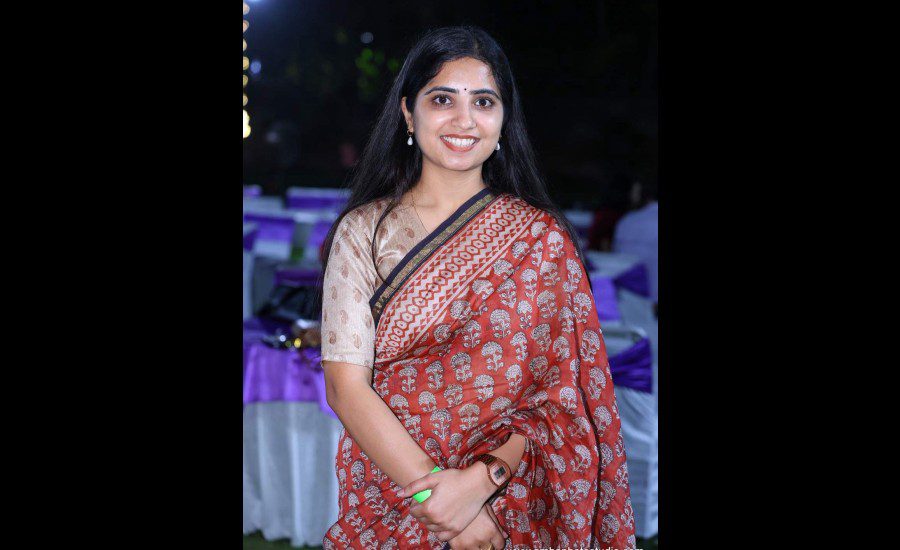
Another unexpected discussion began with something entirely different: her sari. A woman board member complimented her attire and then asked questions about handwoven sarees from different states of India.
In her final interview, owing to her ongoing training in the Civil Accounts Service, many questions revolved around accounts and finance.
But one geography-related question stood out.
The board asked her to identify a geographical feature of Delhi that most people may not know.
After considering several responses, she finally spoke about the fault line passing through Delhi and its connection to the earthquake swarms occasionally experienced in the region.
The answer satisfied the board.
And perhaps reflected exactly what UPSC values most: not rehearsed responses, but thoughtful thinking under pressure.
FAMILY, HUMANITY AND THE IMPORTANCE OF STAYING GROUNDED
Unlike many candidates who struggle with financial or social barriers, Devangi openly acknowledges that she received strong support from her family throughout her journey.
Her parents stood beside her through every setback. That support became an anchor during difficult phases.
Even during intense preparation periods, she consciously protected her emotional well-being.
“I used to talk very frequently to my parents. Sometimes for one hour, one and a half hours, even two hours during preparation. That worked really well for me,” she told Indian Masterminds.
For Devangi, success in UPSC never meant becoming a machine.
She believes aspirants often lose themselves in the race and forget the human side of life.
“The examination should not define your life. The human aspect of you should never be forgotten.“
A MESSAGE FOR EVERY ASPIRANT
Looking back, Devangi believes UPSC is less about perfection and more about adaptability. The ability to identify weaknesses. The courage to accept mistakes. And the willingness to keep searching for solutions.
“If you have that level of willpower, your focus will be on finding solutions rather than blaming things around you if you’re not succeeding.”
Her own journey stands as proof.
A candidate who failed to clear Prelims three times.
A student who stepped away from books to understand herself better.
A Geography scholar who transformed nervousness into confidence.
A Civil Accounts officer who returned stronger for one final attempt.
And a young woman who discovered that sometimes the biggest breakthrough comes not from studying harder, but from understanding yourself more honestly.
For thousands of UPSC aspirants staring at a disappointing result today, Devangi Meena’s story offers a powerful reminder:
Failure is information. What you do with that information determines everything that follows.
Also read: The Engineer Who Left High-Frequency Trading to Crack UPSC in One Shot