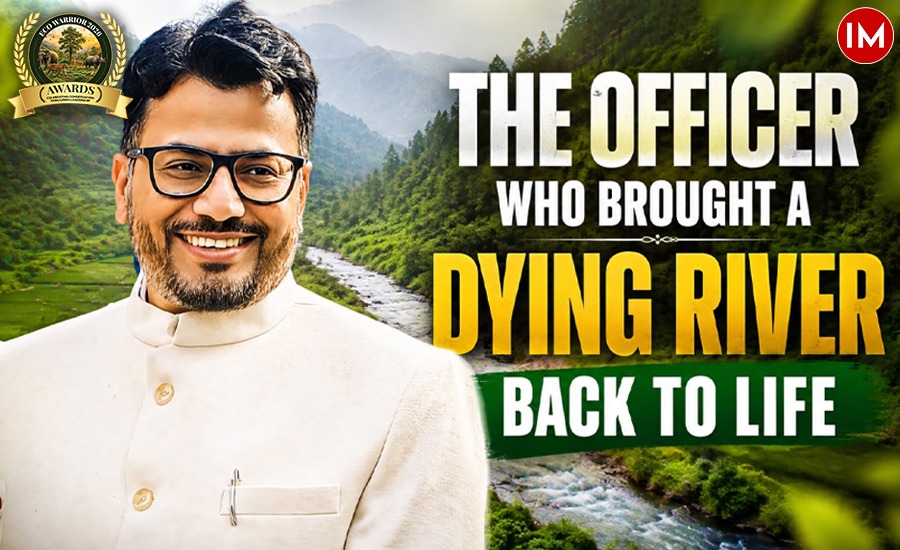
For most people, a river is something that flows through a landscape. For IFS officer Dharam Singh Meena, it became a question: what happens when that flow begins to disappear?
When Meena, a 2009-batch Uttarakhand cadre officer, began working in Tehri Garhwal, he encountered a district where water scarcity was no longer an occasional inconvenience. It was becoming a daily reality.
He was already convinced that forests had to be managed with water at their centre.
“I had in my mind that forest conservation and forest management should be water-centric. Whatever we do in forest areas should augment the availability of water in the forest region,” he shared in an exclusive conversation with Indian Masterminds.
The urgency became personal during his interactions with villagers. The Alakananda Bachao Andolan was underway, with residents raising concerns over declining water availability. Meena began speaking to village Pradhans and discovered that lakhs of people depended on the river, while its water levels had been steadily declining for nearly a decade.
Then came a seemingly ordinary encounter that stayed with him.
A schoolgirl told him that there was no water even at her school. When he asked where she got drinking water, he learnt that children carried bottles from home and had to bring them back after school.
“That thing hit me in my mind,” he recalls.
It was the moment a large ecological problem acquired a human face.
Also Read: Dr. Sanjeev Sharma: The Forest Officer Turning Wildlife Rescue Into a Larger Conservation Mission
Looking Beyond Water Conservation
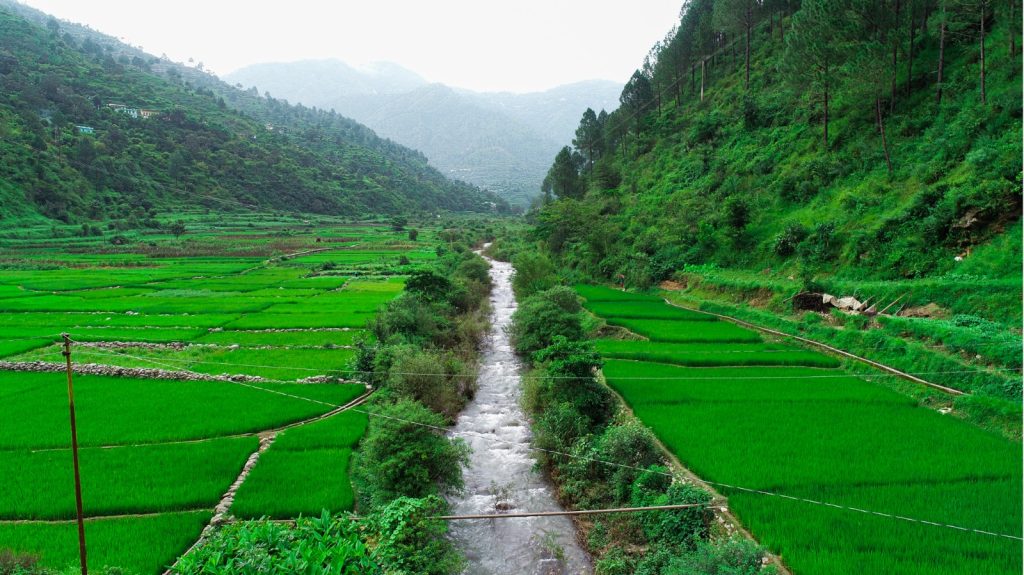
The Heval basin also catered to a large floating tourist population. In areas such as Nauti and Chamba, around 1.5 lakh tourists arrived annually, adding pressure to already scarce water resources. During the peak season, the shortage became particularly acute because the river flowed through deep gorges, leaving upper settlements with limited access to water.
Government departments were already spending heavily on water conservation. MGNREGA, Rural Development, Irrigation, Soil Conservation, the Forest Department and the Watershed Directorate were all undertaking interventions.
But Meena noticed a crucial gap: effort existed, but the interventions were not always scientifically aligned with how the landscape actually stored and released water. He estimates that cumulatively, around ₹7–8 crore had been spent on water conservation, without producing the desired results.
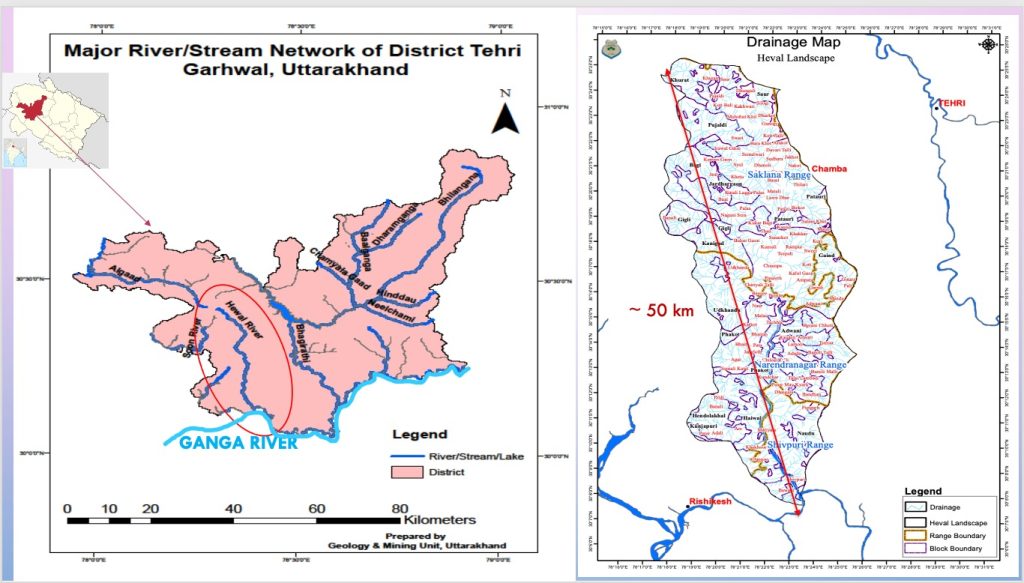
He began looking for scientific references, including work undertaken by ICIMOD in the Hindu Kush region, and embarked on a hydrological assessment of the entire catchment. The survey took nearly a year.
Initially, more than 200 streams were mapped. Of these, 166 were identified as vulnerable based on usability and rapid assessment. The exercise shifted the approach from scattered water conservation works to an integrated understanding of how water moved through the landscape, from springs and streams into the river and eventually to farms and homes.
A Whole Landscape Approach
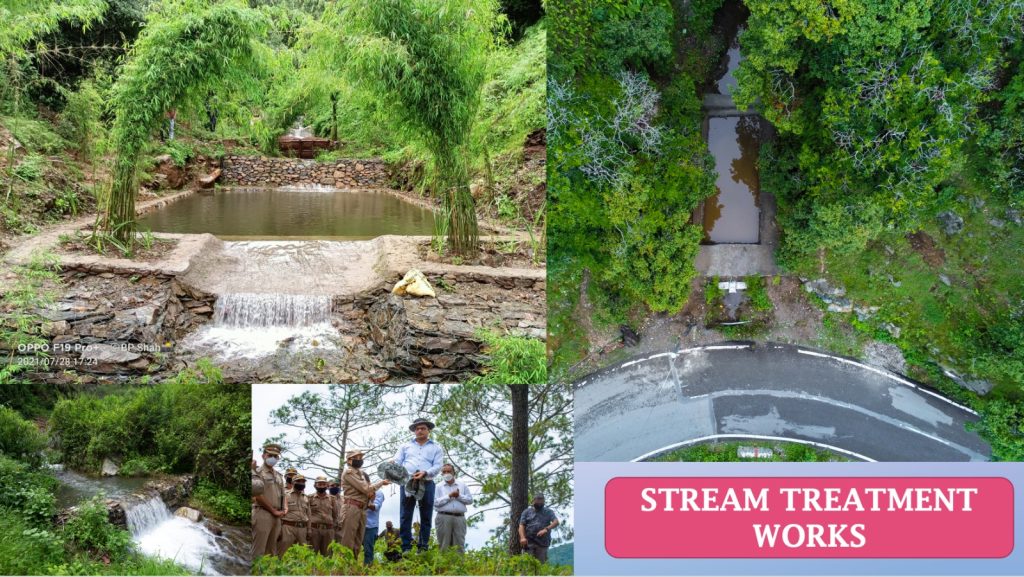
The model that emerged treated water not as a single resource, but as a connected system. Meena’s team worked across springs, streams and the river itself, while simultaneously addressing the forest cover that influenced water retention.
The ecological restoration component was extensive. More than 20 lakh plants were planted, eventually reaching 20.62 lakh native, water-conserving trees and grasses. The focus was not simply on increasing tree numbers. The team also worked with mosses, bryophytes, pteridophytes, grasses and locally available shrubs because these lower forms of vegetation can function like natural sponges, absorbing water and releasing it gradually.
Water-loving plants were also introduced after field experiments showed their role in soil binding and water augmentation.
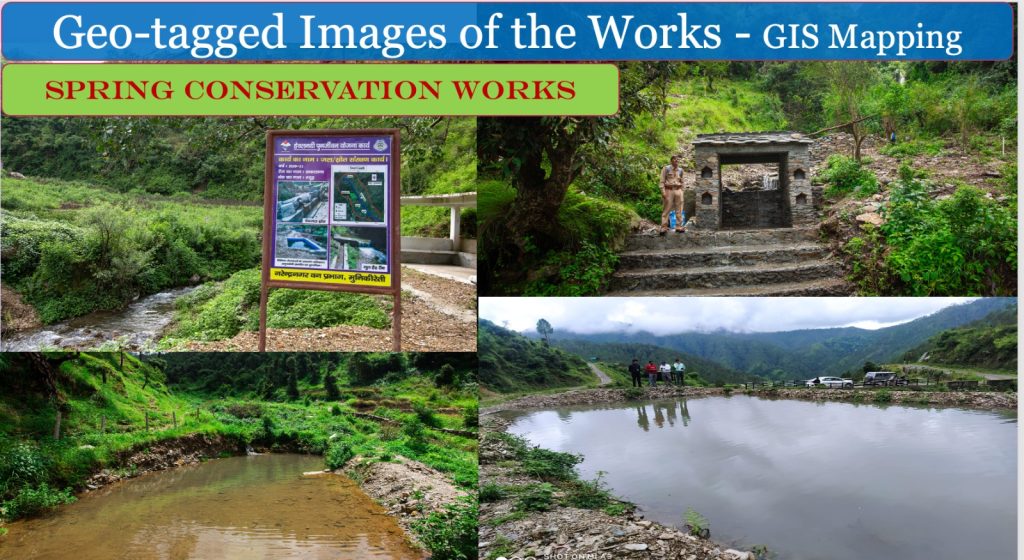
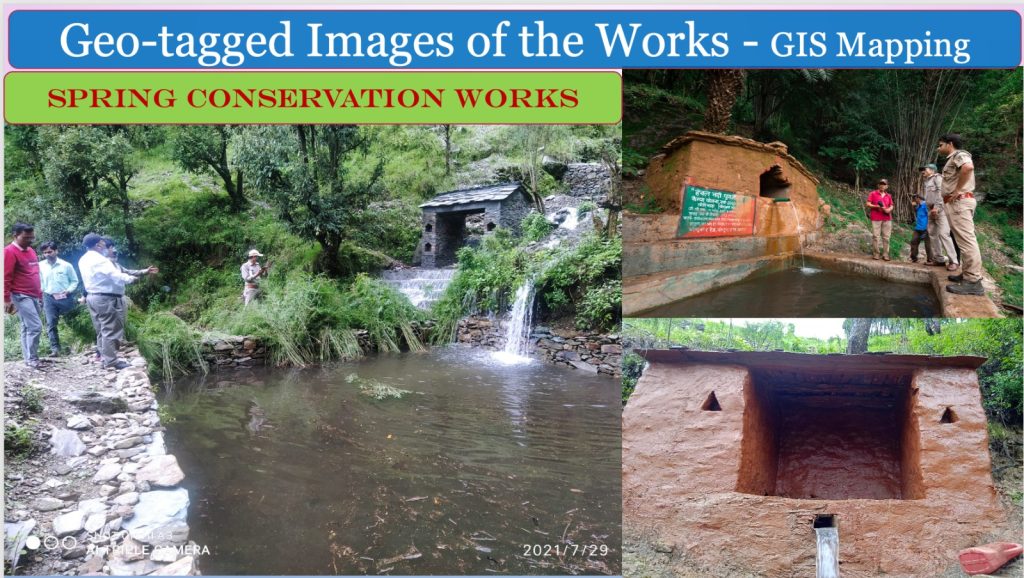
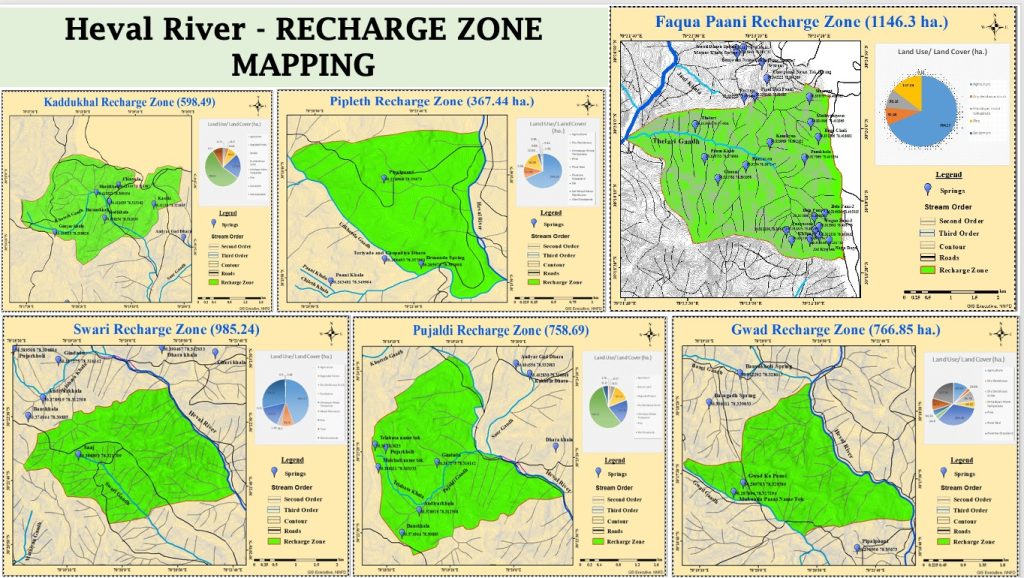
The larger programme eventually rejuvenated 126 degraded springs and 28 streams across 16 recharge zones. As many as 1,58,572 water-harvesting structures were created, enhancing groundwater recharge by an estimated 438.66 million litres.
The riverbed was rehabilitated, invasive species were removed and habitats improved. The result was a landscape where perennial flows began returning and the watershed’s capacity to hold, regulate and deliver water improved.
But Meena was unwilling to simply assume that the interventions were working.
Measuring Every Drop
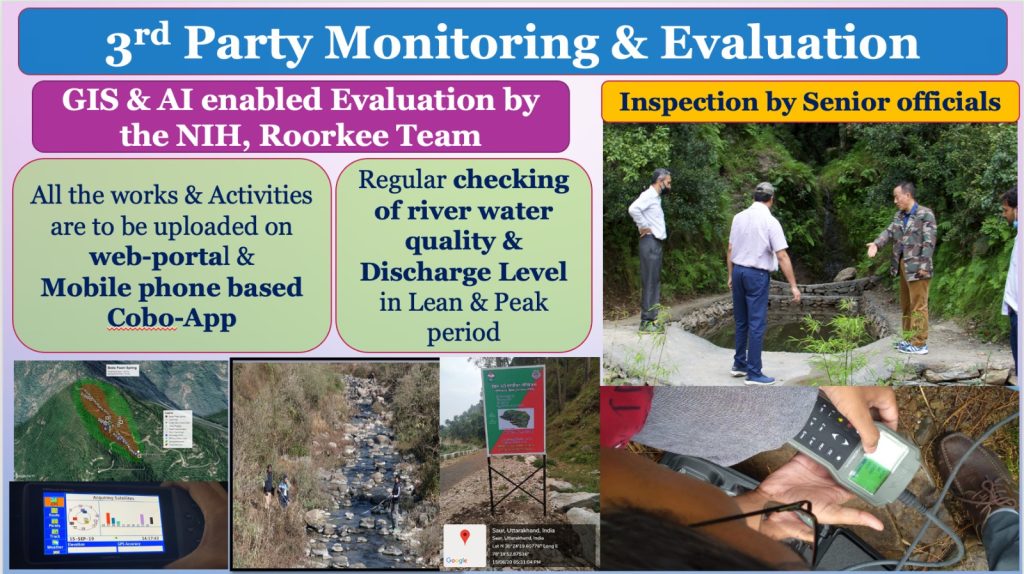
From the beginning, the project was backed by scientific monitoring. The team collaborated with the National Institute of Hydrology and IIT Roorkee, seeking instruments and technical support to measure whether the interventions were producing measurable change.
Initially, data was collected every month. As the project progressed, monitoring became more frequent, including measurements of daily changes in water discharge. The data was used to prepare hydrographs and assess the hydrological and morphological conditions of the area.
There was experimentation too. With no robust standardised methodology available locally for the specific springshed-management approach being attempted, the team tested different techniques before settling on a comprehensive model that combined water conservation, forest restoration and catchment treatment.
“We did our own assessment, our own standardisation of the technique. We did a lot of experiments. Finally, we came to know that this holistic and comprehensive model was the best one because it gave results,” the officer stated.
The model eventually expanded beyond water.
Restoring the River Also Meant Restoring the Landscape
River restoration exposed other problems affecting village life.
Encroachments along riverbanks were identified. Rather than treating villagers merely as beneficiaries, the administration involved them in planning. In several locations, residents themselves removed encroachments.
Lantana had spread across parts of the landscape, so eradication drives were conducted with local women.
Human-wildlife conflict was addressed alongside ecological restoration. Wild animals, including wild pigs, frequently damaged crops at night. Wild-proof fencing and bio-fencing were introduced around vulnerable agricultural areas, including the use of thorny shrubs and trees.
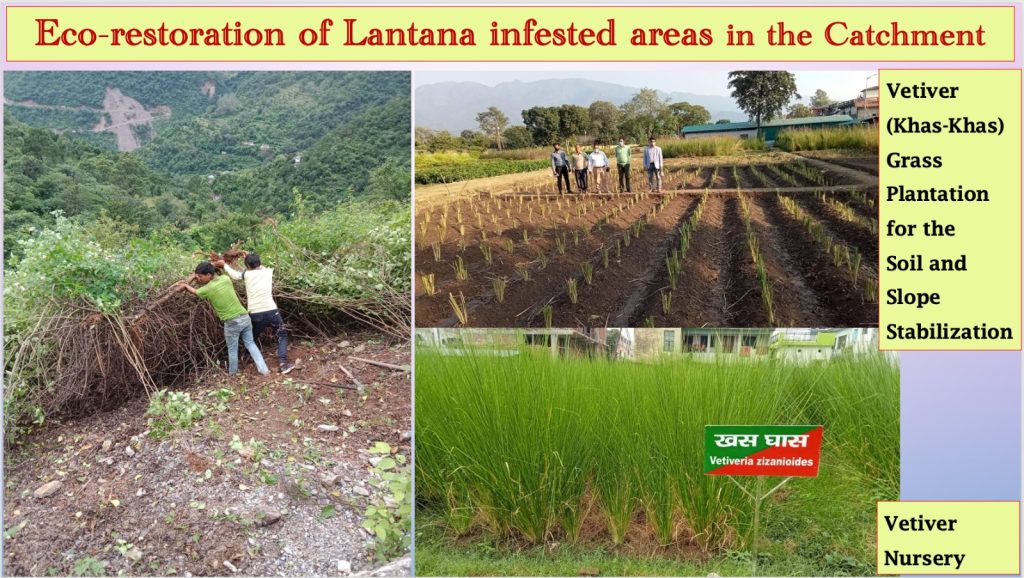
Awareness programmes were conducted in schools and Panchayats, while different government departments were brought together through convergence.
The numbers ultimately gave the initiative a scale of its own: 126 springs, 28 streams, 16 recharge zones, 1,58,572 water-harvesting structures and 20.62 lakh plants.
And then the model travelled beyond Heval.
From One River Basin to Uttarakhand
Meena continued working on the initiative after being promoted from DFO to Conservator of Forests at the same location. He later pursued a PhD focusing on river rejuvenation and, while serving as Additional Secretary in the Uttarakhand government, proposed that the Heval approach be adopted more widely.
The proposal led to the creation of the Spring and River Rejuvenation Authority (SARRA) as an apex body for taking the comprehensive approach across Uttarakhand.
The challenges that had confronted the Heval project such as technical expertise, finance, inter-departmental coordination and collaboration with specialised institutions, could now be addressed through an institutional framework.
The Uttarakhand government adopted the Heval River Rejuvenation Model for wider implementation, turning what began as a response to a water crisis in Tehri Garhwal into a statewide approach to spring and river restoration.
For Meena, however, the achievement is less about a single project than about changing the way a Himalayan watershed is understood.
“The entire water actually originates from the stream and flows through the stream to the river. Water then gets utilised from the riverbank for drinking and irrigation purposes. So we took all these three elements of water,” he told Indian Masterminds.
In the Heval landscape, the river was never treated as an isolated channel. Its revival began much higher up, in the forests, springs, recharge zones and villages that sustained it.
And that may be the most important lesson of the Heval model: to bring a river back to life, sometimes you have to begin far away from the river itself.
Also read: How IFS Officer Kumar Ashish Is Rebuilding Palamu Tiger Reserve