There are moments in wildlife conservation when saving an animal is only the beginning.
A leopard caught in a snare. A Himalayan black bear in distress. Forty-seven protected freshwater turtles pulled from suspected illegal wildlife trade. A rock python rescued from unlawful possession. Armed hunters intercepted with more than 142 kilograms of wild meat and the body parts of protected mountain species.
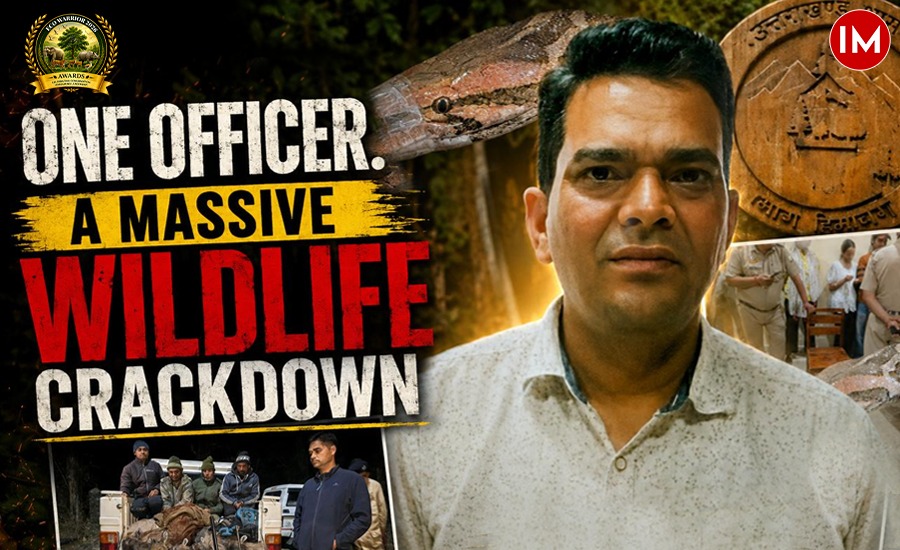
Each incident demands a different response. But under Dr. Sanjeev Sharma, IFS, 2018 batch, these cases have been treated as parts of something larger: a wildlife protection system that connects intelligence, field action, scientific rehabilitation, law enforcement and local participation.
Serving as Deputy Conservator of Forests, Palampur Forest Division, Himachal Pradesh Forest Department, Dr. Sharma has emerged as a field-oriented forest officer whose conservation work during 2025-26 has ranged from rescuing individual animals to taking on organised wildlife crime and bringing communities into ecological restoration.
Also read: How IFS Officer Kumar Ashish Is Rebuilding Palamu Tiger Reserve
When Rescue Means More Than Saving an Animal
In a forest division, a wildlife rescue rarely follows a script.
During the year, the Palampur Forest Division rescued two Sambar deer, a leopard and a Himalayan black bear, all Schedule-I species protected under the Wildlife (Protection) Act, 1972.
The animals were examined by veterinarians, treated where required and rehabilitated before being returned to suitable natural habitats.
One of the most demanding operations involved a leopard trapped in a snare near Holta Army Cantonment.
Such an operation leaves little room for error. The animal has to be secured without causing further injury, while the rescue team must also deal with the risks involved in handling a large predator. The operation required coordination between frontline forest staff and veterinary experts and ultimately ended with the leopard being safely released into the wild.
For Dr. Sharma, however, the purpose of wildlife protection extends beyond the rescue itself.
In an exclusive conversation with Indian Masterminds, he shared, “A rescue is successful only when the animal is not merely taken out of danger but given a genuine chance to return to a suitable natural habitat. Our responsibility begins with saving the animal and continues until its safe return to the wild.”
That philosophy becomes even clearer in one of the division’s most significant interventions of the year.
47 Turtles, One Seizure, And a Much Bigger Conservation Operation
The discovery of 47 Schedule-I freshwater turtles could easily have remained an enforcement story. But, it did not.
The rescued turtles included 39 Indian Tent Turtles (Pangshura tentoria) and eight Indian Roofed Turtles (Pangshura tecta). The case involved illegal possession and suspected wildlife trade, and the intervention also led to the recovery of exotic birds and fish.
Under the supervision of Dr. Sharma, the rescued turtles were secured, identified and inventoried. Photographic documentation and evidentiary records were maintained for the legal proceedings.
But the more difficult question came next: where should the turtles go?
The division assessed the ecological conditions within its jurisdiction and found that suitable riverine habitat for long-term rehabilitation was not available.
Instead of releasing the animals at the nearest available location, the department looked for habitats capable of supporting their long-term survival. Judicial approval was obtained, statutory requirements were completed and the turtles were ultimately released into suitable natural habitats.
The Python That Was Saved Through Community Intelligence
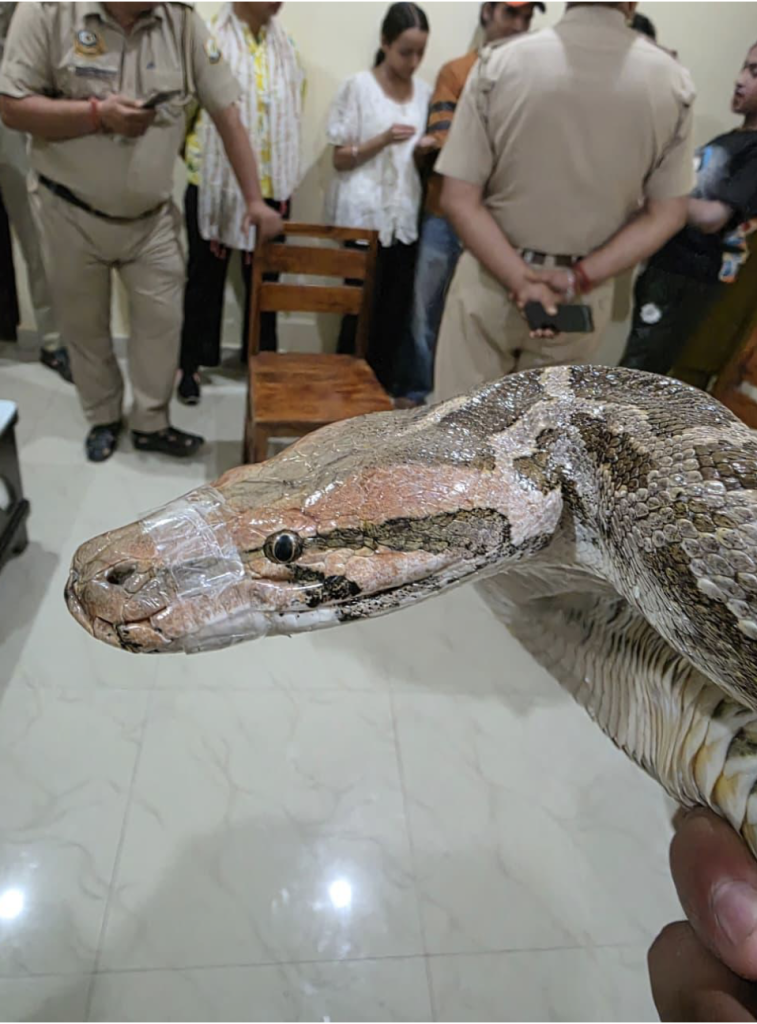
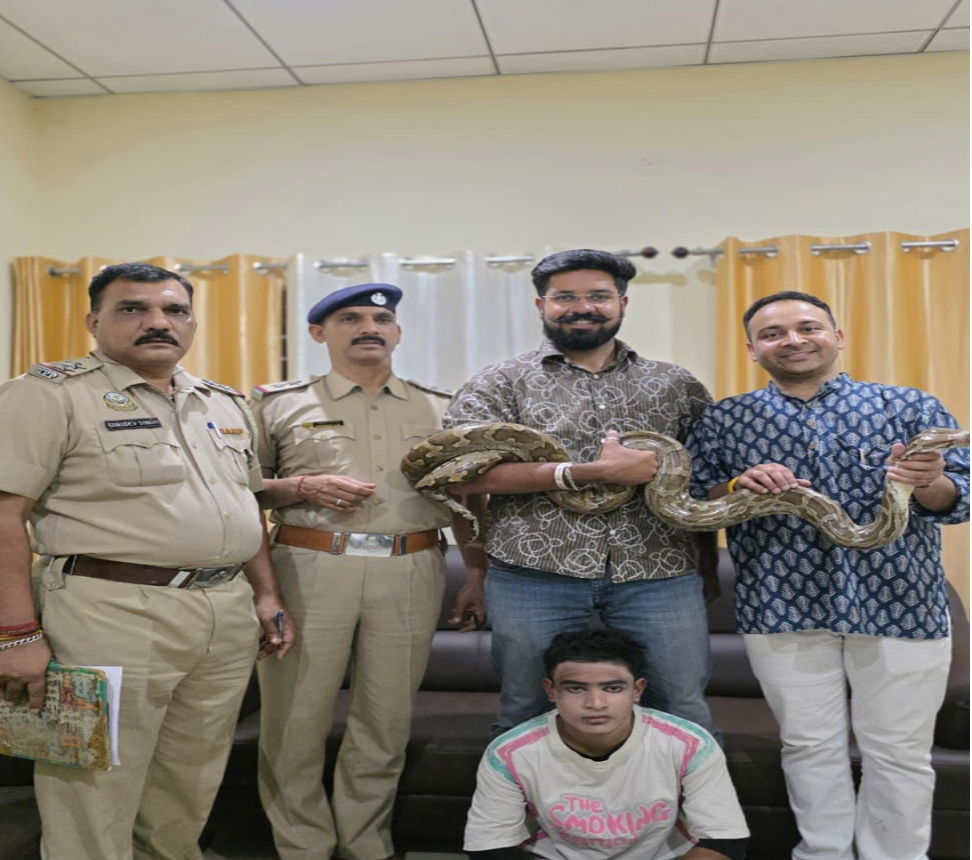
The same model came into play again when the division received information about an Indian Rock Python (Python molurus), another Schedule-I protected species and its illegal possession. Under Dr. Sharma’s supervision, the Forest Department worked with the Police authorities to secure the python and initiate legal proceedings.
The animal was produced before the competent court. Judicial permission for its release was obtained, habitat suitability was assessed and the python was eventually released into a suitable natural habitat within its native ecological range.
142.75 Kilograms of Wild Meat And a Major Blow to a Hunting Network
Not every operation ends with an animal being returned to the forest. Some begin with a threat that has to be stopped.
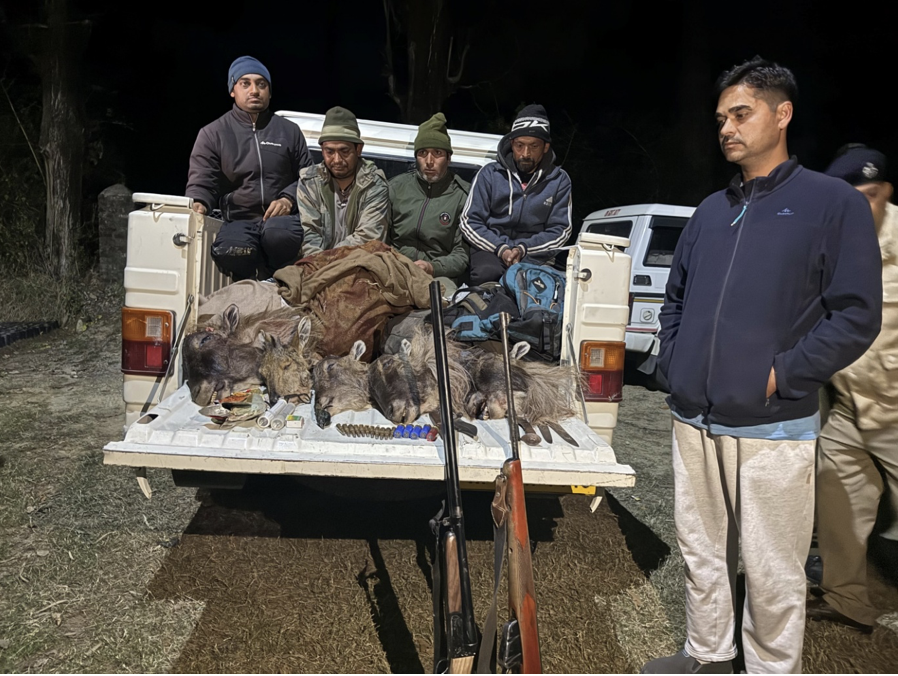
In the Jia area of Kangra district, Palampur Forest Division detected what was described as one of the largest wildlife hunting cases reported in recent years in Himachal Pradesh.
Acting on confidential intelligence and strategic surveillance, forest officials intercepted armed poachers.
The seizure was substantial:
- 142.75 kg of wild meat
- Body parts of Himalayan Tahr
- Body parts of Himalayan Goral
- Body parts of Koklass Pheasant
- Two rifles
- 16 live cartridges
- Six hunting knives
- Five accused persons apprehended
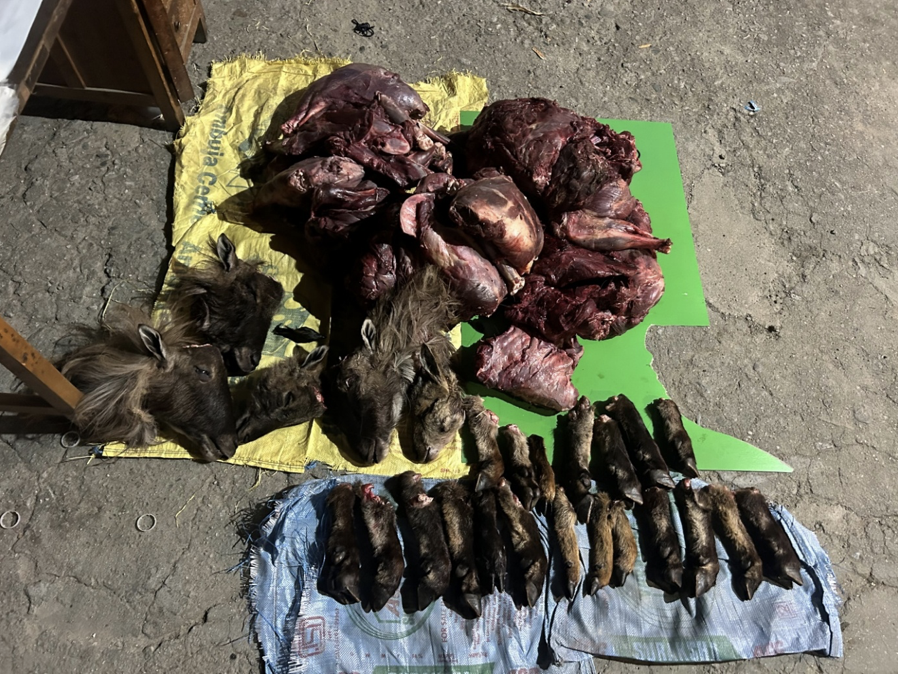
The operation was not simply about making arrests. It was about preventing further hunting pressure on vulnerable wildlife populations inhabiting the Dhauladhar landscape.
For a mountainous ecosystem where species such as the Himalayan Tahr, Goral and Koklass Pheasant form an important part of the region’s biodiversity, such hunting can have consequences far beyond a single carcass.
The operation demonstrated the importance of confidential intelligence, surveillance, field coordination and the ability to act quickly when armed wildlife offenders are involved.
Building a Better Case After the Poachers Are Caught
Dr. Sharma’s approach has also focused on what happens after an offence is detected.
Wildlife crime cases can fail not because the offence did not happen, but because evidence is poorly collected, procedures are not followed or investigation and prosecution are not sufficiently coordinated.
To address this gap, Dr. Sharma organised a specialised training programme on “Wildlife Offence Cases: Investigation and Prosecution” at the Police Training Centre, Daroh.
The programme focused on practical aspects of wildlife crime investigation, including evidence collection, crime-scene management, investigation techniques, legal procedures and prosecution strategy.
The idea was simple: better-trained frontline personnel can build stronger cases. And stronger cases mean that wildlife protection does not stop with a seizure or arrest.
From Wildlife Protection to Human-Wildlife Coexistence
The Palampur Forest Division’s work under Dr. Sharma has not been confined to individual rescue operations.
A science-based Human-Wildlife Conflict Mitigation Programme has also been implemented, involving habitat mapping, identification of conflict hotspots and wildlife movement corridors, along with community participation.
Habitat restoration, afforestation and soil and moisture conservation measures have been taken to improve natural habitats and reduce the movement of wildlife towards human settlements.
This approach recognises a basic reality of conservation in the hills: protecting wildlife also means understanding the people who share the landscape with it.
A forest corridor on a map may look straightforward. On the ground, it can pass through villages, roads, agricultural land and human habitation. Reducing conflict therefore requires both ecological understanding and local participation.
Bringing Private Stakeholders Into Conservation
Dr. Sharma’s conservation work has also extended beyond the conventional forest department model. Through the Rajiv Gandhi Green Adoption Scheme, private stakeholders were encouraged to support afforestation and ecological restoration.
Sponsored plantation interventions covered approximately three hectares, creating a model of public-private-community participation in ecological restoration.
It is an attempt to answer another important question in conservation: how can responsibility for restoring degraded landscapes move beyond government departments?
By creating avenues for outside stakeholders to participate, the initiative seeks to bring additional resources and ownership into environmental work.
The Larger Picture
Since taking charge of Palampur Forest Division in March 2024, Dr. Sanjeev Sharma’s work has covered an unusually broad spectrum.
There have been leopards and bears rescued from distress, Sambar deer returned to the wild, 47 protected turtles moved from illegal possession to scientifically selected habitats, a rock python rescued and released, armed poachers intercepted, wildlife crime investigation strengthened and three hectares brought under sponsored plantation efforts.
Behind these individual interventions is a consistent idea: wildlife protection does not end when an animal is rescued.
It continues through veterinary care. Through scientific assessment. Through evidence collection. Through court procedures. Through habitat selection. Through prosecution. Through community intelligence. And, ultimately, through creating landscapes where wildlife and people can coexist with fewer conflicts.
The story is not merely about the animals that were saved or the poachers who were caught. It is about building a system capable of responding to wildlife threats from the first piece of information to the final return of an animal to the wild.
Also read: IRS Rohit Mehra’s 365 Quotes For Success Turns Every Day Into A Lesson