By – Anuja Amralkar
Across India, dynamic civil servants are promoting people-oriented reforms that are completely reshaping the perspective of how governance actually works on the grassroot level. Today, proactive government officials are introducing innovative pro-people programmes and implementing community projects that are transforming the key sectors such as education, healthcare, and tribal welfare across multiple districts.
Honestly, these initiatives show the truth that real progress only happens when the government effectively engages with local citizens, and converts complex administrative hurdles into possibilities for collective progress.
The current system of state administrative organization is too rigid, commonly labeling innovation at the grassroot level as “personal pilot projects” rather than permanent setups. This experimental bottleneck hinders effective governance although specific areas achieve remarkable development but the impact fails to expand nationwide.
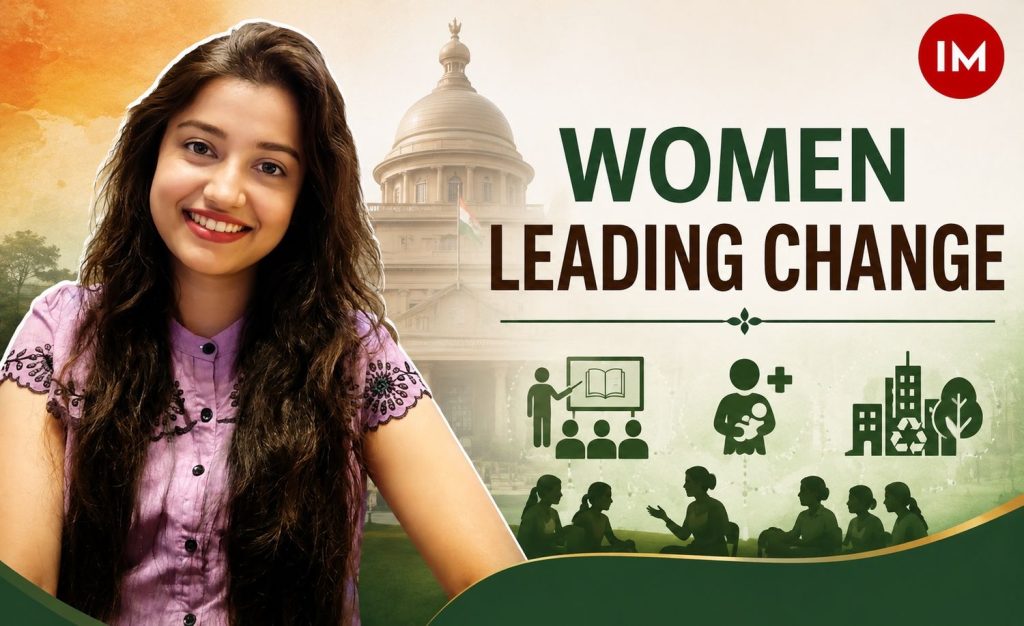
Aligning with the national vision of Viksit Bharat@ 2047, women-led development is transforming governance at the grassroot level throughout India, as our highly driven women administrators specifically prove this transformation by way of effective, practical execution. For instance, Odisha cadre 2015 batch IAS officer Parul Patawari’s “SHIKSHARTHA” initiative in Odisha’s Rayagada district transformed tribal school infrastructure into vibrant learning spaces using indigenous Lanjia Saura art, successfully boosting student retention.
Read Also: The Power of a Response: How a Simple Reply Can Bring Government Closer to People
Similarly, officers like 2001 batch IAS officer from Telangana cadre, Ms Smita Sabharwal have also contributed by developing community-centric health initiatives such as the innovative Ammalalana to improve maternal and child healthcare. Telangana cadre 2010 batch IAS officer Hari Chandana Dasari has focused on smart city projects and e-governance to promote sustainable urbanization and citizen welfare through innovative programs, such as recycling initiatives.
Addressing this specific bottleneck, the Government of India has set up essential foundations schemes such as NITI Aayog’s Aspirational Districts Programme (ADP) and the NITI for States framework, which are important because they promote competitive and cooperative federalism by identifying and compiling best practices at the grassroots level, such as the innovative smart-classroom model in Banka district or other health-sector initiatives.
Nevertheless, while the national government can provide a comprehensive framework, respective state administrations still require a mandatory regulatory framework to integrate and execute them on the ground. To ensure these advancements are not forgotten, we must transition from short-term rewards to establishing strategic frameworks.
Create a State-Level digital dashboard: where successful district-level pilot projects are documented, peer-reviewed, and made accessible to all administrative blocks.
Mandate Standard Operating Procedures (SOPs): For every initiative that has shown results (in terms of improved learning outcomes or public service delivery), the state government should create an official SOP that must be followed by all subsequent officers in the state.
Ultimately, bridging the gap between individual innovation and state-level policy is the true key for achieving administrative excellence. By translating these grassroots innovations into SOPs state governments can protect successful initiatives from vanishing when leadership changes.
When state cooperation unites visionary, women-led leadership, governance transforms from reactive crisis management into proactive nation-building, paving a clear, sustainable path toward the shared vision of Viksit Bharat 2047.
About the Author – (Anuja Amralkar is a public policy professional, computer science engineer, and gold medalist for research excellence based in Bhopal, Madhya Pradesh. Specialising in digital governance, regulatory compliance, and empirical research, she has authored multiple policy briefs and research papers focusing on administrative reform and public governance.)
Disclaimer – (The views and opinions expressed in this article are solely those of the author and do not necessarily reflect the views of Indian Masterminds. For feedback or queries, please write to [email protected].)
Read Also: Beyond Financial Inclusion: Why SHGs Must Be Seen Through a Feminist Political Economy Lens