There is a peculiar distance between the citizen and the district administration in India.
On paper, the distance may be only a few kilometres. In reality, it can feel like miles.
For an ordinary citizen, meeting the District Magistrate or Collector can be intimidating. Entering the Collector’s office itself can require confidence, connections and sometimes several visits. For someone seeking a pension, land document, police action, welfare benefit or simply an answer to a government-related problem, the first hurdle is often not the solution. It is reaching the officer who can provide it.
This is why something as simple as responding to a phone call or message can become an important act of governance.
The recent letter by Cabinet Secretary T V Somanathan (IAS:1987:TN), to civil servants offers an interesting starting point. The letter speaks about the importance of small things in administrative work — how officers conduct meetings, manage time, communicate with colleagues, engage with visitors and delegate responsibilities. It argues that these seemingly minor practices can distinguish an outstanding officer from a mediocre one.
Perhaps one more “small thing” deserves to be added to that list: responding to people.
THE FIRST RESPONSIBILITY IS TO LISTEN
A civil servant posted at the block, subdivision or district level is often the government’s most visible face.
For a villager, the Block Development Officer may be the government. For a person in a district, the Collector may represent the entire administration. For someone facing a law-and-order problem, the Superintendent of Police may represent the State.
Read Also: How Digital Media Is Giving India’s Cooperatives a New Voice
Their job is not merely to implement schemes, review files or attend meetings.
It is also to listen.
A citizen may not always need an immediate solution. Sometimes, he or she simply wants to know that the complaint has reached the right person and that somebody is looking into it.
That acknowledgement can make a remarkable difference.
Imagine a farmer whose compensation has been delayed. A widow waiting for a pension. A family struggling to get a certificate. A student unable to access a scholarship. Or a person whose complaint has been moving between government offices for months.
A short response – “Please share the details. I will have the concerned officer look into it” — may not solve the problem immediately.
But it tells the citizen something important: the system has heard you.
WHY DOES MEETING A COLLECTOR FEEL SO DIFFICULT?
India has created several mechanisms to make administration accessible. Public grievance systems, official telephone numbers, email addresses, social media handles and public hearings are meant to reduce the distance between citizens and government.
Yet perception often remains different.
For many ordinary citizens, approaching the Collector’s office is still a major undertaking. There may be security checks, multiple layers of staff, appointments, waiting periods and uncertainty about whom to approach. Someone who has never interacted with government officials may simply decide that it is easier to give up.
This is particularly significant for vulnerable citizens. A well-connected person can find a phone number, approach an intermediary or get an appointment. A poor farmer or daily-wage worker may not have any of these advantages.
Therefore, accessibility is itself a form of equality.
If a citizen can reach an office but cannot reach the person responsible for the decision, the formal existence of a grievance mechanism means little.
THE OFFICIAL NUMBER SHOULD MEAN SOMETHING
State governments routinely provide official contact numbers for senior officers — from Sub-Divisional Magistrates and District Magistrates to Superintendents of Police and senior secretariat officials.
The purpose is clear.
These are not private numbers. They are official channels created to facilitate communication. But the question is: what happens when citizens call?
In my own experience of trying to contact officers in Bihar for professional work, the experience has been mixed. Some senior officers have been remarkably accessible. The Chief Secretary and the DGP, for instance, have at times been easier to approach through a simple WhatsApp message than several officers much lower in the administrative hierarchy.
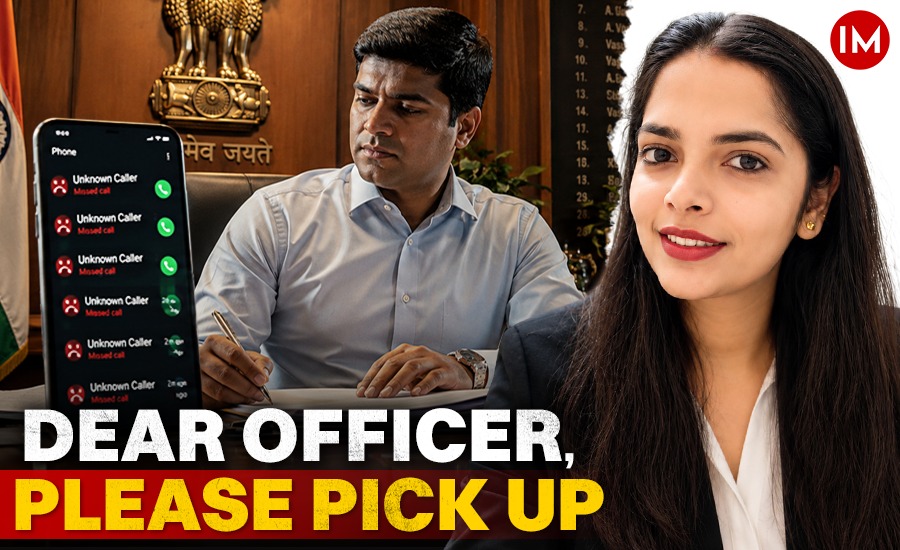
At the same time, there are officers who are difficult to reach. Sometimes they are in meetings. Sometimes they are on field visits. Sometimes the phone remains unanswered.
There is nothing wrong with an officer being unavailable at a particular moment. An administrator cannot possibly answer every call. But there is a difference between being unavailable and being unreachable.
Read Also: ‘My Path Has Not Been Straight’: Shakeel Ahmad Ganie’s Journey to the IRS
An unanswered call can be followed by a message. A missed call can be returned later. An office can designate a responsible person to record urgent matters.
Technology has made this possible.
A RESPONSE DOES NOT MEAN SOLVING EVERYTHING
There is also a legitimate concern among officers. If they start responding to every message personally, won’t their workload become unmanageable?
Absolutely.
That is why accessibility should not mean that every officer becomes a personal grievance officer for thousands of citizens.
The solution is not to make officers available 24 hours a day. The solution is to create a responsive system around the officer. An official number can have a defined protocol.
Messages can be acknowledged during office hours. Urgent matters can be flagged. Routine grievances can be transferred to the appropriate department. Staff can maintain a simple record of complaints and their status.
The officer does not need to personally solve every problem. But someone in the system should be able to say:
“We received your complaint. This is the officer handling it. This is what happens next.”
That alone can dramatically change the citizen’s experience of government.
THE BEST OFFICERS ARE NOT ALWAYS THE BUSIEST ONES
There is a tendency in bureaucracy to treat extreme busyness as evidence of importance. An officer who is constantly in meetings, travelling, reviewing files and attending events may indeed be working extremely hard.
But administration is not a competition to see who can remain busiest. The real question is whether the work is producing outcomes.
The Cabinet Secretary’s letter makes precisely this broader point. Officers can spend decades in government and still fall into routines without asking whether they are improving. Perhaps accessibility should become part of this self-reflection.
At the end of the day, an officer could ask:
How many people were able to reach my office today?
How many complaints were acknowledged?
How many citizens left knowing what would happen next?
These are simple questions. But they can reveal a great deal about the quality of administration.
SMALL RESPONSES, BIG TRUST
Trust in government is not built only through large reforms. It is built through everyday interactions. A police officer returning a victim’s call. A Collector acknowledging a citizen’s complaint. An SDM ensuring that a pending application reaches the correct department. A BDO asking why a welfare benefit has not reached a village.
These actions may never make headlines. But for the citizen involved, they can become the moment when government stops feeling like an abstract institution and starts feeling like a service.
This is particularly important in rural India, where physical distance, limited digital literacy and social barriers can make access to government more difficult.
A responsive officer can become a bridge. An inaccessible officer can unintentionally become another wall.
THE QUESTION IS NOT “CAN I SOLVE IT?” BUT “CAN I RESPOND?”
No civil servant can solve every grievance. No Collector can personally investigate every complaint. No SP can take every phone call. No Secretary can respond to every message.
That is not the expectation. The expectation is much simpler.
Respond. Acknowledge. Direct. Follow up.
Sometimes the most powerful sentence an officer can send is not “I will solve this.”
It is: “I have received your message. Please contact this officer, and the matter will be examined.”
For a citizen who has spent weeks trying to find the right door, that response can be the door opening.
BRIDGING THE GAP, ONE RESPONSE AT A TIME
The government often speaks about bringing administration closer to citizens. Digital governance, public grievance portals, social media and technology are all helping make that possible. But technology cannot replace responsiveness.
A WhatsApp number is useful only if someone checks it. An email address matters only if someone reads it. A grievance portal matters only if someone acts on the grievance.
The distance between government and citizen is therefore not always a question of geography.
Sometimes, it is just one unanswered call away.
The most important lesson from the Cabinet Secretary’s emphasis on improving the small things in administrative life may therefore be this: good governance is not always created by a dramatic policy intervention.
Sometimes it begins with a civil servant looking at a missed call during office hours and deciding to call back.
That call may take two minutes.
For the citizen on the other side, it may restore faith in the government.
And perhaps that is one of the simplest, yet most powerful, forms of public service.
Also Read: India’s Strategic Autonomy Is Facing Its Hardest Test