For an elderly widow living in a remote village, good governance is not about artificial intelligence, digital platforms or complex algorithms. It is about receiving her pension on time, without repeated visits to government offices. For a rural family, an effective healthcare system means access to medicines, affordable tests and timely treatment, regardless of where they live.
These simple expectations lie at the heart of administrative reform. Technology can make government systems faster and more efficient. However, its real value depends on whether it makes citizens’ lives easier.
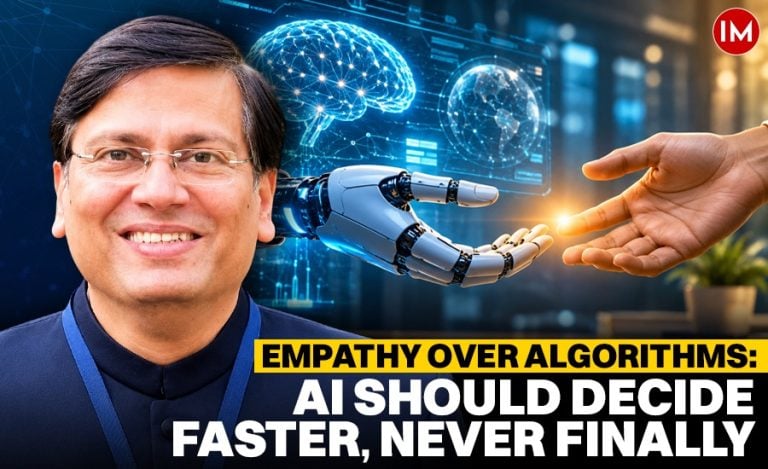
Dr. Samit Sharma, an Indian Administrative Service officer with over two decades of experience, believes that welfare delivery must be designed around people rather than procedures. In a conversation with Indian Masterminds, he spoke about using artificial intelligence (AI) in governance, making welfare systems more accessible, encouraging innovation within the bureaucracy and documenting reforms so that their lessons survive beyond an officer’s tenure.
A 2004-batch IAS officer of the Rajasthan cadre, he is currently serving as Secretary to the Government and Registrar of the Cooperative Department, Rajasthan. His approach to governance rests on a simple principle: technology should improve the delivery of public services without taking away the human element.
Also Read – How Goat Farming Can Protect Small Farmers from Economic Shocks
MAKING TECHNOLOGY INVISIBLE TO CITIZENS
Digital platforms have changed the way governments identify beneficiaries, verify eligibility and transfer welfare benefits. Yet, these systems can also create difficulties for people who have limited digital access or struggle to understand complicated procedures.
For Dr. Sharma, the solution is to make technology work in the background.
“An elderly widow in a village need not understand what an algorithm or an API is; she should simply find that her pension arrives on time, every time, without her having to visit a government office,” he told Indian Masterminds.
He believes that automation should reduce the burden on citizens rather than create new requirements for them. In the model he describes, Aadhaar is used for identification, while the Jan Aadhaar database helps verify eligibility and facilitate the transfer of benefits.
The larger idea is to shift the burden of verification from the beneficiary to the government system wherever possible. Citizens should not have to repeatedly submit information that the administration can already verify through reliable records.
“The real test of any digital welfare reform is not how advanced the technology is, but how invisible it becomes to the person who benefits from it,” he said.
This approach is particularly important for elderly people, persons with disabilities, widows and other vulnerable groups. For them, the success of digital governance should be measured by easier access to services, fewer visits to government offices and timely delivery of benefits.
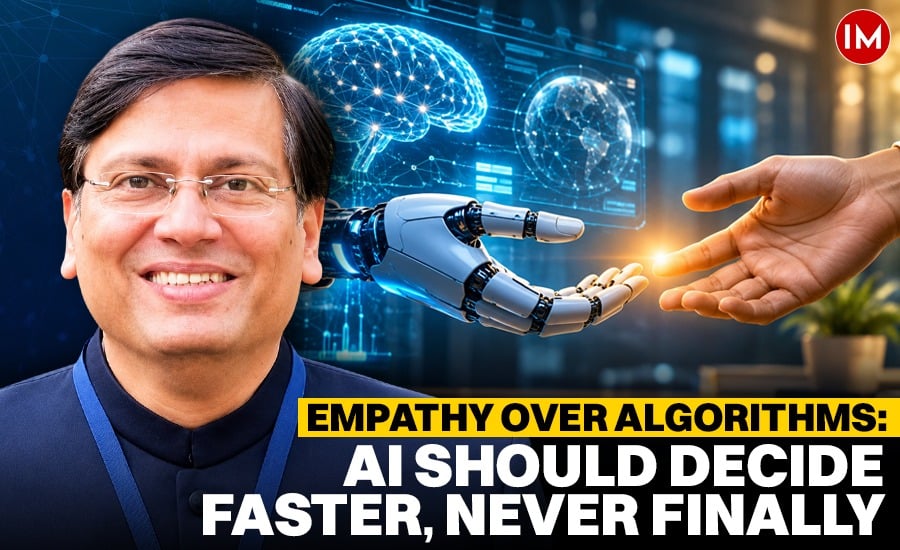
AI MUST SPEED UP DECISIONS, NOT MAKE THE FINAL CALL
Artificial intelligence offers governments new ways to process information, identify risks and detect errors. However, Dr. Sharma believes that its growing role must be accompanied by clear safeguards.
He sees considerable scope for automation in verification, computation and service delivery. These are areas where manual processes can lead to delays, inconsistencies and opportunities for corruption.
But he draws a clear distinction between automating routine processes and making decisions that require an understanding of individual circumstances.
“AI should decide faster, never finally,” he said while speaking to Indian Masterminds.
According to him, every automated welfare system must provide an accessible grievance mechanism and a way for officials to review and correct decisions. A database cannot capture every detail of a person’s life. A genuine beneficiary may be excluded because of an incorrect entry, a technical error or circumstances that do not fit standard categories.
In such cases, human intervention becomes essential. An appeal must be heard, a grievance must be examined and an incorrect decision must be capable of being reversed.
For Dr. Sharma, the purpose of AI is to strengthen public administration, not remove accountability from it. Technology can help governments work faster, but the responsibility to protect citizens must remain with the administration.
REIMAGINING RURAL HEALTHCARE
Asked which welfare system he would redesign from scratch using today’s technology, Dr. Sharma chose primary healthcare delivery in rural India.
His proposed model brings together the benefits of free medicines and free diagnostic services under the National Rural Health Mission (NRHM) with the possibilities offered by artificial intelligence.
He envisions rural health centres equipped with digital diagnostic tools and AI-assisted triage systems that can help identify health risks early. Essential medicines and diagnostic tests would be available free of cost and guaranteed as a legal entitlement rather than depending only on individual schemes.
He also proposes a verified digital identity linked to a comprehensive health record that follows a citizen across healthcare facilities. This could help doctors access relevant medical information and reduce the chances of important details being lost when patients move between facilities.
The ultimate objective is to reduce the gap between rural and urban healthcare.
“The goal would be a healthcare system where geography and income no longer determine the quality of care a citizen receives,” he explained.
In his vision, a child born in a remote village should have access to the same diagnostic accuracy as a child born in a city hospital.
Such a system would require reliable infrastructure, secure health records, trained personnel and safeguards for personal data. Technology alone cannot solve every healthcare challenge. But when combined with accessible facilities and accountable service delivery, it can help make quality healthcare more equitable.
WHY ADMINISTRATIVE REFORMS MUST SURVIVE TRANSFERS
Civil servants often introduce new ideas and improve public services during their postings. Yet, many useful reforms struggle to continue after the officer moves to another assignment.
Dr. Sharma believes this is one of the reasons administrative experiences need to be documented.
“Over two decades, I have seen good reforms fade away simply because they lived only in the memory of the officer who implemented them, and were lost the moment that officer was transferred,” he told Indian Masterminds.
He wants the lessons of administration to reach beyond official files and reports. These include not only successful initiatives but also failures, resistance from within the system and the small adjustments that make a reform work on the ground.
His book is intended primarily for young civil servants and future administrators who will inherit existing welfare systems and need to adapt them to changing public needs. He also hopes it will help policymakers and students understand the practical realities of governance.
Documentation, he believes, can make successful ideas easier to understand, replicate and improve. It can also prevent officers from having to start from scratch when a new posting brings fresh responsibilities.
The larger purpose is to turn individual administrative experience into institutional knowledge that remains useful long after an officer has moved on.
BUILDING REFORMS THROUGH EVIDENCE AND OWNERSHIP
Introducing new ideas in government is rarely easy. Officials may be accustomed to established procedures, while field staff may worry about additional responsibilities or the risks associated with changing familiar systems.
Dr. Sharma believes that administrative reform cannot succeed through orders alone. It requires consultation, evidence and the involvement of those responsible for implementation.
“When field staff see queues shortening or complaints reducing, they become the biggest advocates for the reform themselves,” he said.
He follows an approach that focuses on demonstrating results rather than expecting people to accept a proposal without evidence. Political leadership, he believes, needs to see measurable public impact, including the number of beneficiaries reached and the time and money saved.
Field staff, meanwhile, should be involved at the design stage rather than being asked to implement decisions made elsewhere. Their practical experience can help identify problems early and make new systems more effective.
“Disruption imposed from above breeds resistance; disruption built with the people who will run it breeds momentum and consequent outcomes,” he explained.
This approach places collaboration at the centre of administrative change. It recognises that even a well-designed reform can fail if the people responsible for delivering it do not understand or support it.
EMPATHY AND COURAGE BEYOND TECHNOLOGY
As young civil servants enter an era of AI, data analytics and digital governance, Dr. Sharma believes technical knowledge will increasingly become an essential part of administration. But it will not be enough to distinguish truly transformative officers.
He places empathy and courage at the centre of effective public service. Empathy helps an administrator recognise who is being excluded by a system. Courage enables the officer to challenge established practices and entrenched interests when reform becomes necessary.
He also stresses the importance of honesty, integrity, dedication, discipline, compassion, transparency, objectivity, fairness and justice.
“Data can tell you what is happening, but only a values-driven officer can tell you why it matters and who is being failed by the gap between policy and delivery,” he said.
For him, good governance requires administrators to look beyond dashboards and performance figures. They must visit the field, meet citizens and understand whether a policy is producing the intended results.
Technology can help governments reach more people and deliver services faster. But it cannot replace the responsibility of a public servant to listen, respond and act.
Dr. Sharma’s message is clear: the future of governance will depend not simply on how intelligently governments use technology, but on how responsibly they use it. The measure of a successful reform will ultimately remain the difference it makes to an ordinary citizen’s life.
Also Read – How IPS Officer Gaurav Rai Made Trust Central to the Fight Against Naxalism