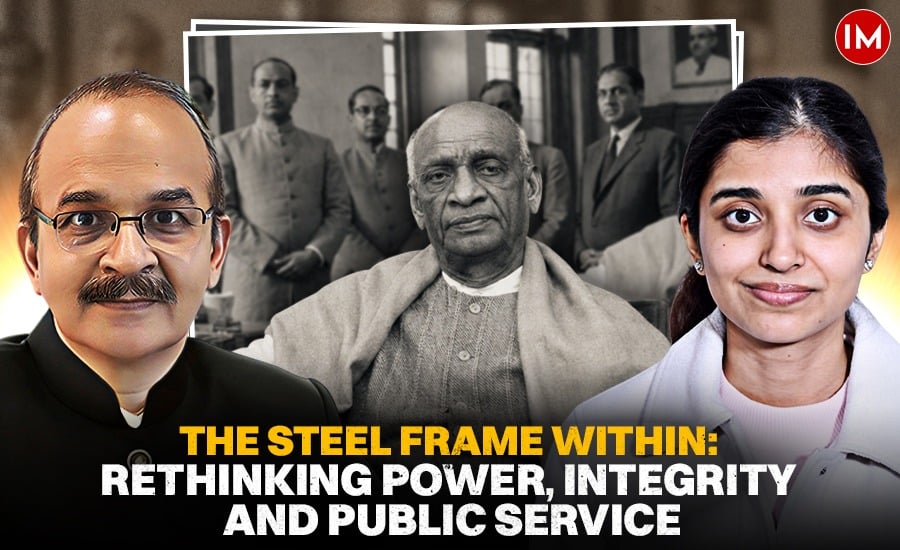
On his 151st birth anniversary, a reflection on administrative independence, intellectual honesty and the purpose of public service.
On 10 October 1949, speaking in the Constituent Assembly, Sardar Vallabhbhai Patel delivered one of the strongest defences of the All India Services. India was still consolidating its unity, and Patel believed that a capable, independent and professionally secure administrative machinery was indispensable to the survival of the Union.
He warned that without an effective All India Service, India would not remain united. He also insisted that civil servants must have the freedom to express their considered opinions without fear. The constitutional safeguards he defended were intended not as personal privileges, but as protection for an administrative system capable of serving the nation through changing governments.
Patel expected much from the civil services. On his birth anniversary, the question is whether we have justified that confidence. Have We Surrendered Our Own Authority? The authority of civil servants has undoubtedly changed over the decades. Political pressures, shifting administrative practices and growing external influences have affected professional independence. But it would be convenient, and intellectually dishonest, to blame others entirely. How much of our authority have we voluntarily surrendered?
When officers begin anticipating what those in power wish to hear, when agreement becomes a career strategy and when inconvenient professional advice is quietly withheld, institutional authority diminishes from within. Loyalty to an elected government requires faithful implementation of lawful policy. It does not demand personal allegiance or intellectual submission. A good officer is neither a habitual dissenter nor a habitual supporter. He must possess the judgment to distinguish between the two.
Also Read – India Has Digitised Land Records. Now It Needs a Digital Cadastre Backbone
From Institution-Building to Self-Promotion
An equally troubling tendency is the growing fascination with personal influence, prestigious postings, proximity to power and public visibility. Ambition is not objectionable. But when individual prominence becomes the principal measure of success, institution-building takes a back seat. An officer may command enormous influence during his tenure, yet leave behind little of lasting value. Another may work quietly, strengthen procedures, empower subordinates and create systems that continue to function effectively long after his departure.
The true measure of administrative leadership is not how powerful an officer becomes, but how much stronger the institution becomes under his stewardship. Unfortunately, making oneself indispensable is often mistaken for administrative excellence. In reality, an institution excessively dependent upon one individual is an institution inadequately developed.
The Price of Intellectual Conformity
Perhaps the most damaging consequence of this changing culture is the decline of independent thinking. When agreement becomes safer than analysis, decision-making suffers. Files move, approvals accumulate and meetings conclude, but essential questions remain unanswered. The ability to examine facts objectively, identify weaknesses in proposals and offer reasoned alternatives is fundamental to good administration.
Intellectual honesty is not about opposing authority. It is about refusing to substitute convenience for conviction or personal preference for professional judgment. An administration in which everyone agrees may appear harmonious, but it is not necessarily healthy. Patel wanted officers capable of giving independent advice, not merely endorsing decisions already made.
Duty Is Not a Personal Favour
I have always believed in a simple principle: “Everyone is paid to do good work. Therefore, doing one’s duty is no favour to anyone. But deliberately doing wrong is a betrayal of that duty and, where it violates the law, a crime.” Public office is a responsibility, not an opportunity to distribute personal favours.
Resolving grievances, ensuring fairness, taking timely decisions and delivering results are ordinary obligations of public service. Exceptional courage and dedication certainly deserve recognition, but routine discharge of duty should not become an exercise in self-glorification. The growing tendency to publicise every achievement risks confusing personal visibility with public value. Good administration should speak through its outcomes, not merely through the publicity surrounding its officers.
What Would Patel Expect Today?
Patel’s concern was not the personal stature of civil servants, but the strength of the administrative machinery supporting a united India. He would perhaps ask whether we encourage independent thinking, develop capable successors, delegate authority and establish systems that can withstand changes in leadership. He might also question whether the constitutional protections intended to secure professional independence have always been matched by the willingness to exercise it.
The civil services cannot seek respect merely by invoking their history. Respect must be earned through competence, fairness, courage and the quality of governance delivered to citizens. On Sardar Patel’s birth anniversary, another sermon on values would serve little purpose. What is needed is professional introspection, particularly among those of us who have spent our working lives within the system.
We cannot complain indefinitely about the dilution of administrative authority without examining our own role in that process. Patel’s steel frame was intended to hold the nation together, not to become a ladder for individual advancement. The finest tribute to Sardar Patel would be to leave behind institutions stronger than we found them, rather than merely becoming more powerful within them.
About The Author – (Dr Shailendra Srivastava served the Government of Madhya Pradesh for over 34 years, and retired from the post of Director General/Chairman of MP Police Housing and Infrastructure Development Corporation. )
(Arunima Srivastava is an Advocate who has previously worked with Shardul Amarchand Mangaldas and NITI Aayog as a Young Professional. She currently practises before the Supreme Court of India and various High Courts.)
Also Read– He Taught Students to Meet Expenses. Today, Sachin Bhadouria is a Scientist ‘B’ at CWPRS