The next contest for global economic supremacy may not be fought over oil alone. It may be decided by what lies beneath the earth. Lithium, cobalt, nickel, copper and rare earths are fast becoming the strategic resources of the 21st century. Electric vehicles, semiconductors, fighter aircraft, batteries and renewable energy systems all depend on them, and these minerals are increasingly instruments of geopolitical power. For India, securing them is no longer just an economic imperative. It is a question of national security and strategic sovereignty.
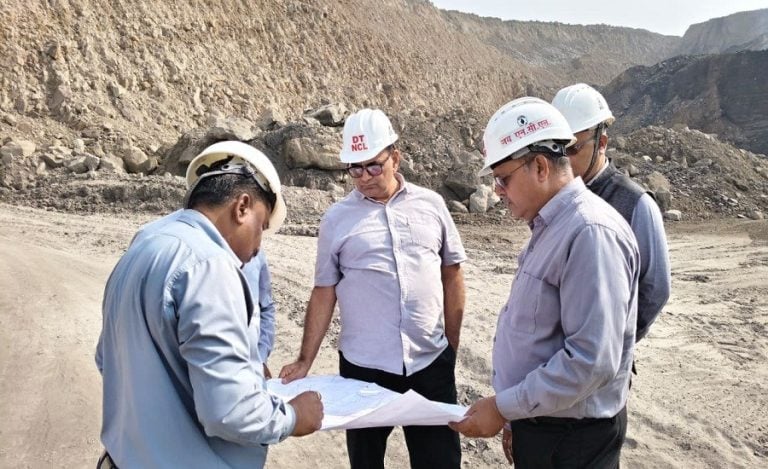
India’s mineral wealth could shape its journey to developed-nation status by 2047. Coal anchors energy security, iron ore feeds the steel industry, and bauxite, copper and limestone underpin infrastructure and manufacturing. Coal output crossed one billion tonnes for the second consecutive year, reaching 1,040.08 million tonnes in 2025-26. Yet India still imports several grades of coal and many critical minerals. Cutting that dependence while powering a fast-growing economy is among the toughest tasks facing policymakers.
Mineral Sovereignty
The National Critical Mineral Mission, with an outlay of Rs 16,300 crore and an expected Rs 18,000 crore more from public sector enterprises and other stakeholders, is a significant step. Its agenda spans exploration, domestic production, overseas acquisitions, processing, recycling and technology development. Opening exploration to private players, running competitive auctions and building indigenous processing capacity should bring fresh capital and expertise.
Also Read – IAS Rishav Gupta’s 3.5-Crore Aquapark Model Is Transforming Tribal Women’s Lives in MP
But the road from discovering a deposit to producing from it is long. Thin exploration, delays in land acquisition and clearances, infrastructure gaps, limited processing capacity and technological constraints all slow the sector down. The goal is not simply to extract more but to build an integrated domestic value chain, from exploration and mining to refining, manufacturing and recycling. India must stop exporting raw resources and importing high-value finished materials.
The Unfinished Transition
Coal poses a different but equally complex challenge. It generates more than 70 per cent of India’s electricity and will remain vital to energy security even as renewables expand. Higher domestic output, better coal quality, lower transport costs, beneficiation and coal gasification are therefore priorities. So are mine safety, mechanisation, methane emissions, water conservation and land reclamation.
Mining With Responsibility
The future of mining cannot be measured only in tonnes extracted, revenue earned or blocks auctioned. It must also be judged by environmental sustainability and the well-being of the communities living in mineral-rich regions. Mining often takes place in ecologically fragile areas with large tribal populations. Displacement, lost livelihoods, groundwater depletion, pollution and damage to forests and biodiversity cannot be set aside in the pursuit of growth.
District Mineral Foundations (DMFs) are meant to ensure that affected communities share in mining’s benefits. Their funds can transform healthcare, education, drinking water, sanitation and livelihoods in mining districts, but the real test is outcomes, not expenditure. Transparent practices, scientific mine closure, progressive reclamation and productive reuse of exhausted land must be core to India’s development strategy, not an afterthought.
The Private Sector
Private participation will be decisive. Commercial coal mining and reformed mineral auctions have opened the door to investment, technology and competition. Investors, in turn, need predictable policies, timely clearances, adequate infrastructure and a level playing field. Government and industry must work together to unlock India’s geological potential without compromising transparency, public interest or environmental safeguards.
Beyond Resources, Good Governance
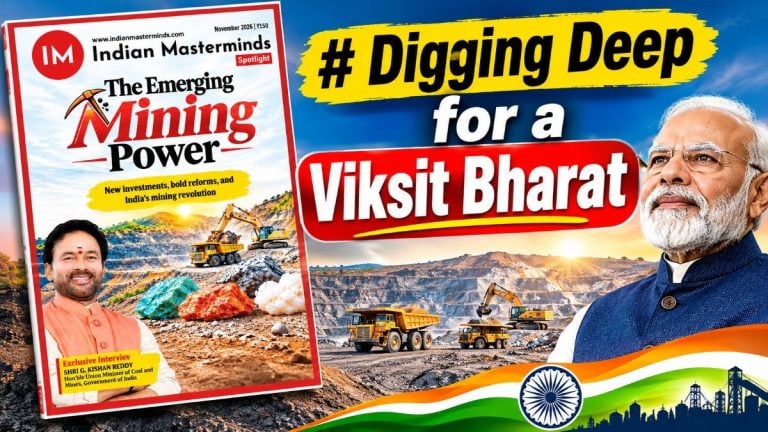
This edition of Indian Masterminds also looks beyond mines and minerals at another ingredient of national progress: good governance. Across India, innovative administrators and public institutions are solving stubborn problems in healthcare, education, technology, infrastructure, social welfare and public service delivery.
Our special section gathers stories from across the country showing how imagination, commitment and sound execution turn policy into tangible benefit. Whether it is technology widening access to healthcare, a district-level innovation improving services, or an administrator breaking through entrenched delivery hurdles, each offers lessons in leadership, accountability and institutional innovation. Good governance is not about announcing schemes or allocating funds. It is about making sure benefits reach those who need them most.
National Mission
India stands at the intersection of economic ambition, technological change and geopolitical competition. Its mineral resources can underpin industrial growth, energy security and strategic autonomy, but only with far-sighted policy, scientific exploration, private investment, innovation and responsible governance.
Ultimately, India’s progress will be measured not by what lies beneath its surface, but by what the nation builds with it. Whether securing critical minerals, strengthening coal production or nurturing grassroots governance, the mission is the same: to turn national resources and administrative capability into sustainable growth and shared prosperity.
Also Read – Can AI Save Forests? Surat Forest Division Shows How Technology Is Changing Conservation