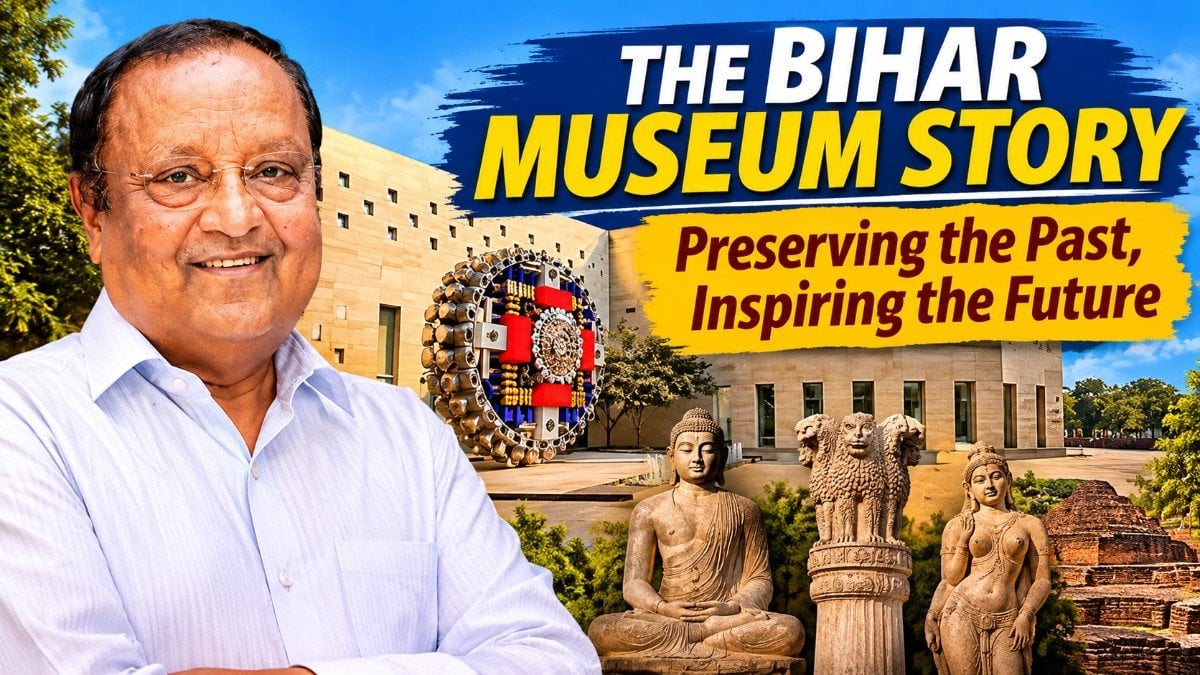
For centuries, Bihar has been at the heart of India’s history. From the rise of the Mauryan and Gupta empires to the teachings of Buddha and the ancient seat of learning at Nalanda, the state has a legacy that shaped not just India but much of the world. Yet, this rich heritage has often remained overshadowed by the state’s more recent image.
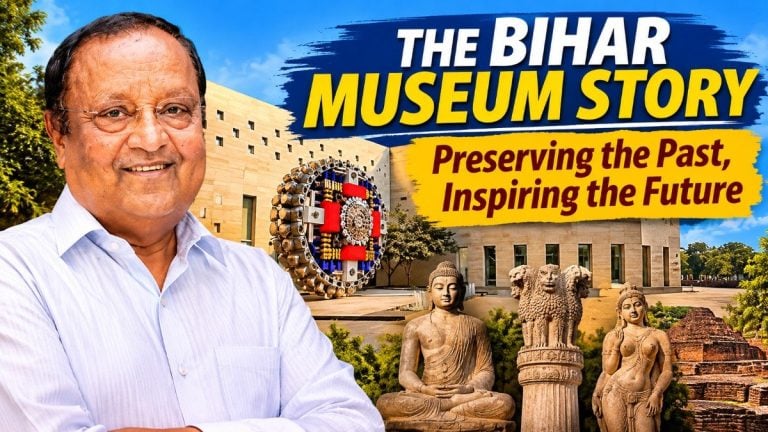
In Patna, the Bihar Museum is attempting to change that narrative. It is not merely preserving ancient artefacts behind glass cases; it is bringing history to life through storytelling, interactive technology and immersive experiences. Here, visitors can mint their own ancient coins, explore historical sites digitally and discover Bihar’s past in ways that go beyond conventional museum visits.
The larger ambition is clear: to make people rediscover Bihar’s civilisational roots and take pride in a history that deserves a place on the global stage.
The effort has also received international recognition. In late October 2026, Worth a Journey, a Munich-based travel guide, placed the Bihar Museum ninth on its list of the world’s 100 best museums for 2026. It ranked ahead of New York’s Metropolitan Museum of Art, which stood at tenth, and the Louvre, which was placed 31st. It was the highest-ranked museum in Asia and the only Indian museum on the list.
The ranking is based on visitor reviews, data analytics and on-site expert assessments, rather than a direct assessment of the scholarly importance of collections. Yet, the recognition has brought fresh attention to an institution that has spent the last decade trying to change how Bihar’s history is presented and experienced.
For Bihar, this is about much more than a museum. It is about reclaiming a cultural identity that goes back thousands of years.
Also Read – The Forest Officer Who Turned Communities Into Protectors of Nature
A New Vision for Bihar’s Heritage
The idea of the Bihar Museum emerged from a larger question about the state’s future. When Jharkhand was separated from Bihar, the state lost much of its mineral resources and had to rethink its development priorities. It began looking towards education, tourism, art, culture, heritage and agriculture as important areas of growth. Showcasing Bihar’s history and cultural wealth became an important part of this vision.
The state already had the Patna Museum, but its infrastructure was old. A large number of valuable artefacts remained undisplayed, the presentation needed improvement and the overall visitor experience was limited. The government therefore decided to create a modern museum while also developing the existing Patna Museum.
Anjani Kumar Singh, Director General of the Bihar Museum, a retired 1981-batch IAS officer of the Bihar cadre and former Chief Secretary of Bihar, was associated with the project from its beginning as its nodal officer.
Speaking to Indian Masterminds, Singh recalled that the vision was to build an institution that went beyond the traditional idea of a museum.
“We were very clear from the beginning that this museum would be run as a culture centre, not just as a museum. Our focus was on programming and activities. If people visit a building and see its collection only once or twice, they may not return. But when you continuously organise activities for different stakeholders, people remain engaged,” he said.
The project brought together international expertise. Canadian museum planner Lord Cultural Resources was selected to plan the institution. Japanese architect Fumihiko Maki designed the building, while fabricators from Singapore and lighting specialists from Austria contributed to its development.
The idea was to use the best available expertise and technology without losing sight of Bihar’s own identity.
A Museum That Tells Stories, Not Just Displays Artefacts
One of the most distinctive features of the Bihar Museum is its storytelling approach. Traditional museums often organise their galleries around categories. Sculptures are displayed in one section, paintings in another and other historical objects in separate spaces. The Bihar Museum follows a different approach. It takes visitors through a journey of civilisation and history.
The story moves through the rise of ancient settlements, the Mauryan and Gupta periods, the life and teachings of Buddha, the growth of Buddhism and Jainism, Ashoka and the Kalinga War, and the development of ancient centres of learning such as Nalanda. Instead of simply looking at objects, visitors understand the historical connections between them.
The museum also uses interactive digital installations to make this journey more engaging. Visitors can explore details of ancient temples, understand how Nalanda University functioned and discover different aspects of historical sites through digital displays.
The idea is to offer information at different levels. A visitor can enjoy the visual experience without needing a guide, while someone interested in deeper details can explore the additional interactive facilities. The museum houses a rich collection of around 40,000 artefacts, reflecting Bihar’s historical and cultural importance.
Among its most celebrated objects is the Didarganj Yakshi, a remarkable sculpture of a woman that is considered one of India’s finest examples of ancient sculpture.
Singh points out that the Yakshi is particularly interesting because she represents an ordinary woman rather than a queen or princess. Her ornaments, clothing and graceful appearance offer a glimpse into the artistic traditions and social life of ancient India. For him, the sculpture also carries a larger message about the place of women in India’s past.
Children at the Centre of the Experience
A museum’s future depends on whether younger generations find it interesting. The Bihar Museum understood this while planning its galleries. A substantial area was therefore dedicated to children. Unlike conventional museum spaces, where touching artefacts is discouraged, the children’s section encourages them to touch, feel, play and experiment.
The material and installations have been selected to make the experience enjoyable and interactive. Children can sit on a recreated royal throne, explore historical themes through games, watch videos and learn through books and activities. They can also try interactive features such as minting their own coins.
Another interesting installation allows visitors to write their names in Hindi or other Indian languages and see them represented in ancient scripts such as Brahmi or Arabic. These activities make history less intimidating. Instead of memorising dates and names, children get an opportunity to experience the past through their senses. Singh believes that young visitors should be able to enjoy history while learning about it.
The museum’s approach is based on a simple thought: the future generation should not see history as a difficult subject confined to textbooks. It should be something they can explore, question and enjoy.
This focus on children is also reflected in the museum’s wider visitor outreach. In 2019, Bihar announced financial support of Rs.20,000 for every primary school to organise museum visits, covering transport, tickets and lunch. The scheme began in districts around Patna but was affected by the pandemic. During its one uninterrupted year, 2019-20, around 33,000 students from 1,000 schools visited under the programme.
First Local, Then National and International
While the museum has received international recognition, Singh says its first responsibility is towards the people of Bihar. According to him, around 98 per cent of its visitors are local, while only about two per cent come from outside the state and foreign countries. The museum receives an average of around seven lakh visitors every year. More than five lakh are ticketed visitors, while approximately two lakh participate in its different free programmes.
For Singh, these numbers underline why the institution must remain connected to its immediate community. “I want this to become a local museum first, then a national museum and finally an international museum. My priority is that the people who come here regularly should feel happy, excited and connected with their history. We should not begin by trying to become an international museum and forget our local audience,” he told Indian Masterminds.
This approach does not mean limiting its ambitions. The Bihar Museum has been working to build international cultural connections through its biennale, held every two years.
Its previous editions have brought together museums, cultural institutions and participants from different countries. The 2025 biennale, themed Global South: Sharing Histories, brought perspectives from Asia, Africa and Latin America to Patna. An earlier edition was organised around India’s G20 theme, One Earth, One Family, One Future, with participation from 29 countries.
The biennale also creates opportunities for institutions to display artefacts and share cultural histories beyond their own geographical boundaries.
The museum regularly organises exhibitions, seminars, workshops, book readings, film screenings and performing arts programmes. Singh says that more than 500 such activities have been organised over the last decade.
This continuous engagement is what makes the institution a living cultural centre rather than a static collection of historical objects.
Preparing for the Museum of Tomorrow
The Bihar Museum is also looking towards the future. It already uses technologies such as virtual reality and interactive digital installations. At the old Patna Museum, an initiative is underway to recreate Chanakya using artificial intelligence, allowing visitors to ask questions and receive answers. Singh has also recently secured an additional acre of land for the Bihar Museum. The plan is to develop new galleries and experiences, although the exact concept is still being worked out.
His thinking goes beyond the immediate needs of visitors. He wants the expansion to anticipate how people might experience museums 30 or 40 years from now. The objective is to create something that can engage future generations through new forms of storytelling and technology.
Changing How Bihar Sees Itself
For decades, Bihar’s image outside the state has often been shaped by discussions around poverty, migration and governance challenges. Its extraordinary contribution to India’s intellectual, political and cultural history has not always received the same attention. The Bihar Museum offers a different way to tell that story.
It brings together the legacy of Pataliputra, the Mauryan and Gupta empires, Buddhism, Jainism, ancient universities, sculpture and art under one roof. It gives visitors an opportunity to understand why Bihar once stood at the centre of India’s political and intellectual life. It also creates economic opportunities. The steady flow of visitors supports hotels, transport services and other local businesses. Even a relatively small percentage of tourists coming from outside Bihar can contribute to the state’s tourism economy.
Singh believes that people should experience the institution themselves rather than depend on publicity campaigns. He is confident that the museum can help change perceptions about Bihar, but says such a change takes time.
“People are often surprised when they see what we have created here. But I believe things are already changing. A museum like this gives Bihar an institution that people can be proud of. It allows visitors from across the world to see our history, culture and capabilities for themselves,” he said.
The larger lesson is that cultural identity cannot be reclaimed through slogans alone. It needs institutions that preserve history, make it accessible and encourage people to engage with it.
The Bihar Museum is attempting to do exactly that. Its success will not be measured only by international rankings or visitor numbers, but by how deeply it connects people with their past.
When a child mints an ancient coin, a visitor discovers the story of the Yakshi or a foreign traveller explores the history of Nalanda, the museum is doing more than displaying heritage. It is bringing Bihar’s identity back into public conversation.
And perhaps that is its biggest achievement: making history something people do not simply look at, but something they experience, understand and carry with them.
Also Read – How Chandrapur’s SHG Women Are Running Safari Vehicles and Earning Through Tadoba Tourism