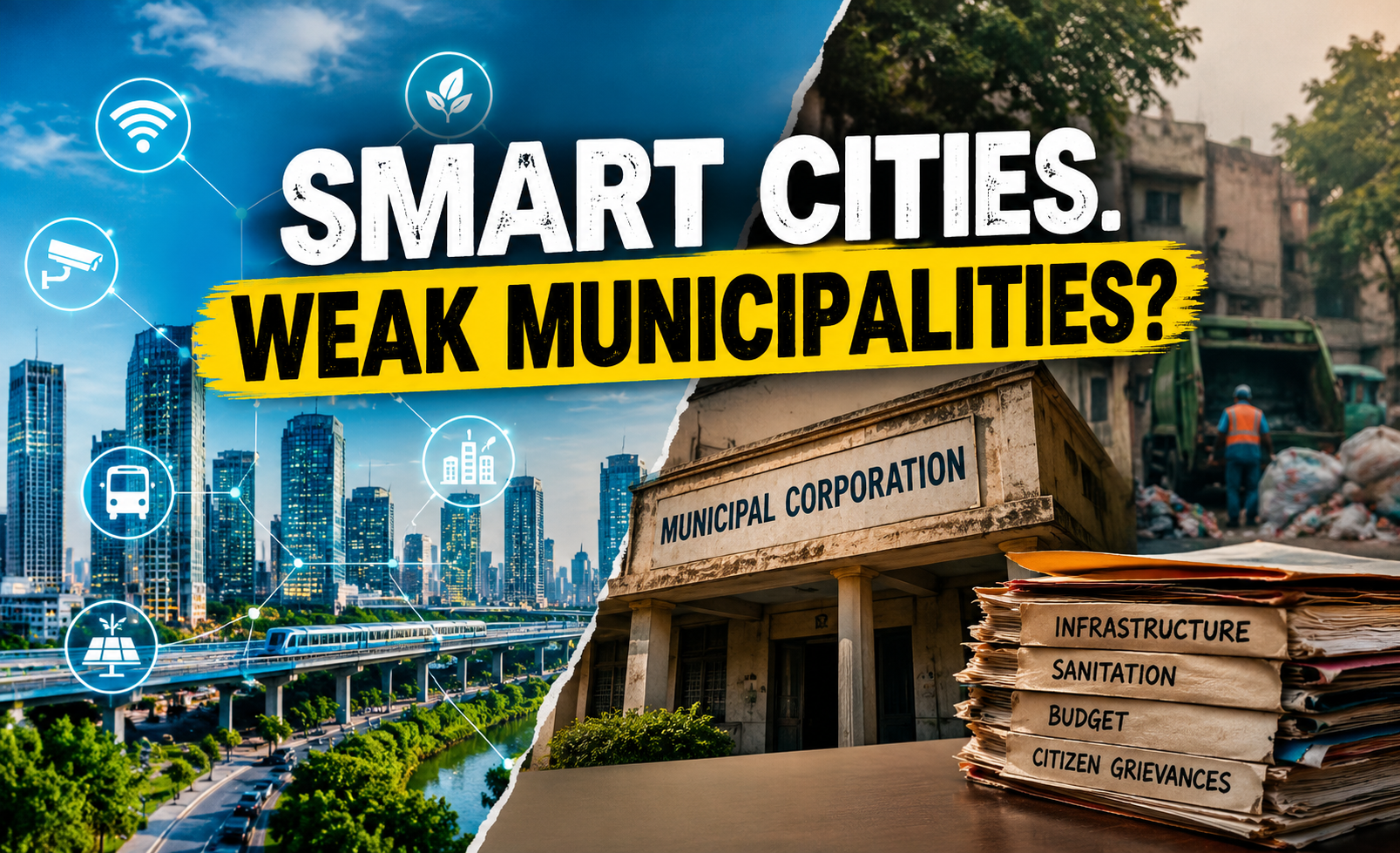
India’s cities are becoming smarter on paper. Traffic cameras, command centres, digital complaint systems and technology-driven waste management are changing how urban services are monitored.
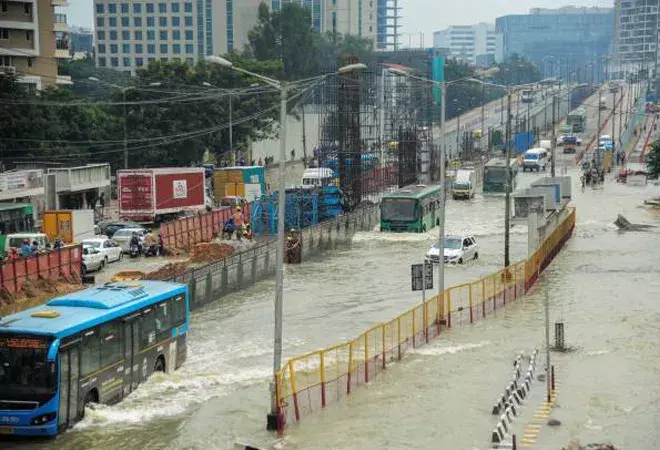
Yet, residents continue to deal with overflowing garbage bins, waterlogged roads and broken streetlights. If a municipal corporation can monitor a problem but cannot resolve it quickly, what exactly has technology achieved?
The Smart Cities Mission, launched in 2015, selected 100 cities for technology-enabled urban development. By March 2025, 94% of its projects had been completed, according to government figures reported by PRS Legislative Research.
That is progress. But the bigger challenge is making everyday civic services work consistently, long after a project has been inaugurated.
Also read: Why Does India Continue to Lose So Many Lives on Its Roads?
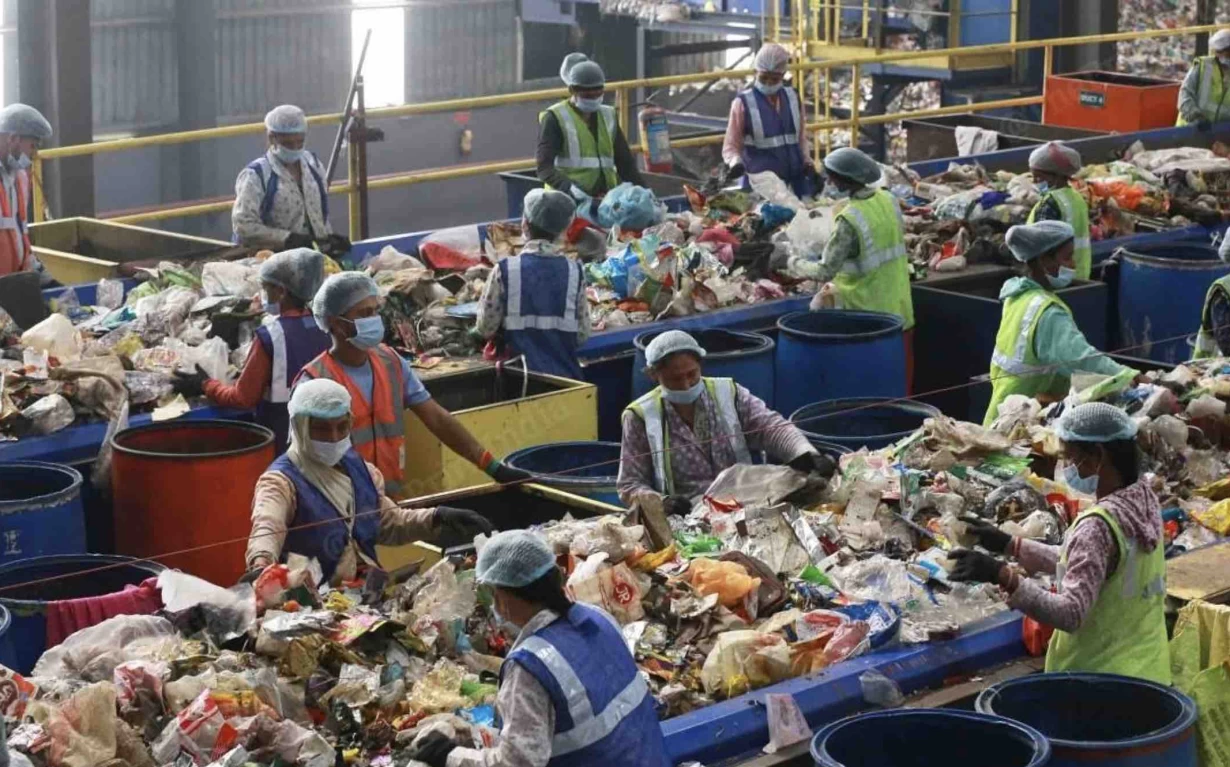
Who Is Actually Responsible?
The 74th Constitutional Amendment gave urban local bodies constitutional status in 1993. Its Twelfth Schedule lists 18 functions that may be entrusted to municipalities, including urban planning, roads, sanitation, water supply and public health.
However, Article 243W leaves state legislatures to determine the powers and responsibilities municipalities receive. In practice, municipal corporations often share responsibilities with state departments, development authorities and other agencies.
This creates a familiar problem. Residents approach their councillor, the councillor approaches a municipal official, and the official may point to another department. Meanwhile, the drain remains blocked.
Politicians cannot escape responsibility either. Elected representatives often promise better roads, drainage and sanitation, but these promises mean little without sustained monitoring and coordination. Governments must stop treating urban development as a series of inauguration ceremonies and start measuring whether services continue to work.
At the same time, municipal officials must move beyond office-based administration. Local leaders, ward representatives, resident welfare associations and community groups need to be involved in identifying problems and following up on solutions.
What Indore and Raipur Got Right
There are examples worth learning from within India itself.
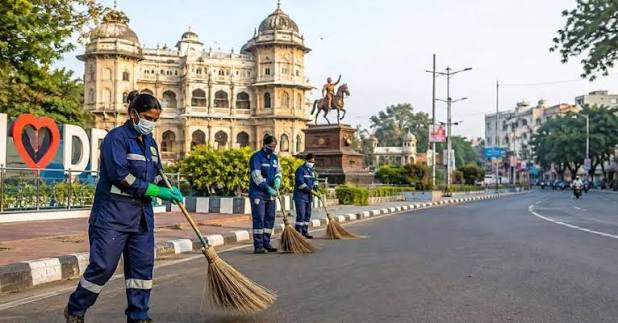
Indore’s cleanliness journey was not simply about deploying better equipment. In a conversation with Indian Masterminds, IAS officer Parikipandla Narahari described the city’s transformation as a collective effort. Officers including Manish Singh, Asheesh Singh and Pratibha Pal, along with the mayor, municipal representatives and citizens, contributed to the campaign.
One important strategy was competition: corporators were encouraged to make their wards cleaner, while resident welfare associations also became part of the effort. Door-to-door waste collection and household segregation gradually became routine practices.
Surat, too, has established itself among India’s leading clean cities. In the 2024–25 Swachh Survekshan, Indore and Surat were among the top performers in the million-plus population category. Their experience shows that municipal performance improves when systems, leadership and public participation reinforce one another.
Raipur offers an especially practical idea. During IAS officer Rajat Bansal’s tenure as CEO of Raipur Smart City, the administration conducted its own cleanliness assessment across 70 wards. Ward representatives, contractors, local politicians and residents were encouraged to compete for better rankings.
The point was not merely to identify the cleanest neighbourhood. It was to make local stakeholders participants in the process rather than spectators.
Uttar Pradesh’s Moradabad isn’t as big as Surat or Indore. It was also once regarded as a ghetto. But, efforts of just once person – its Municipal Commissioner Divyanshu Patel, changed the scenario, possibly forever. He used to hit the roads at 4.45 am, surveying the sweeping and cleaning work being undertaken. In no time, he changed the work culture of municipal workers. Though he has been transferred recently, people still remember him for the plethora of initiatives undertaken.
Other cities can adopt such approach without expensive technology. Publish ward-wise performance scores, recognise improvements, make the results accessible to residents, attend to the complaints promptly. .
Four Changes That Can Make Cities Work Better
First, make every ward accountable for measurable outcomes. Municipalities should publish monthly scorecards covering waste collection, pothole repairs, drainage complaints, streetlight maintenance and grievance-resolution times. Comparisons must account for differences in population and resources.
Second, bring local representatives into the actual work. Councillors should hold regular ward meetings, conduct neighbourhood inspections with municipal staff and maintain a public list of pending complaints. Resident groups and market associations can help identify recurring problems, but officials must remain responsible for delivering services.
Third, reward performance, not announcements. Cities could introduce annual ward competitions, with independent verification and public feedback. Better-performing wards could receive additional discretionary funds for local improvements. Poor performance should trigger a time-bound corrective plan, not just another review meeting.
Fourth, give municipalities the authority and money to deliver. State governments must clearly assign responsibilities, provide adequate staff and ensure predictable funding. Municipalities should improve property-tax collection and publish transparent expenditure reports. Technology can help track these processes, but it cannot substitute for administrative capacity.
The Politics of Everyday Governance
Municipal reform also requires political will. State governments must resist excessive interference in routine civic decisions, while elected representatives must accept responsibility for outcomes rather than taking credit only when projects succeed.
Frequent transfers can disrupt ongoing initiatives, and new administrations should not abandon working systems merely because their predecessors introduced them. Indore’s experience shows the value of building public participation into a campaign so that it survives changes in individual officers.
Municipal commissioners, in turn, must be willing to work beyond their offices, listen to ward-level concerns and coordinate with elected representatives. Neither politicians nor bureaucrats can transform a city in isolation.
India has already demonstrated that technology can improve urban administration. The next step is to make municipal governance more participatory, accountable and effective.
A smart city should not be judged only by its command centre or digital infrastructure. It should be judged by whether its residents can get a pothole repaired, a drain cleared or a garbage complaint resolved without chasing multiple offices.
The real smart city is not the one that merely detects problems. It is the one whose municipality has the power, people and public participation to solve them.
Also read: Praful Matta: The IT Officer Who Faced Death at 7,300 Metres on Everest