In a conflict zone, an operation may secure a stretch of forest, disrupt an insurgent network or weaken an armed group. But lasting peace demands something more difficult: convincing people that the State is on their side. In the Maoist-affected districts of Chhattisgarh, where years of isolation and conflict have shaped relations between communities and government institutions, this distinction is crucial.
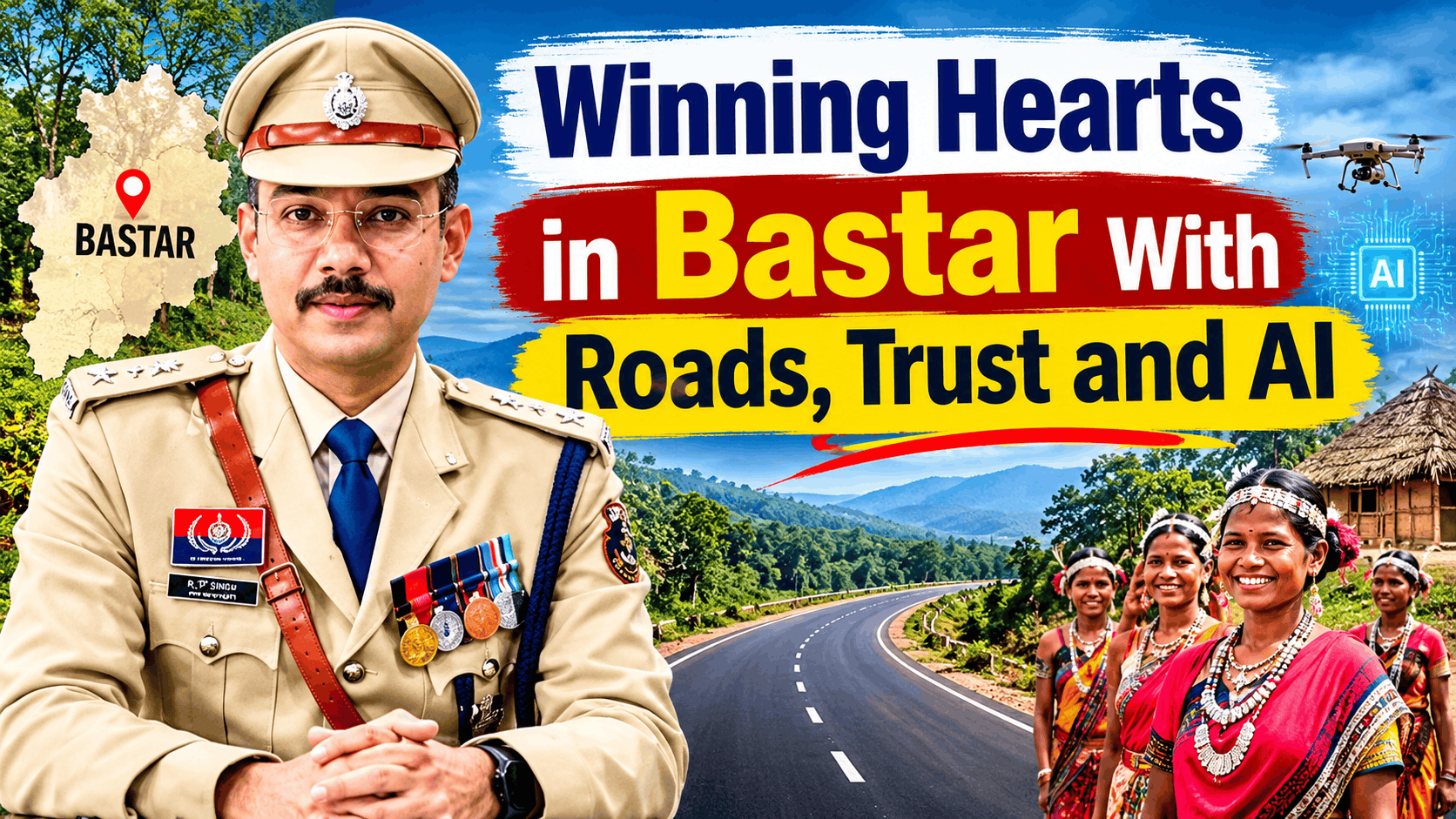
For Gaurav Rai, an Indian Police Service (IPS) officer of the 2019 batch from the Chhattisgarh cadre, the fight against Left Wing Extremism was never limited to encounters and security operations. His experience in Dantewada and the wider Bastar region reinforced his belief that operational success must go hand in hand with public trust, development and community engagement.
Rai is currently posted as Superintendent of Police (SP) of Balodabazar-Bhatapara district in Chhattisgarh. His approach to policing reflects a broader understanding of internal security: while force may be necessary to counter armed insurgency, sustainable peace requires people to see the government as a partner in their lives.
Also Read – Sardar Patel’s Steel Frame: Are We Strengthening Institutions or Ourselves?
THE BATTLE BEYOND THE GUN
Counter-insurgency operations are often judged by measurable outcomes, including encounters, arrests and the number of armed cadres neutralised. However, Rai believes these figures cannot capture the entire picture. An insurgency may be weakened through sustained security action, but its influence cannot be addressed fully unless local communities begin to trust government institutions.
“Operations are a major part of our work, but they are not the whole picture. If we want a lasting solution, we have to win the confidence of the people,” he believes.
This understanding shaped his approach in Dantewada, where security operations were accompanied by efforts to engage with villagers and address their concerns. The objective was to ensure that people encountered the police not only during search operations or security deployments, but also through initiatives that connected them with public services and opportunities.
For communities that had experienced years of conflict, rebuilding confidence required consistency. Trust could not be established through a single visit or a temporary campaign. It had to grow through regular interaction and visible efforts to improve everyday life.
BREAKING YEARS OF DISTRUST
In several interior villages of Bastar, distance from mainstream administration had contributed to a deep sense of alienation. Limited connectivity and inadequate access to public services made it difficult for government institutions to maintain a regular presence. Meanwhile, Maoist groups attempted to influence local perceptions of the State.
Rai recognised that changing these perceptions required police personnel to spend time among communities, listen to their concerns and demonstrate that their presence was not directed against ordinary villagers. Regular outreach visits offered opportunities to interact with residents outside the immediate context of security operations.
These interactions also helped police personnel understand local realities more closely. Communities could raise concerns, discuss their difficulties and seek assistance in connecting with the district administration. Such engagement was important in building familiarity between people and the institutions responsible for their security.
The aim was not merely to communicate the government’s position, but to establish relationships through which villagers could experience its presence in practical ways.
CONNECTING SECURITY WITH DEVELOPMENT
In conflict-affected areas, security and development are closely linked. Government officials and service providers may find it difficult to reach remote settlements when security conditions are unstable. At the same time, villages that lack infrastructure and essential services can remain disconnected from the benefits of governance.
Rai’s approach emphasised creating conditions in which the civil administration could function more effectively. Security forces played an important role in supporting efforts to extend governance into previously difficult-to-access areas.
Road connectivity, healthcare, education and welfare services can transform the relationship between remote communities and the State. Better roads help people reach markets, schools and medical facilities while making it easier for government officials to deliver services. Infrastructure can also reduce the isolation that insurgent groups may exploit.
“Where roads reach, governance reaches,” is the principle that captures this connection between physical access and the wider presence of the State.
For Rai, development was therefore not separate from the security response. It was an essential part of creating the conditions in which communities could participate more fully in public life and benefit from government programmes.
OFFERING A WAY BACK TO MAINSTREAM SOCIETY
Another important aspect of counter-insurgency is encouraging individuals to abandon violence and return to mainstream society. In remote areas, some young people may be drawn towards Maoist groups after prolonged exposure to insurgent narratives or because they see few alternatives for their future.
Community engagement can help communicate that leaving the movement is possible and that rehabilitation and reintegration offer a path towards a different life. By encouraging dialogue and spreading awareness about surrender and rehabilitation opportunities, the administration can create alternatives to continued involvement in armed insurgency.
Such efforts are important because a sustainable reduction in insurgent influence depends not only on weakening armed formations but also on reducing the willingness of individuals to join or support them.
A credible opportunity to return to civilian life can help individuals reconsider their choices. It also sends a message to communities that the State’s response includes a route back to society for those willing to give up violence.
BUILDING TRUST THROUGH EVERYDAY ENGAGEMENT
Trust is often built through small, repeated interactions rather than large announcements. Sports tournaments, cultural programmes and youth engagement activities can bring police personnel and local residents together in settings that are not defined by conflict.
Sports, in particular, offer opportunities for young people to interact with security personnel as participants rather than simply as representatives of an institution. Such activities create space for conversations, familiarity and mutual understanding.
These initiatives may not produce immediate security outcomes, but they can help reduce social barriers over time. When police personnel become familiar faces in community activities, interactions can become more natural, making it easier for residents to communicate concerns and seek assistance.
The wider purpose is to build relationships that continue beyond individual programmes. Community engagement becomes meaningful when people see it as a sustained commitment rather than an occasional exercise.
TAKING CARE OF THE FORCE
Rai’s understanding of effective policing also extends to the welfare of personnel operating in difficult conditions. Officers and constables deployed in remote forest areas often face long periods away from their families, demanding field conditions and limited access to basic facilities.
Accommodation, camp infrastructure, equipment and logistical support are therefore important parts of operational readiness. Personnel who are adequately supported are better placed to sustain demanding deployments and carry out their responsibilities effectively.
Welfare is not simply an administrative concern. It is connected to morale, confidence and the ability of a force to perform under pressure. Recognising the difficulties faced by personnel also reinforces the relationship between leadership and those serving on the ground.
In a challenging security environment, looking after the force and building public confidence are complementary responsibilities. Both contribute to a more resilient and effective policing system.
FROM COMMUNITY POLICING TO TECHNOLOGY-DRIVEN INNOVATION
Rai’s experience also encouraged him to look beyond conventional policing methods. While community engagement addresses the human dimension of internal security, technology can help improve the efficiency of investigations and other police functions.
One problem that caught his attention was the time and manpower required to examine CCTV footage manually during criminal investigations. Reviewing hours of video to identify relevant events can place a considerable burden on investigators, particularly when time and resources are limited.
Rather than accepting this as an unavoidable part of police work, Rai began exploring the potential of artificial intelligence to make video analysis more efficient. This interest eventually led to the development of an AI-powered CCTV video analytics platform, reflecting his belief that innovation can strengthen modern policing.
The initiative illustrates a wider principle: effective policing requires the ability to identify practical problems and explore new ways to solve them. Technology cannot replace sound judgement, field experience or community relationships, but it can help investigators use their time and resources more effectively.
LASTING PEACE BEGINS WITH TRUST
Rai’s experience in Bastar highlights the multiple dimensions of counter-insurgency. Security operations remain essential, but they are only one part of a larger effort involving governance, development, rehabilitation, personnel welfare and public engagement.
For an officer working in a conflict-affected region, success is not simply about responding to threats. It is also about creating an environment in which people feel secure enough to access public services, pursue opportunities and place their confidence in institutions.
That is why winning the trust of communities matters as much as improving operational effectiveness. Security can create the space for peace, but responsive governance and meaningful relationships help sustain it.
Also Read – How Goat Farming Can Protect Small Farmers from Economic Shocks