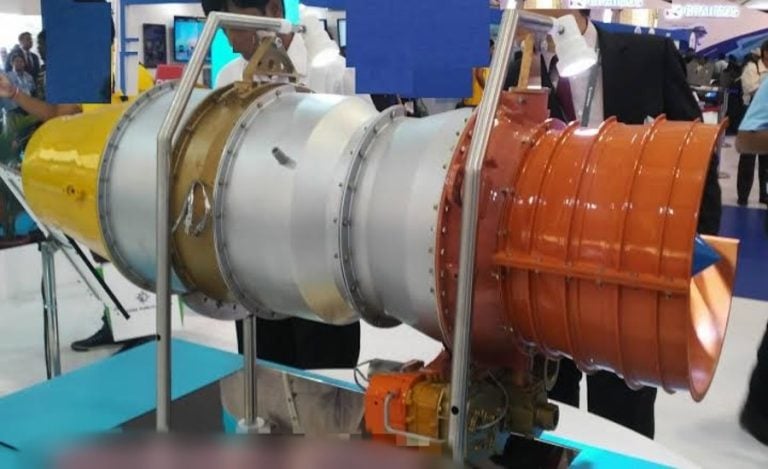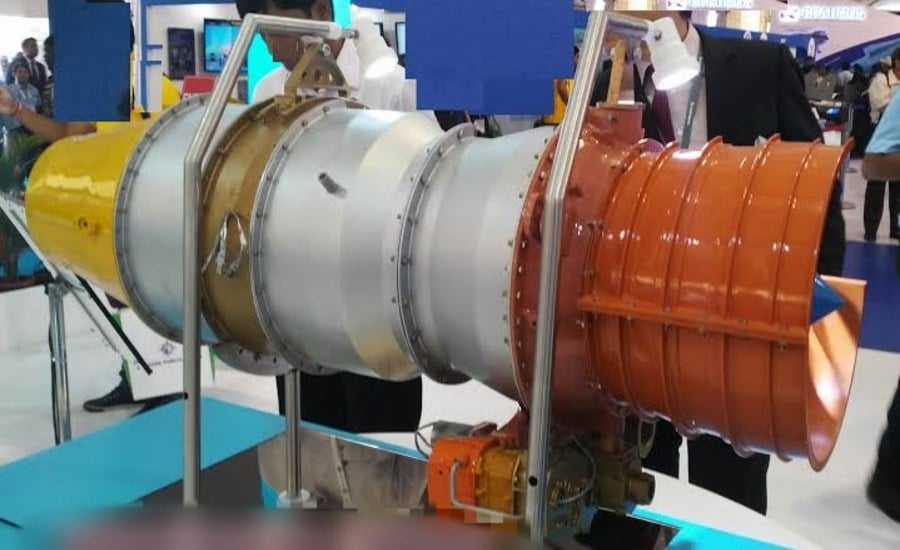
New Delhi: India’s indigenous defence manufacturing sector has achieved another important milestone as Bengaluru-based Vayuvya Defence successfully test-fired its Vayu 250 micro jet engine.
The engine reached 116,700 RPM against its design target of 117,000 RPM and generated 23.67 kgf of corrected thrust. This achievement marks a promising step towards developing homegrown propulsion technology for India’s future drones, unmanned aerial vehicles (UAVs) and other compact aerospace platforms.
Details of Vayu 250 Micro Jet Engine Test
According to the performance details released by Vayuvya Defence, the Vayu 250 micro jet engine has a designed thrust capacity of 25 kgf.
Read also: Mission Sudarshan Chakra: India Moves Closer To Building A Powerful Defence Shield
During its reported test firing, the engine achieved a maximum mechanical speed of 116,700 revolutions per minute (RPM), against the targeted 117,000 RPM. This represents approximately 99.7% of its targeted mechanical speed.
The engine also delivered 23.67 kgf of corrected thrust, compared with its planned 25 kgf thrust rating.
It achieved 98.3% of its corrected speed target, showing that the development programme has reached an important performance milestone.
These results indicate promising progress towards the engine’s design goals. However, further development and testing will be necessary before it can be considered ready for operational use.
Why Is India’s Indigenous Micro Jet Engine Important
Micro jet engines are important propulsion systems for several modern military and aerospace platforms.
They can support the development of small jet-powered unmanned aerial vehicles, loitering munitions and other compact airborne systems.
At present, access to reliable and suitable propulsion systems remains an important challenge for countries developing advanced unmanned platforms.
Developing such engines within India could help domestic manufacturers reduce dependence on foreign suppliers.
It could also strengthen India’s defence manufacturing ecosystem by encouraging local research, engineering, component manufacturing and propulsion technology development.
For India’s growing drone and unmanned warfare capabilities, indigenous engine development could become an important technological advantage.
About Vayuvya Defence
Vayuvya Defence is a Bengaluru-based aerospace and defence technology company working on indigenous propulsion technologies.
The company has been developing micro jet engines and other advanced aerospace systems for emerging defence applications.
Its Vayu 250 programme represents an effort to build domestic capabilities in a highly specialised area of aerospace engineering.
Jet engine development requires advanced knowledge of aerodynamics, combustion, high-speed rotating components, heat management and precision manufacturing.
Therefore, even a successful initial engine test represents an important engineering achievement for a developing domestic propulsion programme. However, the company has not publicly disclosed all technical details of the Vayu 250’s development programme.
What Are The Next Challenges For Vayu 250
Although the initial test results are encouraging, achieving the targeted speed and thrust is only one part of the complete engine development process.
The Vayu 250 will require further testing to establish its long-term performance and reliability. Some of the important areas that require validation include:
- Long-Duration Testing: The engine must demonstrate that it can operate reliably for extended periods.
- Thermal Management: It must control the high temperatures produced during jet engine operation.
- Vibration Control: Engineers must ensure that excessive vibrations do not damage engine components.
- Operational Reliability: The engine must deliver consistent performance under different operating conditions.
- Repeatability: Repeated tests must produce reliable and consistent results.
These tests will help determine whether the engine can meet the requirements of an operational aerospace platform.
Vayuvya Defence has not yet announced a confirmed timeline for flight testing, mass production or operational deployment. Details about its fuel consumption, weight, dimensions and service life also remain undisclosed.
India’s Growing Focus On Indigenous Jet Engine Technology
The development of the Vayu 250 comes amid India’s wider efforts to strengthen domestic aerospace and defence manufacturing capabilities.
In another important development, the Ministry of Defence announced in July 2026 that India’s first indigenous 350 kg thrust-class expendable turbojet engine, designed by DRDO’s Gas Turbine Research Establishment (GTRE), had been successfully developed and delivered to GTRE by Azad Engineering.
Although this is a separate engine programme with a different thrust class and development team, it highlights India’s growing efforts to build domestic expertise in advanced jet propulsion technology.
Such programmes are important because jet engine technology remains one of the most challenging areas of aerospace engineering.
The participation of private defence companies alongside government research organisations could further strengthen India’s domestic aerospace industry.
What Does The Vayu 250 Micro Jet Engine Mean For India’s Defence Future
The successful test firing of the Vayu 250 is a promising step for India’s indigenous micro jet engine development.
Its achievement of 99.7% of the targeted mechanical speed and 23.67 kgf corrected thrust demonstrates encouraging progress towards its design specifications. However, the engine must still pass further endurance, reliability and operational qualification tests before its actual military applications can be established.
If future development stages prove successful, the Vayu 250 could contribute to India’s domestic propulsion ecosystem and support the country’s expanding unmanned aerospace capabilities.
More importantly, it reflects the growing role of India’s private defence manufacturers in developing advanced technologies that were traditionally dominated by a limited number of global players.
Read also: IAF Strengthens Unmanned Warfare Capabilities With Induction of Indigenous ARYA-5001 Tactical UAVs
FAQs
The Vayu 250 achieved a maximum mechanical speed of 116,700 RPM against its target of 117,000 RPM. It also generated 23.67 kgf of corrected thrust against its designed thrust of 25 kgf.
The Vayu 250 is an indigenous micro jet engine developed by Bengaluru-based Vayuvya Defence. It is designed to produce 25 kgf of thrust and is being developed for potential aerospace and defence applications.
The Vayu 250 is being developed for potential applications involving small UAVs and other compact airborne platforms. However, its final integration, flight-testing schedule and operational deployment have not yet been officially announced.