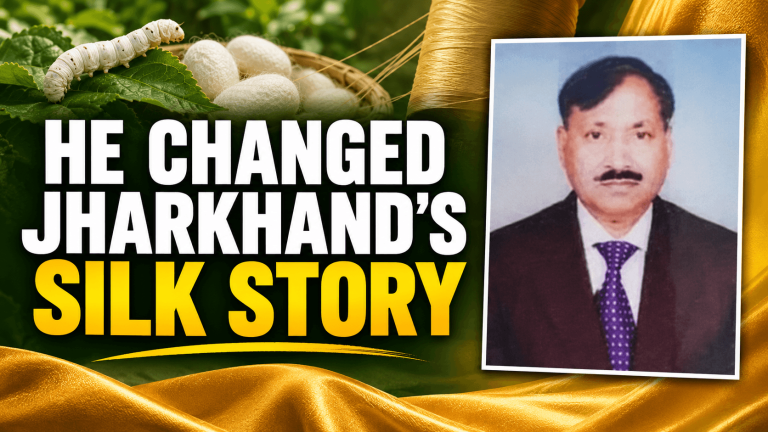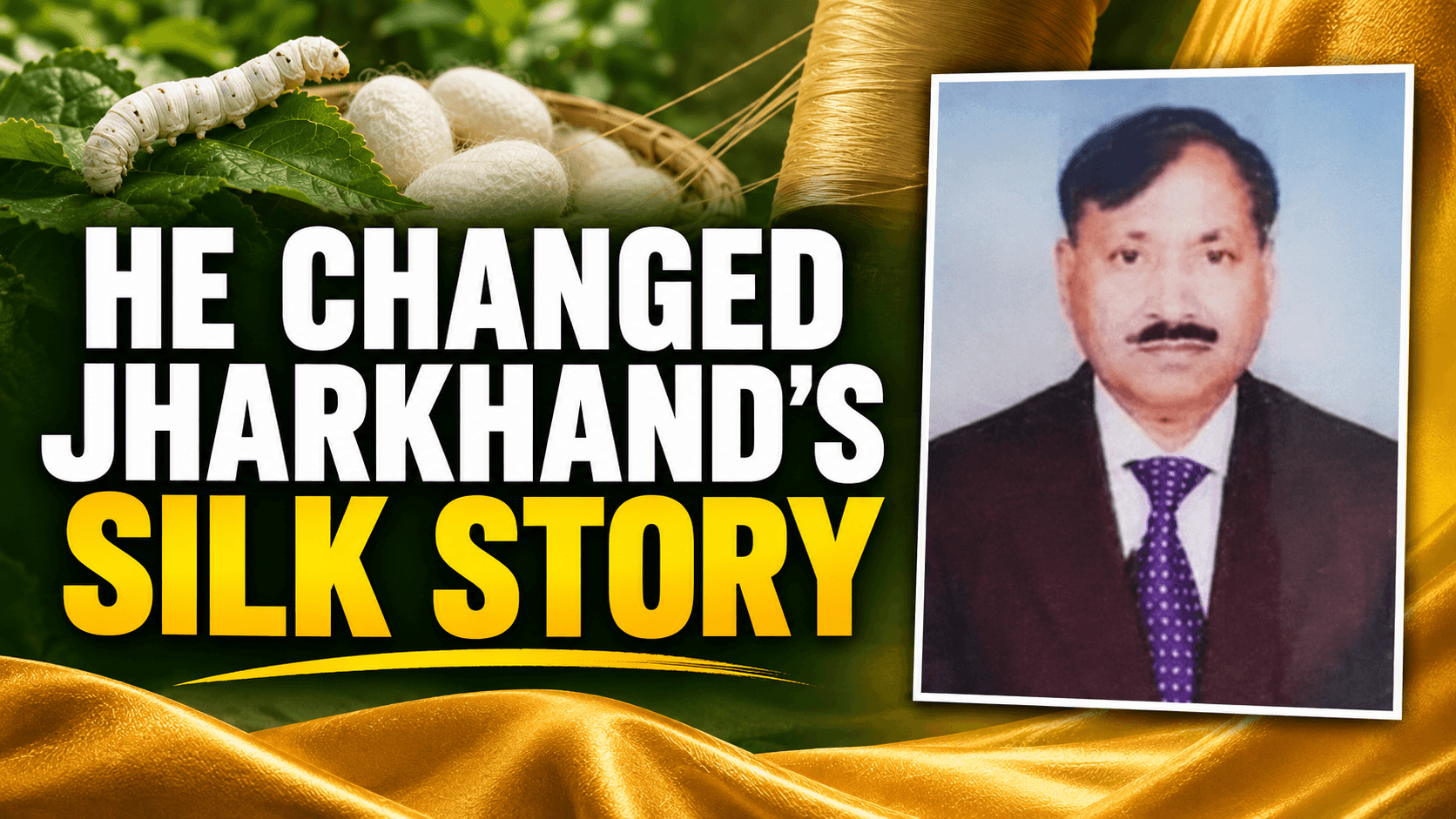
A forest officer’s work is often measured in hectares protected, trees saved, and illegal activities stopped. But what happens when the same officer begins measuring success in livelihoods created, women trained, migration reduced, and traditional crafts brought back to life?
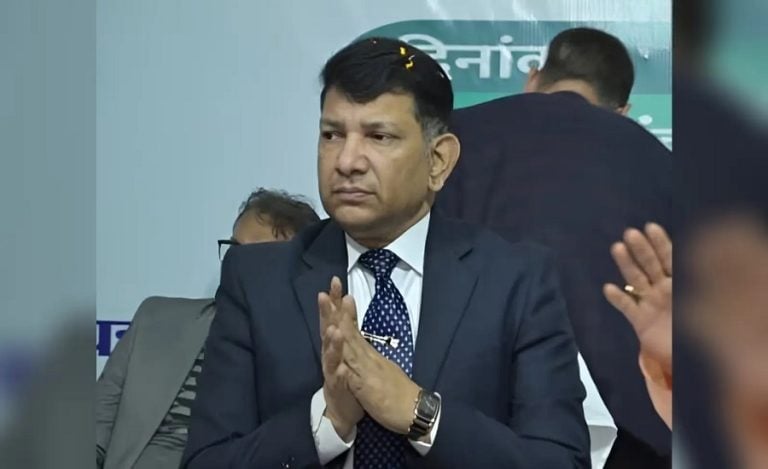
For retired Indian Forest Service officer Dhirendra Kumar (Jharkhand cadre, 1983 batch), the answer lay in looking beyond the boundaries of the forest.
Across his career, Kumar worked in some of Jharkhand’s challenging forest and mining landscapes, tackled organised forest crime, improved government revenue, and helped resolve disputes between industry and forest administration. Later, as head of the Directorate of Sericulture, Handloom and Handicraft, he took on a different challenge: turning the state’s traditional skills into a viable economic enterprise.
His journey brought together two seemingly different responsibilities: protecting forests and improving the lives of the people who depend on them.
Also read: Meet Rakesh Garg, the IT Officer Who Has Cycled 1.1 Lakh Kilometres Across India
Turning Garhwa Into a Revenue-Generating Forest Division
One of Kumar’s notable achievements came as the officer in charge of Garhwa Forest Division. The division’s annual revenue, which had remained below ₹50 lakh, rose to more than ₹3 crore during his tenure. At the same time, expenditure was brought down to just 22 per cent of revenue.
The change reflected a shift towards tighter financial management and better utilisation of the division’s resources. Forest administration, often viewed primarily through the lens of enforcement, was also made accountable for its financial performance.
His approach was tested in Saranda, where illegal teak felling, timber smuggling and organised forest crime posed serious challenges. As Divisional Forest Officer, Kumar relied on intensive patrolling, intelligence gathering, community participation, and coordination with police and district authorities to control these activities.
The objective was not simply to conduct raids. It was to make illegal operations harder to sustain by strengthening surveillance and bringing local communities and other departments into the effort.
Mining presented another challenge. Kumar helped close around 24 illegal mines after their leases expired and strengthened regulation of mining and timber trade. Alongside enforcement, he pushed for measures that connected forest protection with local welfare, including medical vans, village infrastructure and employment opportunities for young people in the Kiriburu mines.
The idea was straightforward: conservation would have a stronger foundation when people living around forests also had access to essential services and economic opportunities.
Resolving Forest Disputes and Strengthening Governance
Kumar’s responsibilities also extended to planning and resolving complex disputes involving forests and development projects.
As Deputy Conservator of Forests (Planning) in Ranchi, he established a GIS cell and oversaw the digitisation of topographical sheets, strengthening the use of geographical information in forest planning. He also contributed to proposals connected with World Bank-related projects.
Later, as Conservator of Forests in Hazaribagh, he helped resolve major forest-use disputes through joint surveys and secured forest clearance for 39 proposals of Central Coalfields Limited (CCL). Through net present value (NPV), compensatory afforestation and penalties, these processes helped the government realise more than ₹800 crore.
His work also included drafting guidelines for Village Forest Management Committees, which were subsequently notified by the governments of Bihar and Jharkhand. He proposed organisational restructuring that led to the creation of new forest zones and divisional posts.
These interventions addressed different aspects of administration: better planning, clearer rules, improved coordination and a more structured forest governance system.
The Jharcraft Mission: Giving Traditional Skills a Market
In 2006, Kumar took charge of the Directorate of Sericulture, Handloom and Handicraft, beginning a new chapter in his career.
Jharkhand had a rich tradition of tasar silk production, weaving and indigenous crafts. Yet traditional skills did not automatically translate into stable incomes. Artisans needed access to markets, better production systems, training and an organisation capable of connecting their work with buyers.
Kumar helped develop Jharcraft into a profitable, market-driven national brand, building value chains around silk, handloom and handicrafts.
The results in tasar silk were particularly striking. Production rose from 90 metric tonnes in 2006–07 to 2,200 metric tonnes in 2014–15, benefiting approximately 2 lakh rearers. More than 25,000 women received training in post-cocoon activities, while employment was generated for around 60,000 weavers.
These figures represented more than increased production. They reflected a growing network of people whose traditional knowledge could become a source of regular income.
Jharcraft also worked to revive distressed weaving clusters, including Bhagaiya, while modernising and promoting crafts such as Sohrai and Kohvar painting, Dhokra metalwork, bamboo products and lac jewellery.
The organisation expanded to approximately 36 emporiums, giving its products a wider retail presence. Certifications including Silk Mark, Handloom Mark and organic certifications helped strengthen product credibility and market access.
The larger task was to ensure that traditional crafts did not survive merely as cultural exhibits, but remained economically relevant to the communities practising them.
Conservation That Improved Lives
Kumar’s work sought to connect environmental protection with livelihoods across more than 2 lakh hectares. The model was associated with reduced migration, improved school attendance and greater economic empowerment for women.
By linking forest conservation and rural enterprise, it offered an alternative to treating environmental protection and economic development as competing priorities.
His experience also attracted national attention. In 2015, the Government of India invited him to contribute to northeastern sericulture projects worth ₹1,100 crore. In 2024, he received the Central Silk Board Lifetime Achievement Award in recognition of his contributions to tasar silk.
A Career Beyond the Forest Boundary
Dhirendra Kumar’s career moved from forest crime and mining regulation to geographical information systems, industrial clearances, silk production and traditional crafts. Yet the thread connecting these assignments remained consistent: making administration deliver measurable results.
In Garhwa, that meant higher revenue and tighter expenditure. In Saranda, it meant stronger action against illegal forest activity. In Hazaribagh, it meant resolving disputes and securing government revenue. Through Jharcraft, it meant creating economic opportunities for rearers, weavers, women and artisans.
His journey offers a compelling lesson in public service: protecting natural resources is only part of the task. The larger challenge is to ensure that the communities living alongside those resources can build better lives without being forced to choose between their livelihoods and the environment.
Also read: Praful Matta: The IT Officer Who Faced Death at 7,300 Metres on Everest