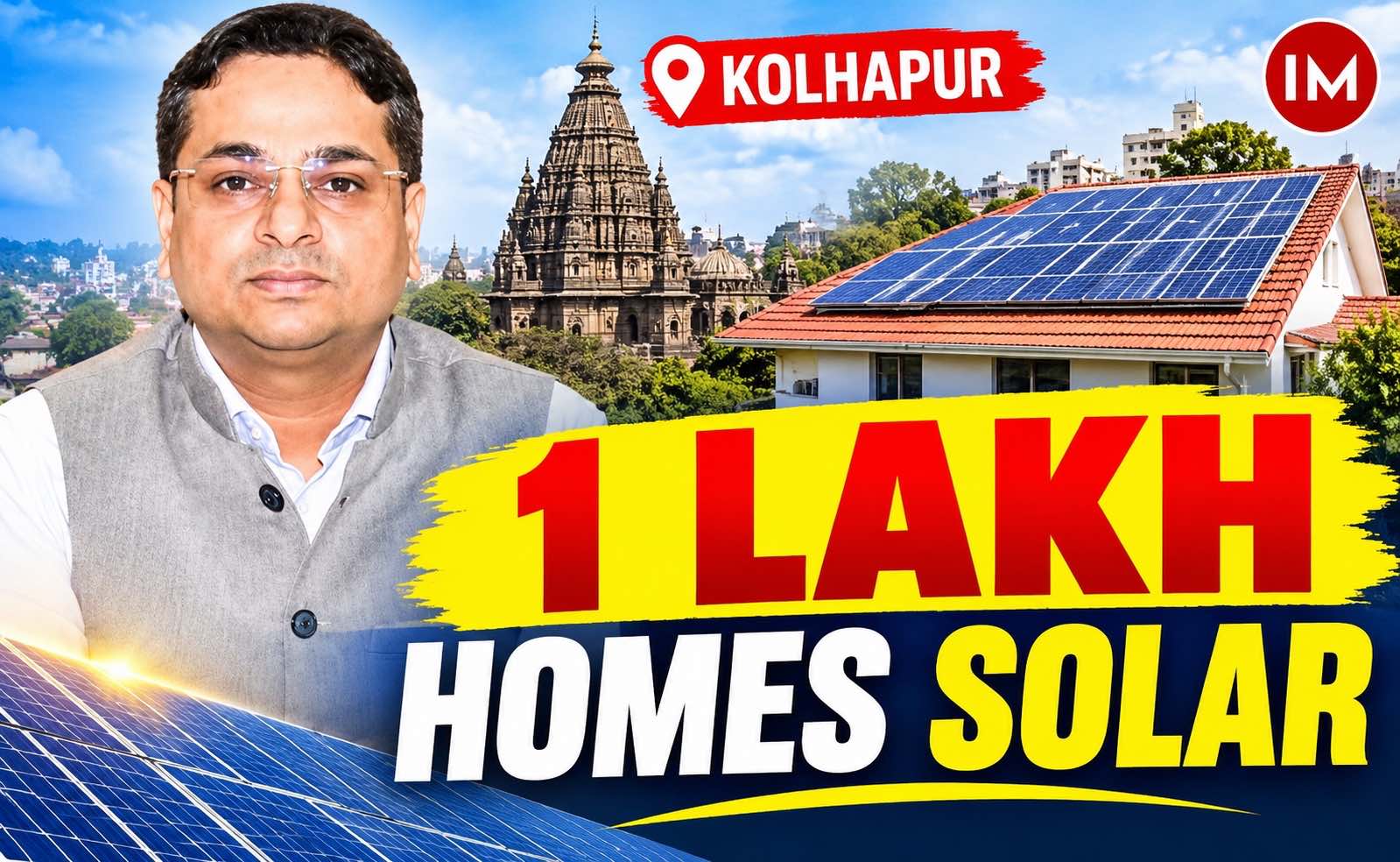
Government schemes often come with ambitious targets and promising benefits for citizens. Yet, the real challenge begins when these schemes have to move from official files to people’s doorsteps. Their success depends not merely on funding or policy decisions but on effective implementation, public awareness and coordination among departments.
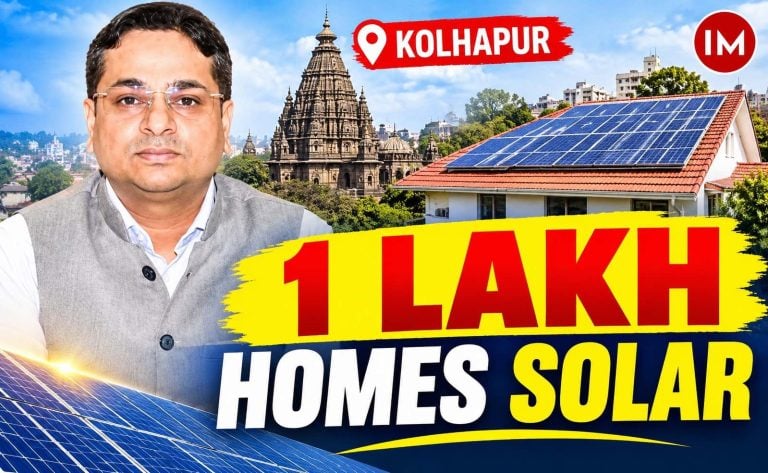
In Maharashtra‘s Kolhapur district, Collector Dr. Vijay Rathod, a 2014-batch IAS officer, is demonstrating how administrative coordination and a clear vision can turn an existing government scheme into a people’s movement. Under his Green Vision initiative, the district is working towards expanding rooftop solar installations across rural and urban households, encouraging citizens to embrace clean energy while reducing their electricity expenses.
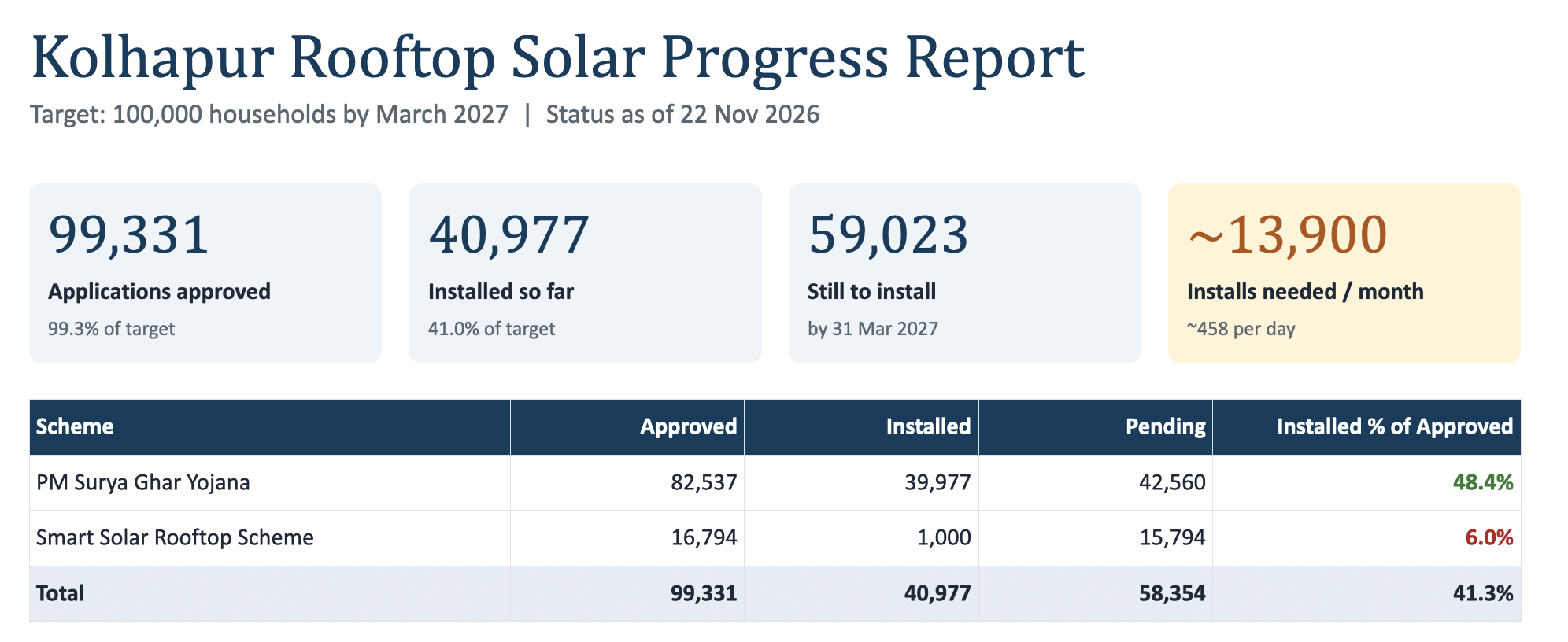
By involving multiple government departments, organising village-level awareness camps, facilitating bank loans and streamlining the installation process, Kolhapur has emerged as one of Maharashtra’s better-performing districts in rooftop solar implementation. Nearly one lakh applications have been approved, while more than 40,000 rooftop solar installations have already been completed. The district has set an ambitious target of reaching one lakh households by March 2027.
Speaking to Indian Masterminds, Dr. Rathod explained how a structured administrative approach, combined with people’s participation, is helping Kolhapur move towards a greener future.
Green Vision: Beyond a Single Department
Rooftop solar installation is primarily associated with the electricity department. However, Dr. Rathod believed that achieving large-scale coverage would require much more than the efforts of one department.
The government schemes were already in place, but their implementation needed stronger monitoring, wider public participation and better coordination.
Also Read: Can AI Save Forests? Surat Forest Division Shows How Technology Is Changing Conservation
“Maximum rooftop solar coverage across the district is our aim. We want to achieve saturation so that more and more households can benefit from green energy,” he said.
Instead of treating the initiative as the responsibility of the electricity department alone, the district administration brought different departments and local institutions onto a common platform.
The idea was simple: if the government wanted citizens to adopt solar energy, its entire administrative machinery had to work towards that objective.
How It Started: Making People Aware First
According to Dr. Rathod, public awareness was the first and most important step.
He believes that even the most beneficial government scheme cannot succeed if people do not know about it, understand its advantages or know how to apply.
“The first step should be public relations. Everyone must be informed about the scheme and its benefits,” he explained.
To ensure systematic implementation, the administration established committees at three levels: district, sub-divisional and village levels.
These committees were designed to strengthen coordination, monitor progress and take the initiative directly to citizens.
Village-level teams were particularly important because they could interact with households, explain the scheme and help people understand the application process.
The administration also motivated officials and employees at different levels to take ownership of the initiative. From government teams to village representatives, everyone was encouraged to contribute towards the common objective.
Implementation: Taking the Scheme to Every Village
One of the major interventions was organising awareness camps across villages.
During these camps, citizens were informed about rooftop solar installations, government subsidies, eligibility conditions and the application process.
However, the administration soon realised that awareness alone would not be enough. Many potential beneficiaries were hesitant because of the paperwork, online application requirements and initial installation costs.
Dr. Rathod said that the administration therefore focused on addressing these practical difficulties.
“We have involved different departments in the process. We motivated our teams first, then the people working at the grassroots level and subsequently the village representatives. Everyone was encouraged to work towards achieving the target,” he said.
This approach helped transform the scheme from a department-driven exercise into a coordinated district-level campaign.
Making Solar Affordable Through Bank Support
The initial cost of installing rooftop solar systems can discourage households, even when government subsidies are available.
To address this problem, the Kolhapur administration facilitated coordination with a local bank to make financial assistance more accessible.
A simplified, single-page application mechanism was introduced. Beneficiaries could submit their applications and obtain quotations without having to navigate an unnecessarily complicated process.
After loan approval, the bank could directly release payments to the vendors, making the installation process easier for households.
This financial facilitation was particularly important in encouraging families who wanted to adopt solar energy but were concerned about arranging the initial investment.
By addressing the financial barrier alongside administrative hurdles, the district administration attempted to make the scheme accessible to a wider section of society.
Transparent Vendor Selection and Faster Installation
Another important aspect was improving the vendor selection and installation process.
The administration promoted a transparent online mechanism through which beneficiaries could apply and choose vendors.
It also worked towards bringing vendors into the campaign and encouraging them to increase their installation capacity.
According to Dr. Rathod, the administration initially worked with a limited group of around 16 vendors to streamline the process and build momentum.
The larger objective was to ensure that applications did not remain pending indefinitely and that approved beneficiaries could move towards actual installation.
He acknowledged that installation, rather than application approval, had become the major challenge.
“Almost all approvals are near the target. The bottleneck now is installation. We need to fast-track the pending PM Surya Ghar cases and improve the conversion under the Smart Scheme,” he said.
This distinction between approvals and completed installations is important because the real success of a rooftop solar programme lies in systems installed and generating electricity, not merely in applications received.
Special Focus on Underprivileged Households
The initiative also seeks to maximise the benefits of the Maharashtra government’s Smart Scheme, which provides additional assistance to eligible beneficiaries.
Under this component, greater subsidies are available to certain categories, including Scheduled Caste and Scheduled Tribe beneficiaries, women and families below the poverty line.
The additional financial support can make rooftop solar installations more affordable for households that might otherwise struggle to bear the cost.
By combining central and state government schemes with local administrative support, Kolhapur is attempting to ensure that the benefits of clean energy reach beyond financially comfortable households.
The Impact and the Road Ahead
Kolhapur’s progress reflects the importance of administrative coordination in implementing large-scale welfare and development programmes.
Nearly one lakh applications have been approved, while more than 40,000 rooftop solar installations have been completed. The district is now working towards its target of covering one lakh households by March 2027.
The initiative covers both rural and urban areas, making it a district-wide effort rather than a programme limited to selected locations.
The benefits could also extend to Kolhapur’s tourism sector. Known for the Mahalakshmi Temple, traditional Kolhapuri chappals and its rich cultural heritage, the district attracts visitors throughout the year. Hotels and other tourism-related establishments can potentially reduce their electricity expenses through rooftop solar installations.
Dr. Rathod’s approach highlights an important lesson in governance: government schemes achieve their true potential when departments work together, citizens are actively involved and practical obstacles are addressed.
The Green Vision initiative is not about introducing an entirely new scheme. It is about making an existing scheme work better through structured monitoring, financial facilitation and people’s participation.
As Kolhapur moves towards its March 2027 target, the district’s experience offers a valuable example of how effective administrative leadership can accelerate the transition towards cleaner and more sustainable energy.
Also Read: From a Balcony in Gangtok, an IAS Officer Harvests Honey and Promotes Harmony with Nature