Strategic autonomy sounds reassuring when the world is stable. It becomes expensive when the world fragments. India is now entering precisely that phase.
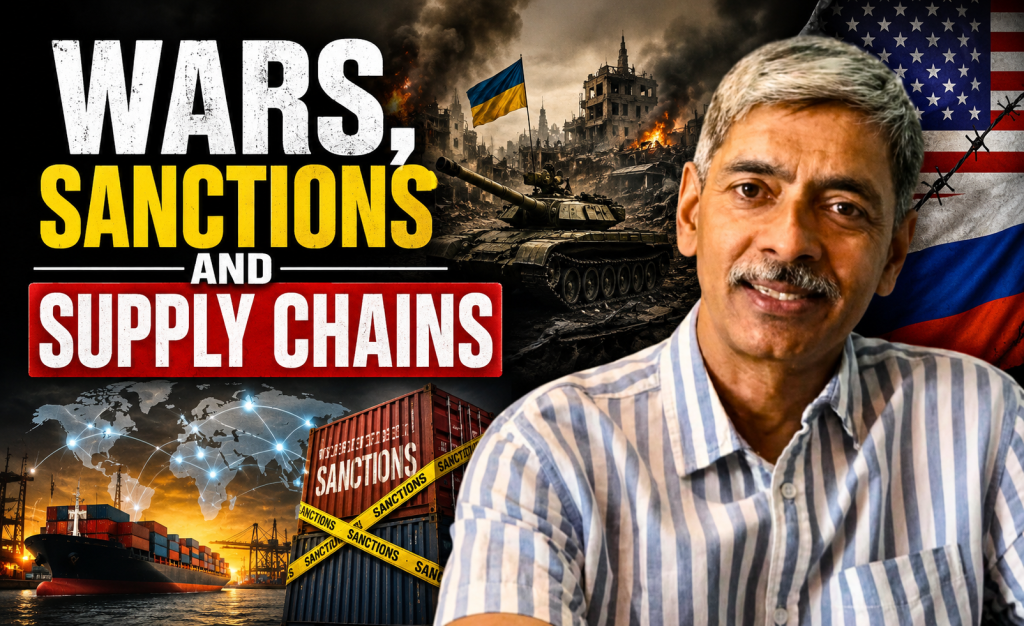
The Russia-Ukraine war, continuing turmoil in West Asia, pressure around the Strait of Hormuz, US-Russia confrontation, sharpening US-China competition and the growing use of sanctions, tariffs, technology controls and supply-chain restrictions are changing the rules of the global system.
For India, this is no longer simply a foreign-policy challenge. It is a test of national resilience. The question is not whether India should choose between Washington and Moscow. It is whether India can build enough capability, diversification and partnerships to ensure that no external power can take away its freedom of action. That is the real meaning of strategic autonomy.
The Latest Warning
The latest signal has come from Washington.
On August 7, the US Senate passed the Lindsey O. Graham sanctioning Russia and Iran Act of 2026 by 86–11. The legislation would give the US President powers to impose tariffs of up to 100% on countries buying significant quantities of Russian oil and gas, potentially affecting countries such as India and China. But the legislation still has to clear the House. It should therefore be treated as a serious policy risk, not as an existing tariff regime against India.
GoI may have hit the pause button albeit temporarily to unravel their next move. Hence, the larger lesson. Economic interdependence is no longer politically neutral. A commercial transaction can acquire geopolitical consequences with remarkable speed.
Also Read – ‘My Path Has Not Been Straight’: Shakeel Ahmad Ganie’s Journey to the IRS
India’s purchase of Russian energy is primarily an energy-security and economic decision. Yet in an increasingly coercive international environment, such choices can attract secondary consequences. This is why strategic autonomy cannot rest on diplomatic skill alone. It needs economic depth behind it.
Hormuz Changes the Equation
The second warning is closer to home. The Strait of Hormuz remains under severe pressure. The waterway previously carried about one-fifth of global oil and LNG shipments. On August 10, oil prices rose again as uncertainty persisted over its reopening.
For India, this is not merely another Middle East crisis. It is a strategic stress test. A disruption in one maritime chokepoint can move quickly from shipping to energy prices, inflation, industrial costs and the wider economy.
India has already demonstrated the value of diversification. The government has said Indian refiners have secured supplies from sources outside the Hormuz route and have diversified LPG procurement to countries including the US, Norway, Canada, Algeria and Russia. That is encouraging.
But crisis-driven diversification must become permanent resilience.
Partnerships must deliver
India has been careful not to reduce its foreign policy to alignment with one power bloc. That approach remains valuable. Russia continues to matter in energy and defence. The United States is increasingly important for technology, investment, markets and defence cooperation. Japan, Australia, South Korea, Europe and the Gulf add other layers of economic, technological and strategic depth. The objective should not be to balance one country against another.
It should be to build a network of strategic options. India’s recent energy arrangements with the UAE illustrate this approach. The May 2026 India-UAE outcomes included cooperation on strategic petroleum reserves, including potential UAE participation in Indian storage and crude storage in Fujairah. The India-South Korea energy partnership similarly recognises energy-resource security and economic resilience as strategic concerns.
This is where diplomacy becomes capability.
A partnership that creates another supplier, another technology source, another logistics route or another investment channel strengthens India’s freedom of action.
Think Beyond Foreign Plicy
The next phase requires a whole-of-government approach. Energy security, defence security, technology security, trade security and financial security can no longer be treated as separate compartments. A geopolitical shock can move from a battlefield to an oil market, from an oil market to inflation, and from inflation to corporate investment.
India therefore needs a permanent strategic-dependency map. What are our critical imports? Who controls them? Which supply routes are vulnerable? How quickly can an alternative be activated? What happens if the disruption lasts three months—or six? These questions should be answered before the crisis. Not after it.
The same exercise should be undertaken by major Indian companies.
The Boardroom Matters
Geopolitical risk is no longer someone else’s problem. A sanction can affect a supplier. A conflict can raise freight and insurance costs. A technology restriction can disrupt production. A maritime closure can alter the economics of an entire industry. Boards therefore need to ask a different question:
If geopolitics changes tomorrow, how long can our business continue operating? That should sit alongside financial, cyber and operational risk on the board agenda. Resilience is becoming a governance responsibility.
Build More at Home
Partnerships provide options. Domestic capability provides bargaining power.
This is why India’s efforts in defence production, semiconductors, space, digital infrastructure, critical minerals, renewable energy and strategic manufacturing matter far beyond industrial policy. The principle is simple.
India does not need to produce everything. It needs to ensure that critical dependencies have alternatives. That means strategic reserves, diversified suppliers, domestic manufacturing, resilient logistics and stronger indigenous technology.
The objective is not autarky. It is to prevent dependence from becoming coercion.
Autonomy is Not Isolation
Strategic autonomy does not mean maintaining equal distance from every major power. It means retaining the freedom to move closer to different partners when Indian interests require it. On some issues India will converge with Washington. On others it may work with Moscow, Europe, Japan, Australia or the Gulf. Sometimes it may disagree with all of them.
That is not strategic inconsistency. It is strategic choice. This distinction worth making India’s growing partnerships are therefore best understood not as a collection of bilateral relationships, but as an emerging architecture of resilience.
The Real Test
India cannot control when wars will erupt, sanctions are imposed or maritime chokepoints disrupted. It can control how exposed it remains when they do. That requires a change in mindset:
From relationships to strategic networks.
From dependence to diversification.
From efficiency alone to resilience.
From reacting to crises to preparing for them.
From diplomatic balancing to capability-backed autonomy.
A military professional understands one basic principle: preparedness is built before the crisis, not during it.
The same applies to national power.
India’s strategic advantage will not come from avoiding every geopolitical shock. That is impossible. It will come from ensuring that when the shock arrives, India still has choices. Strategic autonomy therefore has a price. That price is domestic capability, diversified partnerships, resilient institutions and preparedness. The question before India is no longer simply, “Whose side are we on?”
It is far more consequential: “When the global system turns coercive, how many choices will India still have?” That is the real measure of strategic autonomy. And that is the resilience India must build now.
About the Author– (Colonel M V Shashidhar (Retd) is an Independent Director, strategic governance commentator and leadership practitioner. He writes on geopolitics, corporate governance, sustainability and the intersection of national strategy and boardroom leadership)
Disclaimer—(The views and opinions expressed in this article are solely those of the author and do not necessarily reflect the views of Indian Masterminds. For feedback or queries, please write to [email protected].)
Also Read – Golden Arrows: The IAF Squadron That Fought Kargil From the Skies