Assam is once again fighting a familiar enemy: water.
In August 2026, severe flooding has continued to batter the state, with nearly 1.4 lakh people across seven districts affected and the death toll reaching 100. Assam’s geography makes floods a recurring crisi; almost 39.6 per cent of the state’s land is officially classified as flood-prone, with the Brahmaputra and its tributaries repeatedly reshaping lives and landscapes.
And in a state where policing has long meant much more than crime control, such emergencies bring another responsibility to the doorstep of Assam Police headquarters.
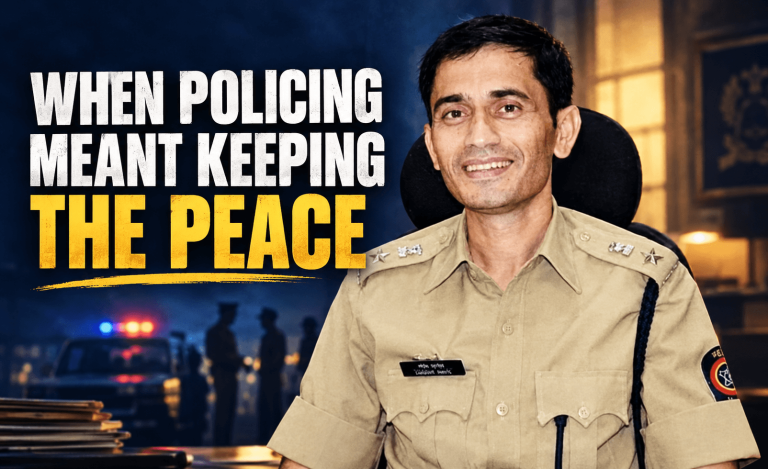
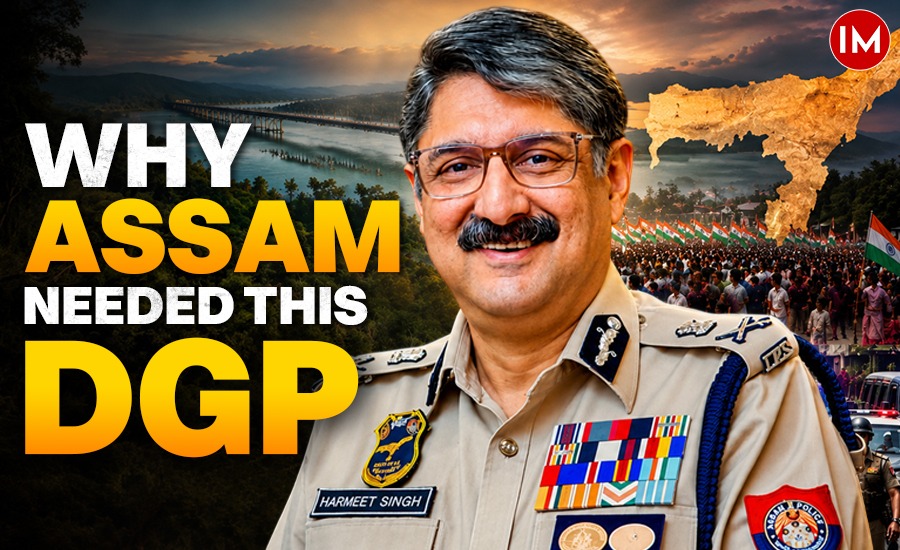
At the centre of that command is Harmeet Singh, IPS, the 1992-batch Assam-Meghalaya cadre officer who became Assam’s Director General of Police in May 2025. But Singh’s story did not begin with a police uniform.
It began with history.
Also read: The Man Who Policed Kosovo, Guarded Ladakh and Now Leads Uttarakhand Police | DGP Deepam Seth
From St Stephen’s to the IPS
Born on 30 December 1968, with Punjab as his home state, Singh studied History at Delhi’s prestigious St Stephen’s College, completing his BA (Hons) between 1986 and 1990. He went on to pursue a master’s degree in History from Panjab University before entering the IPS.
In January 1993, a historian stepped into a profession that would take him into some of the Northeast’s most complex security challenges. Three decades later, he would be wearing the highest police uniform in Assam.
A Career Shaped by Assam’s Changing Threats
Singh’s career has stretched across counter-terrorism, internal security, conflict management, radicalisation, cyber security, administration and border policing. But perhaps the most revealing feature of his career is how closely it mirrors Assam’s own transformation.
The state once dominated by insurgency and militant violence increasingly had to confront newer threats — drugs, cybercrime, misinformation, digital fraud and online radicalisation. Singh evolved with that landscape.
When the Police Entered the Smartphone
In 2018, after two young men were lynched in Karbi Anglong amid rumours that they were child abductors, Assam Police confronted a frightening reality: a rumour travelling through a phone could become a law-and-order crisis on the ground.
As Additional DGP, Singh was placed in charge of the police’s social-media initiative. The force began treating platforms such as Facebook and Twitter not merely as publicity channels, but as tools for intelligence, public communication and misinformation control.
In one striking case, an alert from Facebook about a young woman apparently contemplating suicide reached Assam Police. The social-media team traced her, located her family and helped intervene.
The message was clear: policing was no longer confined to streets and stations. It had entered people’s screens.
From Drugs to Digital Warfare
As Commissioner of Police, Guwahati, Singh brought the same aggressive approach to the drug trade. Within weeks, police arrested more than 100 people and seized narcotics worth over ₹21 crore. He later backed the Drugs Infoline, asking citizens to become partners in dismantling trafficking networks.
Hundreds of kilograms of seized narcotics were subsequently destroyed. Yet the threats kept evolving.
In 2025, Operation Ghost SIM exposed an alleged network involving fake SIM cards, OTPs and Pakistan-based handlers — a reminder that modern policing can involve invisible networks operating through ordinary mobile phones.
The Other Side of the Uniform
For all the hard-security assignments, Singh’s record has another side. He helped drive Sishu Mitra, Assam Police’s child-friendly policing initiative developed with UNICEF and UTSAH. The programme sought to change how children encountering the justice system were treated — placing protection, dignity and rehabilitation alongside investigation.
That contrast says much about his policing journey. The same officer responsible for counter-terrorism and border security also helped build systems designed to make police stations safer spaces for children.
The DGP Who Inherited a Changing Assam
Singh took temporary charge as Assam’s DGP in January 2025 before being formally appointed to the post in May. Today, his responsibilities stretch across a state dealing simultaneously with floods, border concerns, organised crime, drugs, cyber threats and law-and-order challenges.
Under his leadership, Assam Police has reported a sharp fall in crime rates and a major improvement in charge-sheeting and case disposal. But perhaps the larger story is not the numbers. It is the transformation behind them.
Harmeet Singh entered the IPS when Assam’s biggest security battles were fought largely with guns and men on the ground. Today, the battlefield can be a flooded village, a border outpost, a drug network, a social-media post, a cyber scam — or a phone carrying a single dangerous rumour.
And Assam’s top cop, the historian who once studied the forces that shaped societies, now finds himself trying to understand — and police — a state changing just as rapidly.
Also read: How IPS Akshay Sachdeva Is Building a Smarter and Stronger Sikkim Police