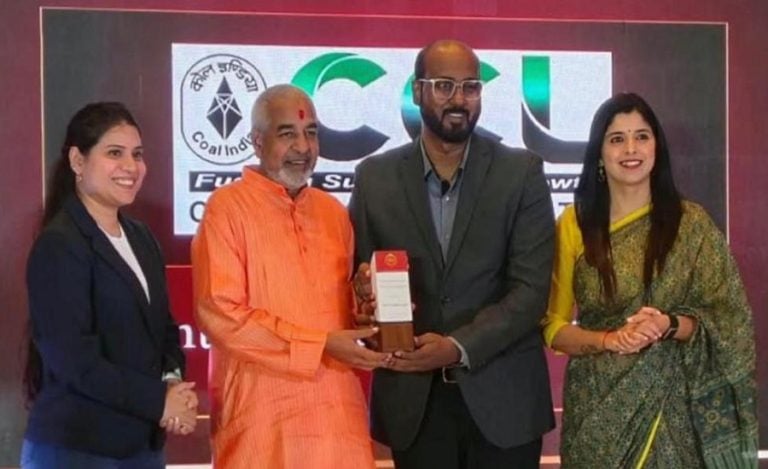
When Akshay Sachdeva took charge as the Director General of Police of Sikkim in January 2025, he inherited more than the state’s highest policing office. He stepped into a role shaped by changing crime patterns, rapid technological shifts, rising cyber threats and one of the biggest concerns confronting the Himalayan state today: the growing menace of drugs.
A 1991-batch Indian Police Service officer of the Sikkim cadre, Sachdeva represents a generation of officers that witnessed Indian policing evolve from conventional law enforcement to an era driven by intelligence, technology and public participation. More than three decades after joining the service, he now heads the force responsible for safeguarding one of India’s most strategically important border states.
Also read: G.S. Rao: The IPS Officer Who Helped Shape Future Cops And Now Leads Tripura Police
A CAREER BUILT ACROSS THE POLICE SYSTEM
Unlike officers who remain identified with a handful of high-profile assignments, Sachdeva’s career has largely been spent strengthening different pillars of the police organisation.
Among his early assignments were two tenures as Commandant of the Sikkim Armed Police — first from November 1996 to November 1999 and later from January 2004 to January 2005. These years placed him at the heart of the state’s armed policing structure, where operational readiness, discipline and training form the backbone of the force.
Over the years, he also handled responsibilities within Police Headquarters and administrative leadership, contributing to the institution beyond field policing. That broad administrative experience eventually paved the way to the state’s top policing post.
TAKING CHARGE AT A CRUCIAL TIME
Sachdeva assumed office as Director General of Police in January 2025, at a time when Sikkim’s policing priorities were rapidly changing.
While maintaining law and order remains a core responsibility, newer challenges have begun demanding equal attention. Drug trafficking networks, synthetic narcotics, cybercrime and crimes that cross state boundaries have increasingly entered the policing landscape.
Soon after assuming charge, he started working extensively on combating drug menace, particularly its impact on young people. Sachdeva assured that the police would pursue strict enforcement while working to safeguard the state’s youth.
MODERN POLICING BEYOND CRIME CONTROL
One theme consistently defines Sachdeva’s vision for policing: modernisation.
His public message as the head of Sikkim Police speaks not only about enforcing the law but also about building an organisation capable of adapting to changing times. He places considerable emphasis on technology, capacity building and strengthening institutional capabilities.
Equally important is his belief that policing cannot function in isolation. He has repeatedly highlighted citizen participation, stakeholder engagement and public feedback as essential components of effective policing.
Rather than viewing the police merely as an enforcement agency, his approach seeks to position it as a public institution that works alongside the community.
BUILDING CONFIDENCE WITHIN THE FORCE
Sachdeva’s priorities are not confined to public-facing initiatives alone.
He has also spoken about creating an enabling environment for police personnel to perform their duties professionally. The message reflects an understanding that organisational strength begins within the force itself — through better systems, professional growth and a culture that supports responsible policing.
It is an approach that combines internal institutional development with external public trust.
POLICING ONE OF INDIA’S STRATEGIC STATES
Leading Sikkim Police comes with responsibilities unique to the state.
Sharing international borders with China, Nepal and Bhutan, Sikkim requires close coordination with the Army, intelligence agencies and border security forces. Alongside strategic concerns, the state also welcomes large numbers of tourists every year, demanding a balance between security and visitor-friendly policing.
Natural disasters, including landslides, floods and earthquakes, further expand the role of the police beyond crime prevention into emergency response and disaster management.
These diverse responsibilities make the office of the Director General of Police as much about coordination and planning as operational leadership.
A QUIET OFFICER, A CLEAR VISION
Unlike many senior officers who frequently appear in public discussions, Akshay Sachdeva has maintained a remarkably low personal profile throughout his career. Yet his professional philosophy is visible through the priorities he has laid out for the force.
Professionalism. Technology. Public trust. Community participation. Institutional growth.
As Sikkim navigates new policing challenges in an increasingly connected world, these principles are likely to shape the direction of the state’s police force under his leadership. For Akshay Sachdeva, the objective is clear — ensuring that the idea of “Protect and Serve” continues to evolve with the needs of a changing society.
Also read: IPS Rajeev Krishna: The Engineer Who Rose to Lead Uttar Pradesh Police as DGP