What happens when the people living around forests become their biggest protectors instead of being seen as a threat to conservation?
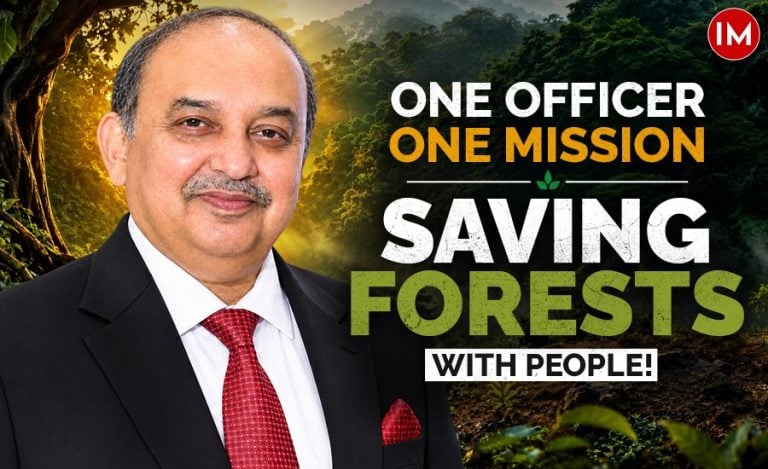
Retired Indian Forest Service officer Mudit Kumar Singh (1984 batch) witnessed this transformation during his career. While serving in Jhabua, Madhya Pradesh, he worked towards changing the relationship between forest departments and local tribal communities.
Instead of relying only on regulations and enforcement, he focused on trust, community participation and development. Village committees were formed, rotational grazing and forest patrolling were introduced, and people were encouraged to take responsibility for protecting their forests.
Speaking to Indian Masterminds, Singh shares how the Jhabua model of eco-development helped transform forest conservation and why he believes that people must become partners in protecting nature.
In this conversation, he also discusses:
His journey into the Indian Forest Service.
The challenges of working in remote tribal areas.
How community participation transformed forest protection.
Balancing development projects with environmental conservation.
The importance of the Forest Rights Act.
The role of AI and technology in modern forest management.
Lessons from his international exposure in Germany.
Why environmental responsibility must begin with individual behaviour.
Currently serving as Expert Advisor, Department of Land Resources, Ministry of Rural Development, Government of India, Singh continues to contribute to public policy and development.
Watch this inspiring conversation to understand why forests cannot be protected through government orders alone. They need people's participation.
#IndianForestService #IFSOfficer #ForestConservation #MuditKumarSingh #IndianMasterminds #WildlifeConservation #JhabuaModel #Environment