By P Sesh Kumar
What does an annual report really tell us about an institution? Ideally, not just how busy it has been, but whether its work has made a difference. The inaugural Avlokan report of the Foreign Tax and Tax Research Division (FT&TR) offers unprecedented visibility into an institution that has long worked behind the scenes of India’s tax administration. It records treaties signed, cases handled, meetings held, information exchanged and thousands of APA pages produced. But when we ask what these activities achieved—revenue protected, disputes resolved, compliance improved or outcomes delivered—the numbers become surprisingly thin. This first part examines that gap between activity and accountability.
THE REPORT THAT CALLS ITSELF OBSERVATION
Avlokan. A looking-at. A beholding. A survey conducted with the eyes open. It is a lovely name for an annual report, and one has to admire the nerve of whoever chose it, because the first thing a reader notices about the Foreign Tax and Tax Research Division’s (FTTR) inaugural offering is how much it looks at and how little it sees.1
Let the credit be recorded first, and without grudging, because the document deserves it. For fifty years the FT&TR Division has been the least legible limb of the Indian tax administration: a handful of Joint Secretaries and Under Secretaries who negotiate the treaties, sign the agreements, answer the requests, and appear in public only as a name at the foot of a notification. This report ends that anonymity. It reconstructs eight decades of Indian treaty-making into four intelligible phases, from the schedule-based India-Pakistan agreement of December 1947–signed by a Dominion, before the Republic and before the OECD Model existed–through the 1960s foundation years to the anti-abuse recalibrations of the present. It prints the organogram. It names the officers. It explains, in prose a district officer could follow, what an Advance Pricing Agreement (APA) is, why a Mutual Agreement Procedure (MAP) exists, and how a request for information travels from an assessing officer in Bhopal to a competent authority in Bern. It sets down India’s negotiating stance at the United Nations Intergovernmental Negotiating Committee with more candour than the Ministry of External Affairs usually permits. For an institution that has spent half a century behind a curtain, this is a real act of disclosure, and the Division should not be punished for having drawn the curtain merely because the room behind it turns out to be arranged for display rather than for inspection.
But arranged for display it is. Read the report twice–once for what it says, once for what a reader would need in order to judge it– and a pattern hardens. Every number in Avlokan is a number of things done. Agreements signed. Treaties revised. Plenaries hosted. Working parties attended. Officers trained. Delegates fed. Pages of paper signed and, in an image the Division evidently found irresistible, measured with a ruler. There is almost no number anywhere in 152 pages that describes what happened afterwards.
Also Read – Who Is Accountable When the Drain Fails?
SEVENTEEN THOUSAND PAGES, ONE AND A HALF METRES TALL
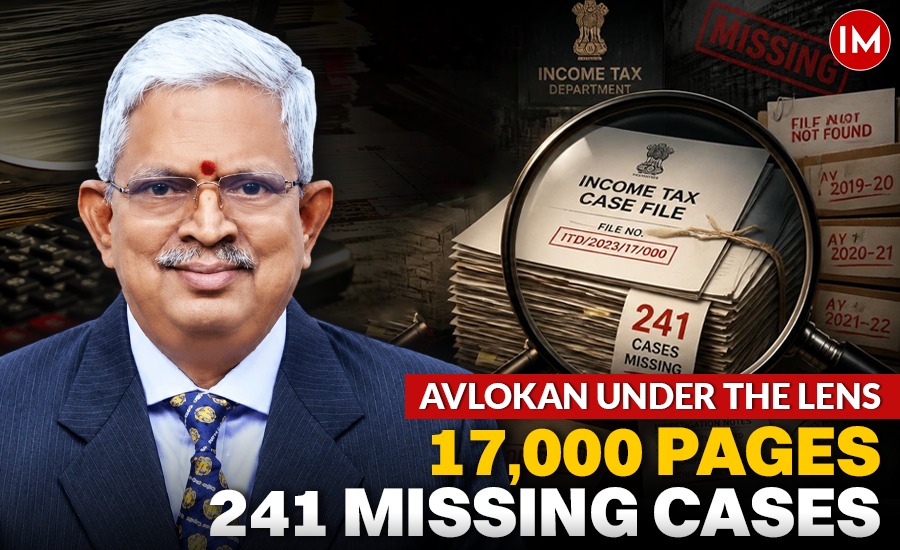
On page 37, beneath the APA chapter, sits a tinted box. The Competent Authority, it announces, signed over 17,000 pages of APA agreements during FY 2025-26; if printed and stacked, the pile would stand well over 1.5 metres tall, roughly the height of an average adult. It is offered as a charming statistic and it is charming. It is also the most revealing sentence in the report, because it is the only place where the Division attempts to convey magnitude–and the unit it reaches for is paper.
Let us consider what else might have been measured. The aggregate value of the international transactions covered by those 220 agreements. The arm’s length margins agreed, by sector, against the margins the Transfer Pricing (TP) Officers had been contending for in the same taxpayers’ open years. The transfer pricing adjustments that will now never be made, and the adjustments that were made in the four rollback years and then reversed. The litigation withdrawn. The refunds triggered. The demands that survived. Any one of these would have told the reader whether the Indian exchequer is better or worse off for a record year of certainty. Instead: a metre and a half of paper.
A tax administration that measures its output in centimetres of signed paper has not merely chosen a whimsical metric. It has told us, precisely, what it is able to count.
This is not a peculiarly Indian failing, and it is worth steel-manning before the verdict. Output measurement is genuinely easier, genuinely more timely, and genuinely less contestable than outcome measurement. An APA’s revenue effect is counterfactual: it requires an estimate of what the taxpayer would have paid, and what the department would have collected after appeal, in a world where no agreement was signed. Reasonable economists differ. Publishing an unreliable outcome number invites its misuse by every columnist with a deadline, and a tax administration that is punished for a bad estimate will simply stop estimating. There is, further, a legitimate institutional argument that certainty is itself the product: that the point of the APA programme is not to raise revenue but to reduce the deadweight cost of dispute, and that measuring it by rupees collected is like measuring a fire brigade by the value of buildings burnt.
All of that is true, and none of it survives the comparison that follows. Because two of the world’s most sophisticated tax administrations face exactly the same measurement problem, are subject to exactly the same taxpayer confidentiality constraints, and publish the numbers anyway– because their legislatures compelled them to.
THE TABLE WHERE 241 CASES WALK AWAY
First, though, the arithmetic that Avlokan does print, and which does not hold.
Page 39 carries India’s Mutual Agreement Procedure (MAP) performance for calendar years 2020 to 2025, in six rows: opening inventory, new invocations, cases closed, closing inventory. The accompanying prose is confident. India’s MAP inventory, it says, declined from 947 cases at the beginning of 2020 to 365 at the end of 2025, a reduction of nearly sixty per cent, while 903 cases were successfully concluded.
Both those figures check out. The six closure columns do sum to 903. The inventory did fall by 582. But an inventory is a roll-forward, and a roll-forward has to close. Add the 562 new invocations to the opening 947 and subtract the 903 closures, and the closing inventory at the end of 2025 should be 606. The report says 365. Two hundred and forty-one cases are missing.
They are not scattered. Each individual row is internally consistent–opening plus new minus closed equals closing, every year, without exception, which tells us the table was built from a live system and not typed from memory. The breakages are all in the joints between the years. The 2020 closing of 873 becomes a 2021 opening of 872. The 2021 closing of 754 becomes a 2022 opening of 740. The 2022 closing of 697 becomes a 2023 opening of 709–inventory going up across a year boundary. The 2024 closing of 386 becomes a 2025 opening of 389. And then, between the close of 2023 and the open of 2024, the inventory drops from 662 to 421. Two hundred and forty-one cases vanish overnight, in a single unremarked step, in the flagship publication of the competent authority of India.
There will be an explanation. A reclassification of pre-2016 legacy cases to align with the OECD’s post-Action 14 reporting framework is the obvious candidate, since the OECD’s own statistics distinguish old cases, compiled on each jurisdiction’s own methodology and prone to double counting, from post-2016 cases reported on an agreed basis.2 A migration to a new case-management system is another. Either would be entirely respectable. Neither is stated. And that is the point: a table that does not reconcile, in a report whose central claim is institutional maturity, with no footnote, no asterisk and no note on methodology, is not a typographical slip. It is a governance signal. It tells the reader that nobody outside the Division was ever expected to add it up.
The same chapter offers a second unbenchmarked triumph. The average time to conclude a transfer pricing MAP case, it reports, has fallen from 64.86 months in 2016 to 39.78 months in 2025–a reduction of almost 40 per cent. The improvement is real and creditable. What the report does not mention is that the OECD’s 2024 statistics, covering 141 jurisdictions and practically every MAP case on earth, put the global average for transfer pricing cases at 30.9 months.3 India, in other words, has improved substantially and remains roughly nine months slower than the world. A report that cites the OECD approvingly 11 times might have found room for the one OECD number against which its own performance could be judged.
NEWS FROM 2021
Let us turn to page 68, to the section titled From Information to Compliance, which opens with a sentence of admirable honesty: the ultimate measure of any exchange of information (EOI) framework lies not in the volume of information exchanged, but in its ability to translate international information into additional domestic revenue. Having set that test, the Division proceeds to answer it with data as on 31 May 2021.
Let us read that again. This is the annual report for financial year 2025-26, published in July 2026. Its enforcement outcomes are five years and two months stale. Five Union Budgets, an entirely new Income-tax Act, two Finance Acts and the whole of the CRS-driven compliance push have intervened. The Black Money (Undisclosed Foreign Income and Assets) and Imposition of Tax Act, 2015 has been in force for another five assessment years. And the reader is handed the position as it stood before the second wave of the pandemic had subsided.
What the frozen data show is worth stating plainly, because the Division prints it without comment. As on 31 May 2021, 1,605 assessment orders had been passed under the Black Money Act, generating tax demands of about Rs 26,673.3 crore and penalty demands of about Rs 15,703.96 crore. Recovery: Rs 347.31 crore. That is roughly 1.3 per cent of the tax demand, and about 0.8 per cent if the penalty demand is added to the denominator. 167 prosecutions had been launched. The report does not say how many resulted in a conviction. It does not say how much of the demand was subsequently deleted in appeal, how much is stayed, how much is irrecoverable against non-residents with no attachable Indian assets, or how much remains merely a number on a register. It offers, instead, the sentence that these outcomes demonstrate the significant role played by international exchange of information in strengthening offshore tax compliance.
A demand-to-recovery ratio of about one in eighty does demonstrate something. It does not demonstrate that.
The same section carries the Division’s proudest domestic story, the SAKSHAM NUDGE campaigns, in which CRS and FATCA data are matched against domestic records and taxpayers are invited to correct their own disclosures before enforcement begins. The philosophy is sound, the Global Forum has praised it, and the participation numbers are genuinely striking: 1,57,112 taxpayers filed or revised returns carrying foreign assets or foreign source income, declaring Rs 99,882 crore of foreign assets and Rs 6,540 crore of foreign income. The additional tax paid voluntarily, in the same panel, is Rs 835.47 crore.
Nobody in the Division appears to have looked at those four numbers side by side. Tax of Rs 835.47 crore on declared foreign income of Rs 6,540 crore is an effective rate of about 12.8 per cent–well below any Indian marginal rate applicable to the taxpayer cohort likely to hold offshore custodial accounts, and the report offers not a word of explanation. Perhaps much of the income was already taxed and merely misreported in Schedule FSI; perhaps foreign tax credits absorbed the rest; perhaps the campaign’s true product is future compliance rather than present collection. Any of these would be a perfectly good answer. None is given. And against a direct tax collection of the order of Rs 25 lakh crore, Rs 835 crore is not a revenue event at all. It is a behavioural one — which is a legitimate and even admirable thing for it to be, provided somebody says so.
A smaller instance of the same inattention: the report’s own EOI Numbers table converts Rs 29,200 crore to EUR 2.41 billion under NUDGE 1.0 and Rs 99,800 crore to EUR 9.14 billion under NUDGE 2.0–two different exchange rates, 121 and 109 rupees to the euro, in adjacent rows of the same table. Elsewhere the reader is told that AEOI information became visible in the Annual Information Statement (AIS) from July 2026 on one page and from July 2025 on the next. These are small things. They are the small things that tell an auditor whether a document went through a reconciliation or a proofread.
WHAT AN APA CHAPTER WOULD CONTAIN IF IT WERE ABOUT APAS
The centrepiece of the report, and of the Division’s year, is the APA programme. The claim is a strong one and largely earned. India signed 220 APAs in FY 2025-26–the report’s figure; the CBDT’s own press release of 31 March 2026 said 219 and put the cumulative total at 1,034 rather than 1,035, a one-agreement divergence that is almost certainly an end-of-March timing artefact but that nobody has bothered to reconcile across two official publications four months apart.4 Eighty-four of them were bilateral, against 65 the previous year, concluded with 13 treaty partners including first-ever bilateral agreements with France, Ireland, Indonesia and Sweden. Cumulatively 1,035 agreements since 2012, of which 751 unilateral and 284 bilateral, covering more than 5,700 assessment years.
Let us set that beside the United States. In calendar year 2025 the Advance Pricing and Mutual Agreement Program of the Internal Revenue Service executed 110 APAs.5 India, in the overlapping fiscal year, signed twice as many. That is a genuine achievement and it deserves to be said loudly, because Indian tax administration is more often measured by its pathologies than by its capacities.
Now let ask what a reader would need in order to know whether those 220 agreements were good ones. Nine questions suggest themselves, and the report answers none of them.
How long does an APA take? The report never says. Not a median, not a mean, not a range. The IRS reports a median of 41.6 months for all APAs executed in 2025 and 45.9 months for new ones. The OECD, aggregating 49 reporting jurisdictions, puts the global average time to grant an APA at 39.6 months in 2024, up from 36.8 in 2023.6 India’s number is unknown to the Indian public, to Parliament, and to anyone who has not filed one.
How many are pending? The report says that over fourteen years more than 2,000 applications have been filed and 1,035 have been concluded. It never draws the inference. Roughly half of every application ever made to the Indian APA programme has not resulted in an agreement, and the report does not disclose how many of those are live, how many were withdrawn by the taxpayer, how many were rejected by the CBDT, and how many simply aged out. The IRS, by contrast, states its pending inventory precisely–622 requests at the end of 2025, of which Japan and India together account for just under half of all pending bilateral cases.7 The Indian reader learns the size of India’s pending bilateral APA load from an American document.
How many were renewals? The IRS reports that half of its 2025 executions were renewals, down from 58 per cent. A renewal rate is one of the few honest proxies for whether an APA programme is delivering durable certainty or simply recycling the same taxpayers through a queue. India’s is unpublished.
How many agreements were revised or cancelled? Rule 10Q of the Income-tax Rules provides for revision and Rule 10R for cancellation, principally where a critical assumption fails or the taxpayer does not comply. The report mentions neither rule, neither event, and neither number. Nor does it mention critical assumptions at all–the load-bearing device on which every APA rests, and which the IRS discusses at length because a failed critical assumption cancels the agreement unless the parties agree to revise it.
What happened to compliance? Rule 10-O requires the taxpayer to file an Annual Compliance Report in Form 3CEF for each covered year.8 Rule 10P requires the jurisdictional Transfer Pricing Officer to conduct a compliance audit of every agreement for every covered year and to report findings within six months of receiving the ACR.9 This is the entire back end of the programme– the machinery that determines whether a signed APA is an enforceable instrument or a piece of decorative parchment. With 1,035 agreements running across more than 5,700 assessment years, there should by now be several thousand annual compliance reports on file and several thousand compliance audits completed or pending. Avlokan does not mention Rule 10-O, does not mention Rule 10P, does not mention Form 3CEF, and does not report a single compliance-audit statistic. A reader could finish the chapter without knowing that a compliance regime exists.
What margins were agreed? The report is properly reticent about individual agreements and should be. But nothing prevents publication of aggregated, anonymised margin ranges by transaction category–precisely what the IRS does in Part III of its annual announcement, and precisely what the 2026 Safe Harbour reform implicitly does when it fixes 15.5 per cent for information technology services and 15 per cent for data centre services. If a standardised 15.5 per cent margin is publishable as a rule, an aggregated distribution of APA-agreed margins in the same sector is publishable as a fact. Its absence means nobody outside the CBDT can tell whether APA outcomes cluster above, below or around the safe harbour–which is to say, whether the taxpayers who negotiate are getting a better deal than the taxpayers who do not.
What was any of it worth? No revenue figure. No estimate of tax secured, tax foregone, adjustments avoided, litigation withdrawn or appeals disposed. Nothing.
What is the uptake of the Safe Harbour regime? The chapter describes the 2013 rules, the 2017 rationalisation and the 2026 consolidation, and asserts that the regime allows Transfer Pricing Officers (TPO) to focus on complex, high-value and high-risk transactions. It does not say how many taxpayers have opted in, in any year, under any category. The regime’s historic problem in India has been low uptake because the prescribed margins were unattractive; whether the 2026 reform has fixed that is the single most interesting question about it, and the report does not ask it.
And what does the programme cost? The Division reports a working strength of over one hundred officers and officials and eleven overseas units. It reports no budget, no cost per agreement, no case-per-officer load. An APA team of unknown size is producing 220 agreements a year against an unknown pending inventory in an unknown period of time at an unknown cost. Every one of those unknowns is a management fact, not a taxpayer secret.
THE LOUDER SILENCES
Beyond the APA chapter, the report is quiet about several things that a 2025-26 review of India’s international tax position could not honestly avoid.
The equalisation levy is discussed only as one of three options that the 2015 Base Erosion and Profit Shifting. (BEPS) Action 1 report considered and did not recommend. The report does not mention that India introduced it in 2016, extended it in 2020, withdrew the two per cent e-commerce levy with effect from 1 August 2024 and abolished the six per cent advertising levy from 1 April 2025– thereby surrendering, in the reporting period and the one before it, the only unilateral instrument by which India actually taxed the digitalised economy.10 The Division’s chapter on the Two-Pillar Solution runs to two pages of India’s principled advocacy for source and market jurisdictions without once acknowledging that India has already paid the entry fee for Pillar One and that Pillar One has not arrived.
Nor does the report state where Pillar Two stands in Indian law. It describes the GloBE Rules, the Qualified Domestic Minimum Top-up Tax, the Income Inclusion Rule and the Undertaxed Profits Rule with textbook competence. It does not say whether India has enacted any of them. On the available reading of the Income-tax Act, 2025 it has not, and India therefore continues to forgo top-up tax on low-taxed Indian profits of in-scope groups that other jurisdictions may collect instead–a live fiscal exposure created by incentive-driven effective rates below 15 per cent in special economic zones (SEZ) and concessional manufacturing regimes.11 This is a single-source inference from the absence of enacting provisions rather than an official statement, and is flagged as such; but the silence of the Division’s own report on a question of this magnitude is itself the finding.
Significant Economic Presence appears in the glossary and nowhere else of consequence. Section 10(23FE), now Schedule V of the 2025 Act, is celebrated across two pages for having notified 41 sovereign wealth and pension funds and for the extension of the investment window to 31 March 2030–with no statement of the revenue foregone, no tax expenditure estimate, no figure for the quantum of investment actually mobilised, and no assessment of whether the exemption bought infrastructure that would not otherwise have been financed. This is a targeted exemption administered by the very Division writing the report, and it is presented purely as an act of facilitation.
The Exchange of Information (EOI) chapter, the longest in the book, contains no aggregate volumes at all. Not the number of EOIR requests India made in the year, nor the number it received; not the average time taken to answer an incoming request, nor to obtain an answer to an outgoing one; not the number of CRS or FATCA records received or the number of accounts covered. The chapter that carries the confidentiality argument most heavily is the chapter that would be least compromised by publishing counts. The Global Forum publishes response-time metrics on exactly this basis. The single request-volume figure in the entire report is anecdotal: 35 outgoing and 12 incoming requests reconciled at a meeting with HM Revenue and Customs in November 2023.
Finally, the eleven Income Tax Overseas Units. Their chapter is the most readable in the report and the least accountable. It narrates achievements in London, Abu Dhabi, Washington, Singapore, Berlin and Port Louis in the language of diplomacy–engagement institutionalised, dialogue initiated, discussions at an advanced stage–with figures that are episodic rather than annual: more than 170 mutual legal assistance and letters rogatory requests handled by London during a recent reporting period, around 24 active extradition matters, a completion rate of nearly 96 per cent in Abu Dhabi for requests made between 2023 and 2025. There is no cost of the network, no output per station, no basis on which anyone could decide whether the twelfth unit should be opened or the eleventh closed.
IS THE LISTING OF ACHIEVEMENTS ITSELF A LAUDABLE END?
Let us put the question as its defenders would. An annual report is not an audit report. It is a communication instrument, addressed to taxpayers, treaty partners, investors and the international standard-setting community. Its job is to establish that the institution exists, that it is competent, and that it can be relied upon–and in a domain where India is simultaneously a rule-taker and an aspiring rule-maker, the signalling value of a confident, well-designed, English-language publication is not trivial. When the Division hosted the eighteenth Global Forum Plenary in New Delhi in December 2025 with over four hundred delegates, the reputational return on that was real. Investors read confidence. Treaty partners read capacity. A report that dwelt on unrecovered demand and unreconciled inventories would serve the auditor and disserve the country. Moreover, this is an inaugural report; first editions establish the frame, and outcome reporting can be layered on later.
Every clause of that is defensible, and the last one is nearly persuasive. It is nearly persuasive and it is still wrong, for three reasons.
The first is that a first edition establishes the frame permanently. Whatever Avlokan counts this year is what Avlokan will count in 2036. The template is now set: agreements signed, meetings attended, delegates hosted. Adding outcome measurement to an established output frame is an admission of prior inadequacy, and institutions do not volunteer those. If the revenue effect of the APA programme is not measured in the report that invents the report, it will not be measured.
The second is that output metrics are not neutral. They are incentives. An officer whose division is publicly measured on agreements signed will sign agreements, and the marginal agreement– the one signed in the last fortnight of March to clear the annual figure–is precisely the agreement where the Indian negotiating position is most likely to have softened. Goodhart’s law is not a witticism; it is the operating principle of every target-driven bureaucracy that has ever existed, and the Indian Revenue Service has more experience of it than most. When the report celebrates that more than half of all APAs concluded since inception were signed in the last three years and that over 40 per cent of cumulative certainty was generated in the last two, it is describing an acceleration whose quality nobody has been asked to verify.
The third is that the Division itself sets the outcome test and then fails it. It is the report, not this note, that declares the ultimate measure of any EOI framework to lie not in the volume of information exchanged but in additional domestic revenue. Having articulated the correct standard, it answers with 2021 data and a recovery ratio of one in eighty. That is not a communications choice. That is a management information system that does not exist, and a report that inadvertently proves it.
The listing of achievements is a laudable beginning and a contemptible end. What separates them is a single institutional question: does anybody inside the building have to answer for the numbers a year later?
THE AMERICAN ANSWER: A STATUTE THAT FORCES THE NUMBERS OUT
The United States faces the identical problem and solved it by legislation 27 years ago. Section 521(b) of Public Law 106-170, the Ticket to Work and Work Incentives Improvement Act of 1999, requires the Secretary of the Treasury to report annually to the public concerning APAs. The same statute preserves the confidentiality of individual APAs as return information under section 6103 of the Internal Revenue Code. Congress, in other words, looked at exactly the objection that circulates in North Block–these are confidential taxpayer arrangements– accepted it entirely, and then legislated a mandatory aggregate disclosure regime that leaves confidentiality intact.
The result is Announcement 2026-8, the twenty-seventh such report, issued on 30 March 2026 and published in Internal Revenue Bulletin 2026-16.12 It runs in three parts. Part I describes the structure, composition and operation of the programme–where APMA sits within Treaty and Transfer Pricing Operations in the Large Business and International Division, how many teams, who leads them. Part II is pure statistics: applications filed, executed, pending, withdrawn, and revoked or cancelled; the countries involved; the time taken, disaggregated between new agreements and renewals; the age profile of the inventory. Part III describes, in general terms, the substance of the agreements executed during the year–the types of covered transactions, the transfer pricing methods selected, the tested parties, the profit level indicators, the ranges applied, the critical assumptions used, and the terms and rollback years.
That last part is the one CBDT officials should read most carefully, because it demolishes the confidentiality objection empirically. The IRS publishes what methods were used and what kinds of ranges were agreed, in aggregate and by category, without identifying a single taxpayer. It publishes that 178 applications were received in 2025, that 153 of them were bilateral, that 622 requests were pending at year end, that the median completion time was 41.6 months, and that 50 per cent of executions were renewals. Nobody’s return information is exposed by any of that.
Around this statutory disclosure sits an oversight architecture that has no CBDT counterpart. The Treasury Inspector General for Tax Administration, created by the IRS Restructuring and Reform Act of 1998, conducts independent audits and investigations of the IRS, cannot be prevented by the Secretary from initiating or completing any audit, and has statutory access to returns and return information for that purpose.13 The Government Accountability Office (GAO- the US counterpart of our CAG) audits IRS financial statements and conducts programme evaluations. The National Taxpayer Advocate reports to Congress twice a year, including on the most serious problems facing taxpayers, and is not required to clear the report with the Commissioner. The tax-writing committees of Congress can obtain return information under section 6103(f) in closed session. Confidentiality in the American system is not a wall around the tax administration. It is a set of controlled doors, each with a named keyholder.
THE BRITISH ANSWER: A YIELD FIGURE, AN ASSURANCE COMMISSIONER, AND A JUDGE IN A LOCKED ROOM
The British approach is different in method and identical in effect. HM Revenue and Customs ( HMRC) publishes an annual statistical release on transfer pricing and diverted profits tax. Its headline is a number that India does not compute: the transfer pricing yield, defined as the additional tax revenue arising from transfer pricing (TP) enquiries, Advance Pricing Agreements (APA), Advance Thin Capitalisation Agreements and transfer pricing MAP cases. For 2024-25 that yield was reported at GBP 3.387 billion, roughly double the GBP 1.786 billion of 2023-24.14 The release also gives the number of enquiry cases settled, 143 in 2024-25, and the average age of a settled enquiry, 41.0 months, up from 33.1 the previous year–a deterioration that HMRC publishes about itself.
Let us note what is being done there. HMRC attributes revenue to the APA programme specifically, as one of 4 named components of a composite yield. The counterfactual problem that supposedly makes APA revenue unmeasurable in India has been solved in the United Kingdom by the simple expedient of adopting a published methodology and applying it consistently, so that the number is comparable year on year even if it is contestable in the abstract. India has no such statistic. There is no Indian transfer pricing yield. Nobody in the Government of India can tell Parliament what the transfer pricing function earns.
HMRC also created, in 2012, a Tax Assurance Commissioner with an annual public report on how large disputes are resolved, and a governance rule under which the most sensitive settlements are decided by three Commissioners rather than by the case team.15 That reform came out of a scandal, which is the usual way such reforms come.
And then there is the precedent that answers the Indian confidentiality objection completely. In 2011 the Public Accounts Committee (PAC) alleged that HMRC had been too generous in settling with large corporates. The Comptroller and Auditor General (CAG) of the United Kingdom did not accept that taxpayer confidentiality placed the question beyond audit. He engaged Sir Andrew Park, a retired High Court judge with a specialist tax practice, to examine five specific large settlements–including the Vodafone and Goldman Sachs matters–in full, with unrestricted access to the files. Park concluded that all five settlements were reasonable and one possibly better than reasonable. The National Audit Office then published Settling Large Tax Disputes as a report of the CAG to Parliament, HC 188 of Session 2012-13, which endorsed the substance of the settlements while criticising, severely, the governance by which they had been reached: case-specific arrangements set up outside the standard process, procedures not correctly applied, and poor internal recording of the reasons for settlement.16
The British Comptroller and Auditor General examined the most confidential tax settlements in the kingdom, published a report on them, named the governance failures, and disclosed not one taxpayer’s return. That is not a theoretical model. It is a completed exercise with a report number.
GIVE AND TAKE: HOW WELL DOES RECIPROCITY ACTUALLY PERFORM ON THE FIELD?
Give and take is the governing metaphor of international tax administration and one of the least examined. It operates in three distinct arenas, and it behaves differently in each.
The first is treaty negotiation. Here the exchange is explicit: India concedes withholding rates, permanent establishment thresholds or capital gains rights, and obtains in return anti-abuse architecture, information exchange, assistance in collection, or a partner’s willingness to come to the table at all. Avlokan records that the Double Taxation Avoidance Agreements (DTAAs) with Qatar, Oman and France were revised during the reporting period, and it describes with some pride what India gained: a revised preamble addressing treaty-shopping intent, residency tie-breaker changes, a hybrid entity rule, a full replacement of the 1999 Qatar treaty. It nowhere records what India gave. A revised treaty is a bargain, and a report that lists only one side of a bargain is not reporting a negotiation; it is reporting a press release. The reader is not told whether a withholding rate moved, in which direction, on which stream of income, or what the annual revenue consequence is estimated to be. Somewhere in the Division there is a negotiating brief with exactly those numbers in it, prepared before the delegation left. None of them appears.
The second arena is the bilateral APA and the MAP. Here give and take is the entire mechanism: two competent authorities each holding a defensible position on the arm’s length price (ALP), converging on a number that neither would have arrived at alone. The question that matters–and that no Indian document answers–is which way the convergence runs. When India and the United States settle a bilateral APA on a captive software development centre, does the agreed margin sit closer to the margin the Indian Transfer Pricing Officer had determined, or closer to the taxpayer’s return position? In the MAP, when double taxation is eliminated, how much of the relief was granted by India and how much by the partner? This is a wholly ordinary competent-authority statistic. Several administrations report the split between full elimination of double taxation, unilateral relief, partial relief and closure without agreement. India reports only that cases were closed.
There is a striking asymmetry buried in the Indian numbers. Of 1,035 cumulative APAs, 751 are unilateral. In a unilateral APA there is no counterparty. There is no foreign tax administration stress-testing the Indian margin, no reciprocal concession, no external discipline of any kind– only the CBDT, the taxpayer and an agreement that binds the revenue for up to five prospective years and four rollback years. Nine years of the tax base of a large multinational, fixed by an administrative bargain, subject to no independent examination, in a programme where the compliance-audit statistics are unpublished. Give and take does not describe a unilateral APA. In a unilateral APA there is only give.
This is not an argument against unilateral APAs, which serve a real purpose in providing certainty where no treaty partner is engaged and in clearing routine cases out of the litigation stream. It is an argument that the two instruments carry radically different assurance risk and must therefore carry radically different assurance treatment–and that a report presenting 751 unilateral and 284 bilateral agreements as a single undifferentiated total of 1,035 is obscuring the most important distinction in its own dataset.
The third arena is exchange of information (EOI), where reciprocity is a legal condition of the system. India cannot receive under Common Reporting Standard (CRS) what it will not send; it cannot expect a timely answer to an outgoing request while sitting on incoming ones. The report proudly records three consecutive Confidentiality and Data Safeguards assessments with no issues identified, and a Compliant rating on the AEOI interim review. Those are real credentials and hard to earn. But they measure CBDT’s capacity to hold information securely. They say nothing about whether CBDT answers as promptly as it asks. On that, as noted, the report is silent in both directions.
The first ten sections reveal a troubling paradox. Avlokan succeeds as an institutional introduction but falls short as an instrument of accountability. Its achievements are substantial, yet the report repeatedly stops where meaningful evaluation should begin. Unreconciled MAP figures, outdated enforcement data, missing APA cycle-time and compliance statistics, and limited outcome measurement suggest that India’s international tax administration measures activity more systematically than results. As the programme grows, counting agreements, cases and meetings is no longer enough. The public needs to know what these efforts deliver for revenue, compliance and certainty. But who should independently examine these outcomes without compromising confidentiality? The second part will follow soon.
About The Author– Mr. P Sesh Kumar is a retired 1982-batch officer of the Indian Audit and Accounts Service (IA&AS) who served as Director General of Audit at the Comptroller & Auditor General of India.
Disclaimer—(The views and opinions expressed in this article are solely those of the author and do not necessarily reflect the views of Indian Masterminds. For feedback or queries, please write to [email protected].)
Also Read – Children Need a Digital Safety Standard, Not Just a Screen-Time Rule